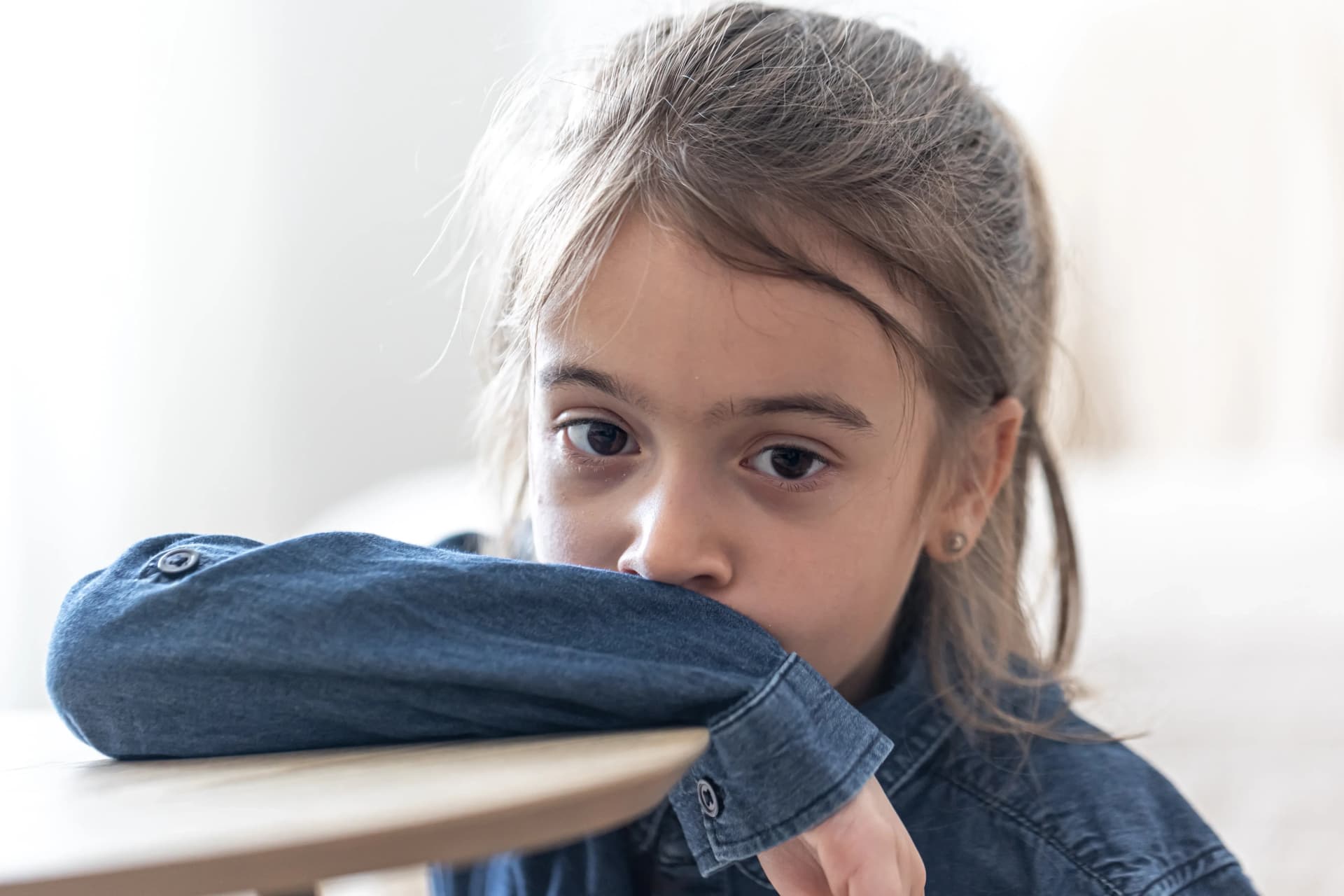
At the playground all the kids are already playing tag, while your child stands next to you, holding your hand and whispering, "I do not want to, there are too many people." At preschool they blush when the teacher speaks to them; at school they are afraid to raise their hand even when they know the answer. In this case shyness is not just a "quiet personality", but a state that interferes with communication, undermines confidence, and makes your child avoid any situation where they might draw attention.
The good news is that shyness does not doom your child to loneliness. If adults understand how it forms, stop putting pressure on the child, and instead support them step by step in social situations, your child can slowly learn to feel calmer and more confident around others. In this article we look at what is really going on with a shy child and which seven concrete steps parents can take to support them without force or traumatic "pushes out of the comfort zone".
What Is Childhood Shyness and How Can You Recognize It
Shyness in preschool and early school years is not just about being "quiet" or liking peaceful activities. It is an inner position where a child is overly focused on what others think and is very afraid of being judged for their appearance, words, or behaviour. Because of this, a shy child often avoids situations where they might become the center of attention – meeting new kids, joining group games, performing at events, or answering in front of the class.
In everyday situations shyness tends to show up in similar ways. In a new place your child literally clings to you and does not go play with other kids, even if they clearly find the toys or games interesting. At parties they try to stay on the sidelines, avoid standing in the middle of the circle, and feel embarrassed around adults and older children. Things like speaking on stage, dancing in front of others, or meeting a new group turn into a challenge instead of a pleasant experience.
Physically, shyness often comes with obvious body reactions – a faster heartbeat, a feeling that the heart is "jumping", sweaty palms, a tight feeling inside, paleness or, on the contrary, a sharp blush. Movements become stiff or clumsy, the voice is quiet and uncertain, the child speaks very little or goes silent. In situations that feel hard, a shy child would rather hide in a corner, step aside, or literally hide behind an adult than try to join in.
How Shyness Shows Up in Everyday Life
It is important to remember – shyness by itself does not mean there is "something wrong" with your child. But if fear of talking to other children and adults stops them from joining games, taking part in learning, or enjoying rest and activities, it is worth paying special attention to it instead of hoping it will "somehow go away on its own".
Why Children Become Shy: Key Factors
Shyness does not appear in one day or for one reason. Every child is born with their own temperament. Some children are more sensitive from the beginning – they are easily overwhelmed and emotionally more vulnerable. They react more strongly to loud sounds, crowds, unfamiliar people, and new places. Without support and gradual expansion of life experience, this natural sensitivity can easily turn into persistent shyness and avoidance of social situations.
Family context also plays a role. If at least one parent is very shy, tends to stay on the sidelines, avoids strangers and public situations, the child not only inherits a similar temperament, but also copies this behaviour. Suppressing a child's will, harsh comments, lack of support, rare praise, and constant comparisons to "more successful" peers make shyness almost inevitable.
Another important factor is how love and approval work in the family. When a child feels loved "for something" – for grades, "good" behaviour, or being easy and convenient – they learn to suppress their own needs to meet adults' expectations. Any mistake or failure feels like a threat of losing love. In this environment shyness becomes a defence strategy – if you do not stand out, do not start conversations, and keep to the background, there is less chance of "embarrassing yourself" and getting criticised.
We also need to mention the impact of traumatic events. Aggression at home, humiliation, parental divorce, bullying at preschool or school, and any form of abuse can sharply increase shyness and make it part of a wider pattern of anxiety. A child starts to avoid not only new people, but any situation where someone might judge them or react unpredictably. In such cases, support from parents alone is often not enough – professional help is usually needed as well.
7 Steps That Can Help Your Child Work Through Shyness
Working through shyness does not mean "turning your child into an extrovert". The goal is for them to feel reasonably comfortable around others, not be afraid of peers, and be able to build healthy relationships. It is a gradual process where small but regular steps matter much more than quick, radical changes.
Step 1. Accept Shyness as Part of Your Child, Not a "Defect"
The first step always starts with adults. If parents see shyness as "shameful" or "a big flaw", the child feels it and closes up even more. It is important to show your child directly that you accept them: "You are allowed to feel nervous, it is okay, we will learn how to handle this together."
It also helps to drop phrases that lock in negative labels like:
- "You are just shy, nothing can be done about it."
- "Look, all the other kids are normal and you are the only one standing there."
- "Because of your shyness, life will be very hard."
Instead, other messages work better: "I can see this is hard for you, but you already took a step forward", "You do not have to be friends with everyone right away", "We can move slowly but steadily." Acceptance does not mean "doing nothing", but it gives your child a safe base from which they can actually try new experiences.
Step 2. Help Build Healthy Self-Esteem
Shyness is closely tied to low self-esteem. A shy child often believes they are "worse", "boring", or "very weird" compared to others. That is why it is important to regularly acknowledge not only their successes, but also their effort and personal qualities.
It helps to focus on:
- pointing out specific strengths (kindness, attentiveness, persistence, sense of humour);
- praising effort even if the result is not perfect ("you talked to that boy – that was a brave step");
- emphasising that mistakes do not make them "bad", they just show where there is room to learn.
When a child feels valued for more than just achievements, their shyness tends to soften. They stop seeing every interaction with peers as "an exam they must pass to be good enough" and gain more freedom to experiment socially.
Step 3. Introduce New People and Situations Gradually
Sudden, stressful plunges into unfamiliar environments – "full day right away" – almost always increase shyness. A step-by-step adaptation works much better. For preschool, for example, it might look like this:
- first, walks near the building, getting to know the yard and playground;
- then short visits to the group together with a parent;
- next, a few hours there without a parent;
- and only then full days.
The same approach is useful for clubs and parties. Tell your child in advance how the event will go, who will be there, and what is expected of them. If they are afraid of performing, do not insist on the leading role right away. Let them start with something small – one line, a short dance, a simple task. That way they build up positive experience instead of another painful memory.
Step 4. Practice Social Skills in a "Home Laboratory"
In many cases shyness gets worse because a child simply does not know what to do with other kids. It is hard for them to walk up to someone, suggest a game, protect their toy, or politely say no. You can build these skills through role play and simple scenarios at home.
Here are some "training" situations you can act out together:
- meeting someone at the playground ("Hi, my name is… Do you want to play?");
- responding to an invitation ("I do not want to right now, but we can play later");
- handling conflict ("I do not want you to take my car without asking");
- joining a game that has already started ("Can I help you build the tower?").
In the safety of home, your child can try different phrases, tones of voice, and reactions and slowly realise that communication is a skill, not some inborn "talent for being social".
Step 5. Arrange Managed Contact With Peers
Keeping your child away from other kids "for the sake of peace" only reinforces shyness. Instead of avoiding groups altogether, it is better to create situations where your child can interact in a more comfortable format. Small groups work best, especially where one or two children are already familiar and friendly.
You can:
- invite one friend or cousin over to your home;
- set up joint walks with one other family;
- choose clubs or classes with small groups and a teacher who is attentive to shy children.
It is useful to give your child simple but meaningful roles – help lay out the toys, show where something is, suggest a game. This way they feel useful and visible without having to become "the star of the show" right away.
Step 6. Avoid Labels and Do Not Scare Your Child With the Future
Phrases like "no one will want to be friends with you if you stay shy" or "what will become of you?" do not help a child overcome shyness – they just increase anxiety and feelings of inferiority. The label "shy" locks them into a role that is hard to leave later.
It is better to highlight what is already going well:
- "I liked how you answered the teacher yourself today."
- "You did great when you went up to that girl on the playground and asked her name."
- "I can see you were scared, but you tried anyway – that is very brave."
This approach builds a sense of capability and shows that shyness is not a "life sentence", but something you can work with and gradually change.
Step 7. Seek Professional Help at the Right Time
If shyness comes with strong physical reactions (tears, shaking, stomach aches), if your child flatly refuses preschool, school, or any contact with other kids, or has gone through a traumatic experience, it makes sense to talk to a child psychologist.

A professional can help you:
- tell apart "typical" shyness from social anxiety or trauma reactions;
- choose specific exercises and interaction scenarios that fit your child;
- support you as parents, especially if you are also very shy or anxious.
Seeing a specialist is not an admission of "bad parenting", it is a responsible step toward protecting your child's mental health. In more serious cases, timely professional support can determine whether shyness turns into chronic social anxiety or stays a manageable personality trait.
How to Treat a Shy Child Day to Day: A Short Checklist for Parents
Everyday parental behaviour often affects shyness just as much as "big" events. Here is a quick list of key principles:
- do not call your child "shy" in front of others and do not make jokes about it;
- do not answer simple questions for them ("how old are you?", "what is your name?") – give them time to gather courage;
- do not force them into the spotlight right away – choose roles they can realistically handle;
- do not isolate them from peers – instead, create safe ways for them to meet other kids;
- do not brush off their fears ("you are not scared at all") – talk about them and offer support;
- do not compare them to more outgoing children – compare your child only to themselves "yesterday".
These small steps work like daily prevention. Shyness does not disappear overnight, but it is less likely to grow into something extreme, and your child will steadily feel more confident around other people.
Questions and Answers About Childhood Shyness
Does Shyness Mean There Is "Something Wrong" With My Child?
No. Shyness on its own is not a disorder or a sign of a "bad personality". It is a mix of sensitive temperament, life experience, and parenting style – and you can influence all of these. It becomes a problem when fear of talking to other children blocks learning, play, development, and your child's quality of life.
My Child Is Only Shy in New Groups. Is That Shyness or Just Caution?
A bit of caution in unfamiliar situations is a normal reaction, especially for preschoolers. If after some time your child joins the game, manages to make at least one friend, and does not systematically avoid contact, it is more about healthy caution. If, however, even after several months in preschool they do not play with anyone, stay silent when spoken to, and are terrified of attention, that is clear shyness that needs support.
Does It Help to "Throw Them Into the Crowd" So They Are Forced to Get Over It?
Suddenly dropping a child into stressful situations without preparation or support usually increases fear and mistrust rather than helping. The child concludes that no one hears or protects them and that the world is dangerous and unpredictable. It is much more effective to gradually make situations a bit more challenging, explain clearly what is happening, and offer support after each step.
Can Shyness Just "Go Away on Its Own"?
For some children, signs of shyness do get milder with age, but relying only on this is risky. If shyness is tied to low self-esteem, fear of peers, refusal to go to clubs or parties, and avoidance of any new situations, it tends to become more entrenched. Consistent support from parents – and professionals if needed – greatly increases the chances that your child will grow up more confident and socially active.
When Is Shyness a Reason to See a Psychologist?
You should consider professional help if your child regularly cries before preschool or school, refuses to leave the house, has strong physical symptoms of anxiety, does not interact with peers at all, and avoids even brief contact. Another warning sign is if shyness appears suddenly after a traumatic event or bullying. In these situations, a specialist can help soften the impact before shyness grows into a lasting anxiety disorder.