In 2026, it is no longer enough just to buy Bitcoin or Ether – you also need to answer honestly where you will store crypto so that you are not checking the news tomorrow to see where your exchange went or why your account was blocked. The market has already lived through several loud bankruptcies and hacking waves, so the question "where should I store cryptocurrency" has become part of basic financial hygiene, not paranoia.
Today an investor chooses between several scenarios: keeping funds on an exchange, moving them into Web3 wallets, and sending part of the coins to cold storage. Everyone has their own answer to where to store crypto. The goal of this article is to sort out how an exchange crypto wallet works, what OKX Wallet, Binance Wallet, and Trust Wallet can do, and to show practical models for where to store cryptocurrency without blind risk.
What Choosing Where to Store Cryptocurrency in 2026 Really Means
When someone first asks where to store cryptocurrency, they usually run into two camps: "just leave it on the exchange, it's easier" versus "withdraw everything to self-custody right away, you can't trust exchanges". In reality, the question "where should I store my crypto" is more complicated. It is not only about the location, but about the model of responsibility: do you hand over control to the platform or do you take it on yourself.
An exchange crypto wallet is a custodial solution. The exchange holds the private keys, shows you the balance in a convenient interface, and gives you a full set of tools: spot trading, futures, staking, earn products, launchpad. From the user's point of view, it looks like an obvious answer to where to store cryptocurrency for everyday work: you open the app, tap a few buttons – and the trade is done. But you pay for this convenience by not controlling the keys and depending fully on the platform.
The self-custody approach gives the opposite answer to where to store crypto long term. The private keys or seed phrase stay with you, and a Web3 wallet becomes your "passport" to DeFi, NFTs, staking, and dApps. No one can freeze coins in that wallet, but no one will restore them if you lose the recovery phrase. So the choice of where to store cryptocurrency is always a balance between control, convenience, and your level of discipline.
Pros and Cons: Exchange Crypto Wallet vs Your Own Keys
Many users start with an exchange: it is convenient to buy your first crypto with a card there, you see a familiar interface, and you can try trading. It is logical that the first answer to "where should I store my crypto" sounds like "where I bought it". But once your balance is no longer just a few dozen dollars and becomes a sum that matters for your budget, it is worth calmly reviewing what exactly an exchange crypto wallet gives you and where its risks lie.
Before you choose where to store cryptocurrency, it helps to name the strengths of the custodial model:
- Convenience and speed. An exchange crypto wallet lets you react to the market instantly: you do not have to send coins in from external wallets, wait for network confirmations, and risk the price running away while the transaction is in flight.
- A full service hub. In one app you can buy, sell, swap, stake, put coins into earn products, use futures or margin. For many traders this is the key argument in favor of where to store crypto if you live inside the market.
- Mobility. Exchange apps give you full control from your phone: you can track your portfolio, place orders, and manage risk without opening a laptop.
- User support. If something goes wrong with login, verification, or 2FA, custodial platforms have support teams that help you restore access. In self-custody there is no such "insurance".
Despite the convenience, hot exchange wallets have a systemic risk that many people only remember too late. An exchange crypto wallet is always connected to the internet, which makes it more vulnerable to hacks, phishing, data leaks, and technical failures. You do not control the private keys, so in practice you are trusting all your funds to the platform's infrastructure and security team.
The second major downside is dependence on rules you do not control. The exchange can change KYC requirements, freeze an account for "suspicious activity", ask for extra documents, or restrict access in certain countries. This is why it makes sense to see a hot exchange crypto wallet as a tool for active operations, not as the only place where all your crypto lives.
Exchange Crypto Wallet: Convenience vs Control
After seeing the comparison, it is easier to understand where your responsibility starts and ends. An exchange crypto wallet is a good answer to where to store cryptocurrency for daily operations, but a weak answer to where to keep crypto as a "safety fund" or long-term reserve. That is why it is logical to separate your trading balance from your "cushion" and move part of your assets into Web3 wallets where you control the keys.
OKX Wallet: Web3 Hub for Traders and DeFi Users
When a user on OKX asks where to store crypto if they actively trade and use DeFi, the natural answer is OKX Wallet. It is a multichain Web3 wallet that works as a mobile app, web version, and browser extension, and at the same time remains non-custodial: private keys and the seed phrase stay under the owner's control.
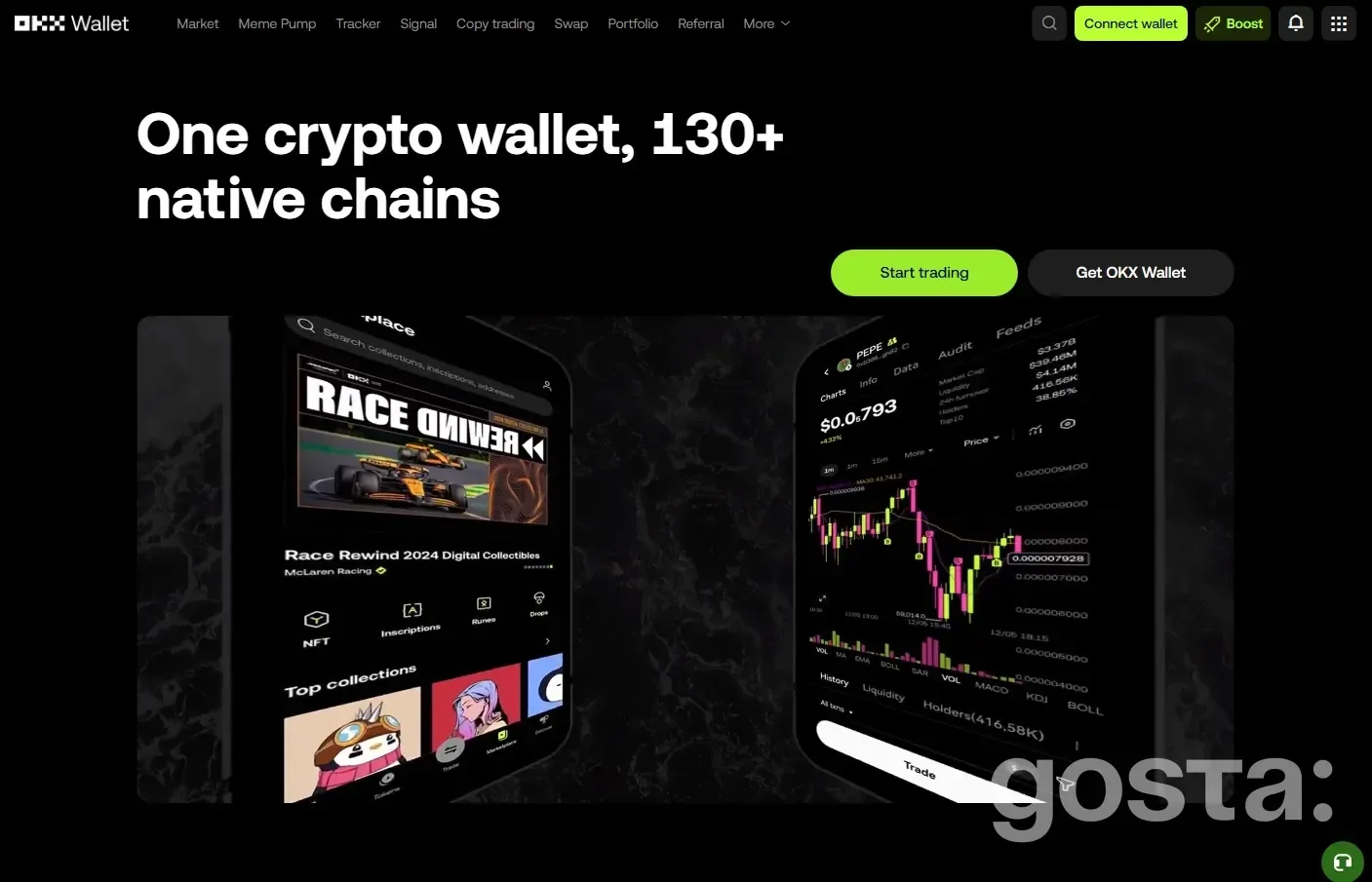
OKX Wallet lets you:
- keep and send assets across dozens of networks – from Bitcoin and Ethereum to different EVM chains;
- connect to DeFi protocols, DEXes, and NFT marketplaces through a built-in dApp browser;
- earn yield through staking or providing liquidity in pools;
- quickly move part of your assets to your centralized OKX account for trading when you need it.
For users looking for a place to store cryptocurrency with access to the Web3 ecosystem, the answer is "in your own wallet on top of OKX, not just in your account balance." In this scenario, the exchange's crypto wallet becomes a working tool, and OKX Wallet becomes a base for storage and experimentation with DeFi.
An important point is security. OKX Wallet allows you to work with a classic seed phrase, protect access with biometrics and a PIN code, separate wallets by purpose (for example, separately for trading and separately for NFTs), and connect hardware wallets if necessary.
To answer briefly the question of where to store crypto in the OKX ecosystem in 2026, the answer is: keep your main funds in OKX Wallet and in cold storage, and keep your operational funds in the exchange's crypto wallet.
Binance Wallet: MPC Model for People Who Fear Seed Phrases
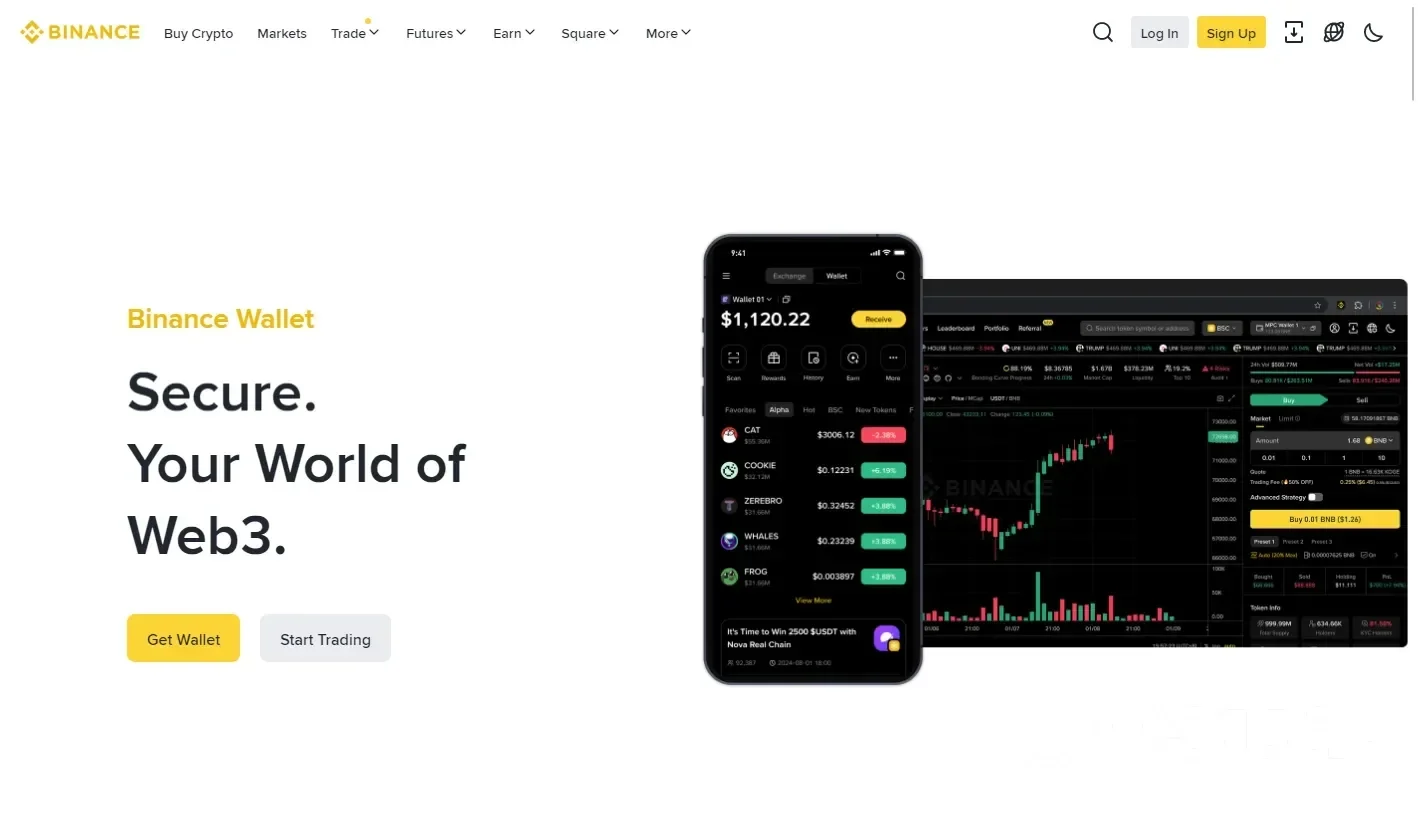
Binance users have their own version of the "where should I store my crypto" dilemma when they want Web3 access but are afraid of losing a piece of paper with the recovery phrase. Binance Web3 Wallet (Binance Wallet) offers a self-custody model built on MPC technology. The private key is not stored as a single string – it is split into three parts that live in different environments: on your device, in the cloud, and in Binance's protected infrastructure.
As a result:
- you only need any two of the three parts to sign a transaction;
- there is no classic 12–24 word seed phrase that you can lose;
- you still control the assets like in self-custody, but the recovery flow is softer.
For someone who has been trading on Binance for a long time and is asking where to store crypto so they are not stuck fully in a custodial model, Binance Wallet is a logical next step. It adds Web3 features, DeFi, NFTs, and cross-chain swaps in the same app where spot and derivatives trading already feel familiar. The exchange crypto wallet covers the centralized side of your activity, while Binance Wallet covers the decentralized side.
If you look at it through the lens of where to store cryptocurrency for longer than one market cycle, the model is roughly this:
- daily trading volumes – on the exchange account;
- medium-term positions and DeFi experiments – in Binance Wallet;
- large long-term amounts – in a connected hardware wallet.
This way you do not have to choose painfully between "either exchange or self-custody". You split roles between different layers of your infrastructure.
Trust Wallet: Mobile Power Tool for Independent Users
If it is crucial for you to minimize dependence on any single platform, your search for where to store crypto often leads to Trust Wallet. It is a non-custodial mobile Web3 wallet that supports major coins, thousands of tokens, dozens of blockchains, and NFTs.
Trust Wallet:
- gives you full control over private keys and the seed phrase;
- supports ERC-20, BEP-2, BEP-20 tokens and many altcoins;
- has a built-in dApp browser for DeFi protocols;
- lets you stake a range of popular assets directly in the app;
- works as a "pocket center" for managing your portfolio.
For an investor who does not want the answer to "where should I store cryptocurrency" to depend on any one exchange, Trust Wallet is a way to spread risk. Today you might use one platform to buy crypto, tomorrow another, while your long-term storage does not change. In this scenario, an exchange crypto wallet is more like a temporary "transfer station", not a place where you leave coins for months.
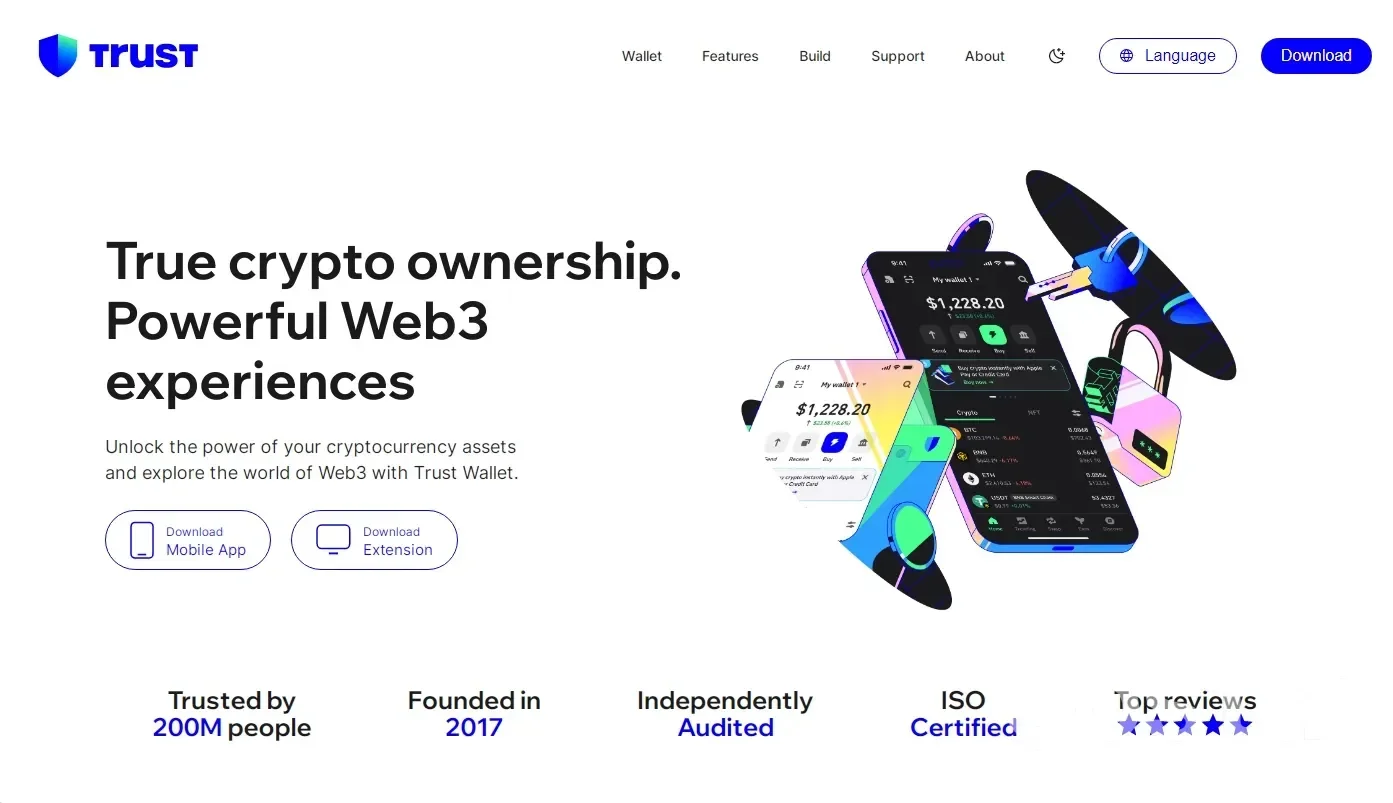
The flip side is responsibility. In Trust Wallet no one will say "click here to reset your password". If you lose your seed phrase, the question "where to store cryptocurrency more safely" stops making sense – access to the assets is lost forever. That is why experienced users often pair Trust Wallet with hardware wallets, spread large sums across different places, and never rely on a single device.
How to Combine an Exchange Crypto Wallet and Web3 Wallets: Practical Strategies
Once you get to know different wallets, one thing becomes clear: there is no universal answer to where to store cryptocurrency. Different people need different levels of control and different toolsets. In 2026 the most practical option is a combined approach where your exchange crypto wallet, OKX Wallet, Binance Wallet, Trust Wallet, and hardware wallets work together instead of competing.
Key principles for combining them:
- Separate the roles. Decide where you will store crypto for trading and where you will store cryptocurrency as a reserve. The funds that are constantly "in play" can stay on the exchange and in Web3 wallets, while long-term amounts sit in cold storage.
- Do not keep everything in one place. A single exchange crypto wallet is a single point of failure. One Web3 wallet without backups is also a single point of failure. Spreading funds across several wallets lowers your risk.
- Factor in your attention span. If you do not have time to monitor security every day, there is no sense in overcomplicating your life with a dozen DeFi positions. It is better to choose a simpler setup with one or two Web3 wallets and a hardware vault.
In all these scenarios, the questions "where to store crypto" and "where to store cryptocurrency" break down into two layers: where the main amount lives and where everyday transactions happen. An exchange crypto wallet rarely should be both at once. Web3 wallets give you room to maneuver, while hardware solutions add peace of mind.
How to Decide Where to Store Crypto in 2026
In 2026, responsible investing in crypto starts not with picking a token, but with an honest answer to where you will store cryptocurrency and how much time you are ready to devote to security. An exchange crypto wallet gives you speed, deep liquidity, and a wide toolset, but it does not give you full control over the keys. Web3 solutions like OKX Wallet, Binance Wallet, and Trust Wallet give that control back to you, but in return they demand discipline and an understanding of self-custody risks.
The most balanced strategy is a combined one. Part of the answer to "where to store crypto" is on the exchange, part is in Web3 wallets with your own keys, and part is in cold storage. This way you do not rely on a single company or device and you do not make your daily life more complicated than necessary. The main thing is not to push this question "for later": decisions about where to store cryptocurrency are always better made before the balance has grown into an amount that is critical for your budget.
Answers to Common Questions About Where to Store Crypto in 2026
Where Is It Safer to Store Cryptocurrency: On an Exchange or in a Web3 Wallet?
An exchange is more convenient and offers account recovery if you lose access, but an exchange crypto wallet does not give you control over your keys. A Web3 wallet gives you full control, yet all responsibility for the keys and seed phrase is on you. The most practical answer to where to store crypto is to combine both: keep working funds on an exchange and your main reserve in Web3 and hardware wallets.
Should a Beginner Go Straight Into Self-Custody If They Don't Yet Know How to Store Cryptocurrency Properly?
If you are just starting out, you can keep a small balance on an exchange and use a Web3 wallet like Binance Wallet or Trust Wallet with a minimal amount. This helps you gradually figure out where it feels more comfortable to store crypto without risking a large sum. At the same time, it's important to learn basic cyber hygiene, especially how to write down and protect your seed phrase.
Where Should a DeFi User Store Cryptocurrency: On an Exchange or in a Web3 Wallet?
If you actively use DeFi, the main answer to where to store crypto is Web3 wallets such as OKX Wallet, Binance Wallet, Trust Wallet, or similar options. An exchange works more as a gateway between fiat and the on-chain ecosystem. It's also important to spread risk and avoid keeping all assets in a single wallet or protocol.
When Is an Exchange Crypto Wallet a Bad Answer to the Question of Where to Store Crypto?
If losing the funds would be critical, an exchange crypto wallet should not be the only place you store cryptocurrency. It's convenient when everything runs smoothly, but regulatory issues, hacks, or market panic can temporarily block access to your funds. In such cases, part of your holdings is better kept in self-custody and cold storage.
Do You Need Hardware Storage If You Already Use OKX Wallet, Binance Wallet, or Trust Wallet?
Web3 wallets are a strong option for storing crypto with full control over your keys, but for very large amounts, a hardware wallet remains the gold standard. Many users follow a three-layer setup: an exchange for daily operations, Web3 wallets for DeFi and flexibility, and a hardware wallet for cryptocurrency they don't plan to touch for years.