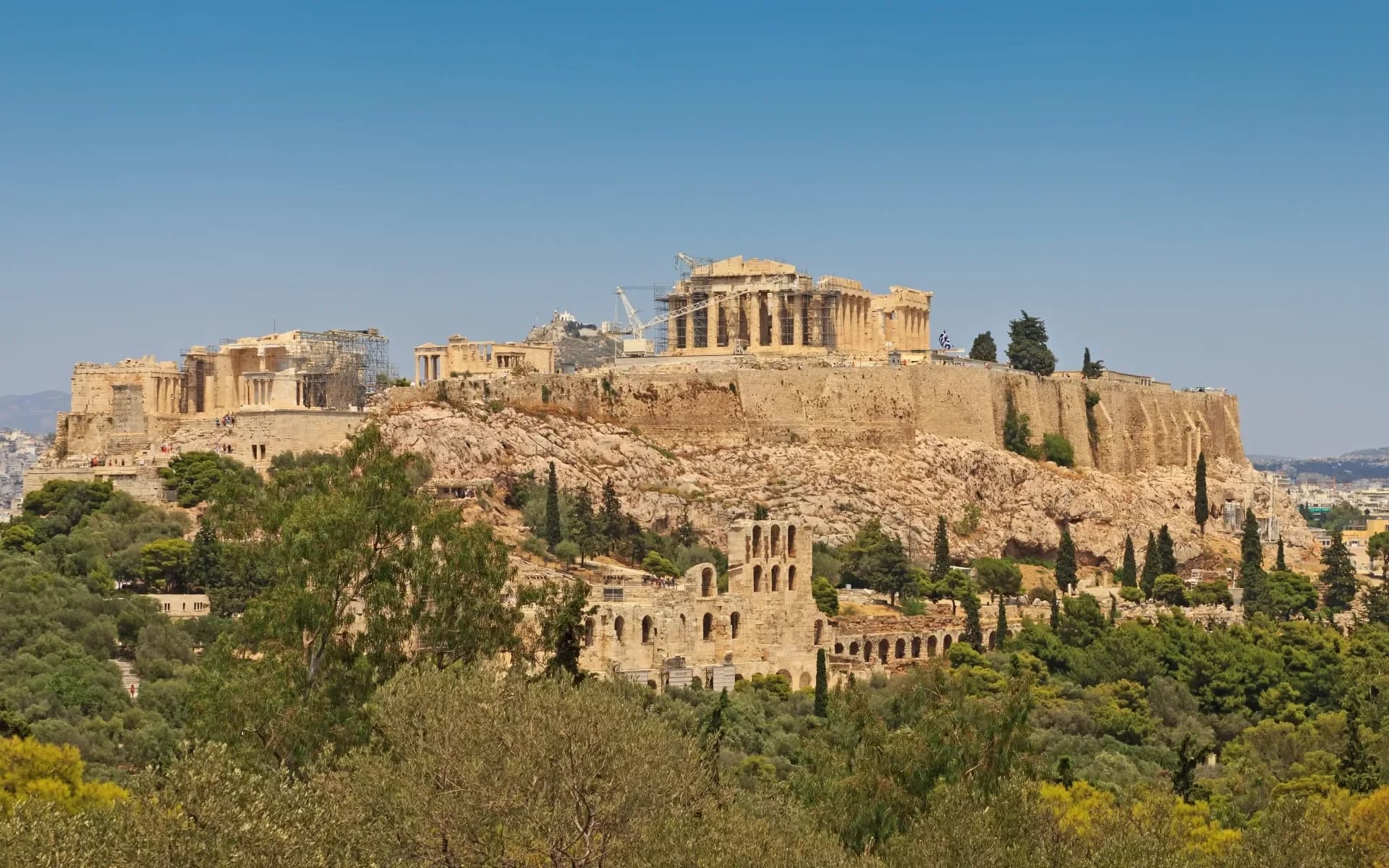
Among the world's greatest architectural and cultural masterpieces, the Acropolis of Athens holds a unique place. It stands as a living testament to an era that laid the foundations of democracy, philosophy, art, and architecture. It symbolizes the strength, spirit, culture, and glory of ancient Greece.
What Is the Acropolis and Where Is It Located?
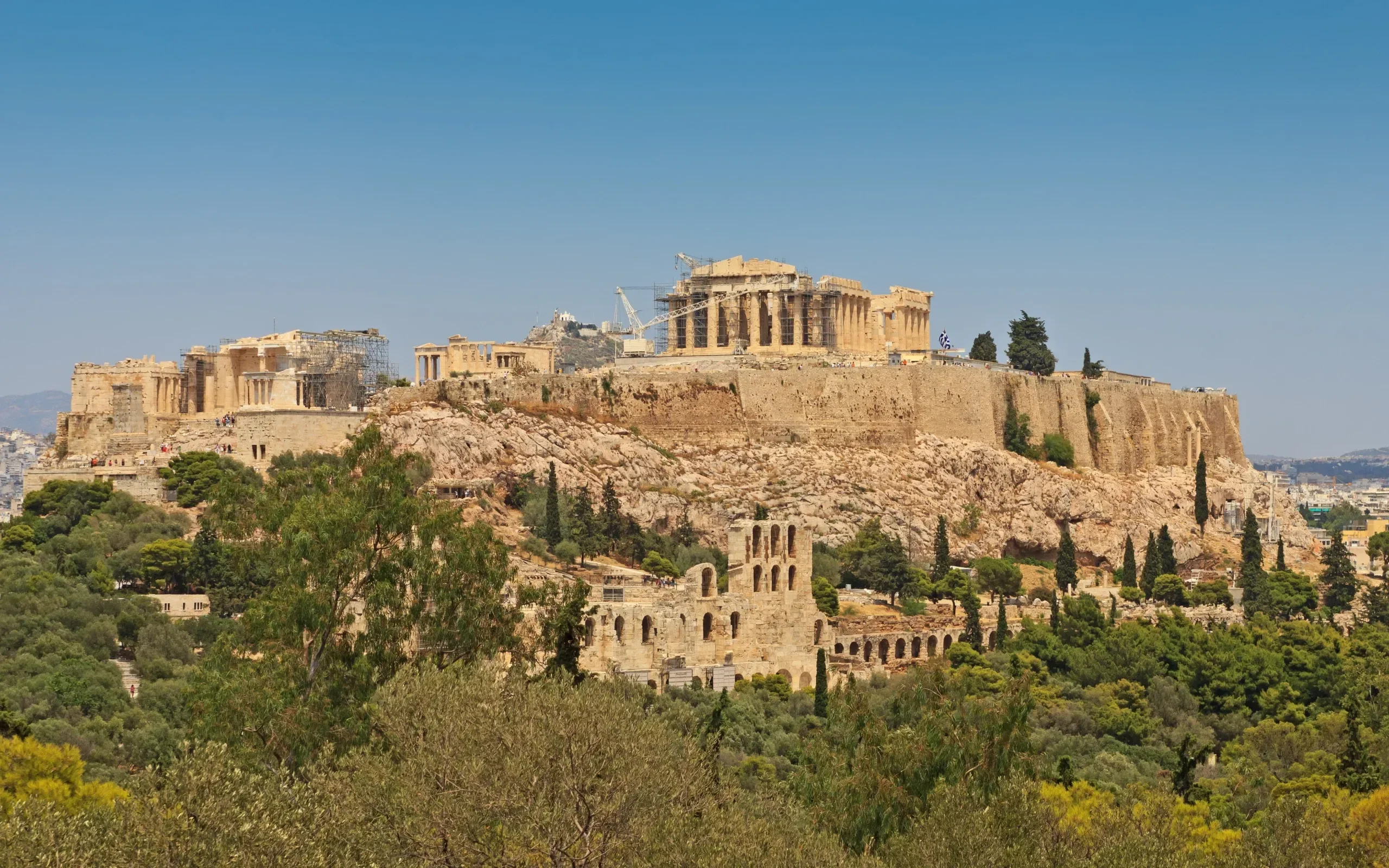
The Acropolis is a fortified "upper city" built on a rocky hill about 150 meters high, right in the heart of modern Athens. While many Greek cities had their own acropoleis, Athens' version became the most famous. It was visible from every corner of the ancient city and dominated the landscape both visually and culturally.
A Quick History of the Acropolis
The earliest traces of life on the Acropolis hill date back to the Neolithic era, though we still don't know who first built there. By the Mycenaean period, a palace surrounded by a defensive wall stood on the hill. But the Acropolis truly flourished in the 5th century BCE, after the Persian Wars.
In 480 BCE, the Persians destroyed the site. Afterwards, under the leadership of statesman Pericles, Athenians began a massive rebuilding project. This marked Athens' "Golden Age," when many of the Acropolis' most magnificent structures were built — many of which still stand today.
Why Was the Acropolis Built?
Originally, the Acropolis served as a military refuge during attacks. But over time, it evolved into a religious and symbolic center. The city's most important temples, ceremonies, and public festivals — especially those honoring Athena, the city's patron goddess — took place here.
What Makes Up the Acropolis of Athens?
The Acropolis isn't just one temple — it's a sacred complex of unique structures, each with its own style, function, and artistic value.
The Parthenon
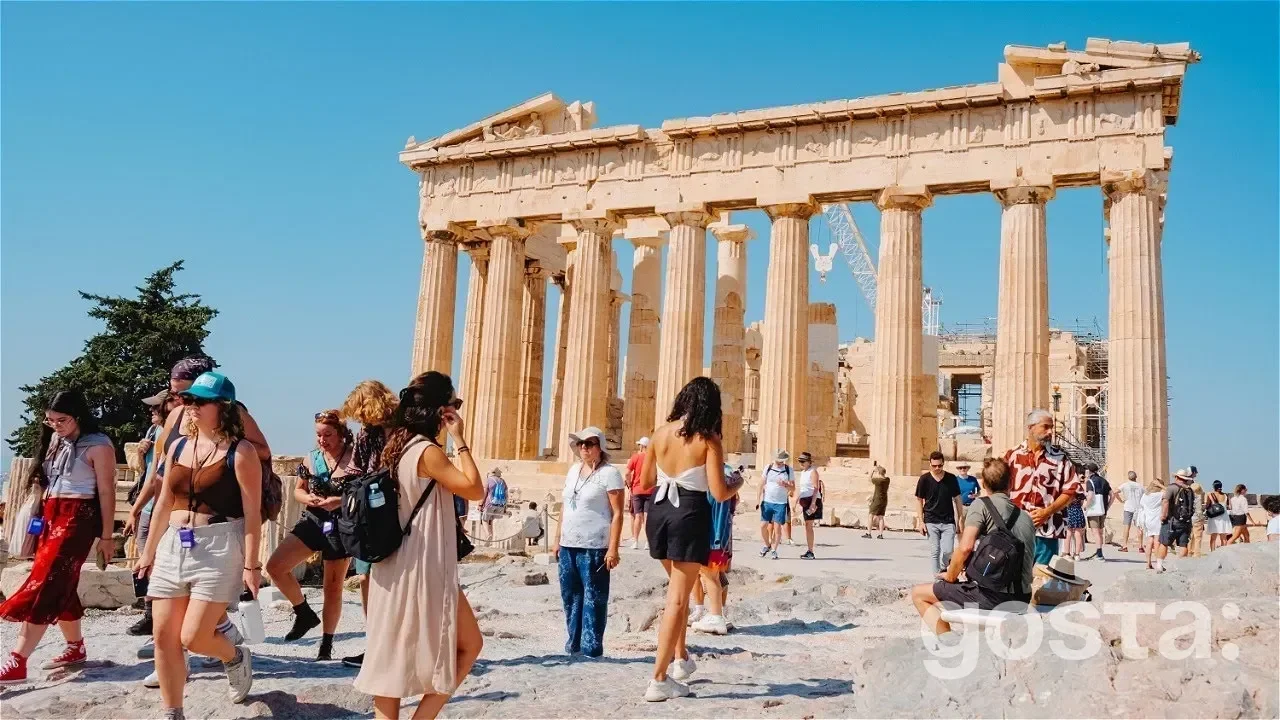
The largest and most famous temple of the Acropolis, dedicated to Athena Parthenos (Athena the Virgin). Built between 447 and 438 BCE, it's a masterpiece of the Doric order with Ionic elements. The Parthenon wasn't just a place of worship — it also housed the city's treasury and served as a symbol of Athenian power.
The Propylaea
The grand entrance to the Acropolis, designed by the architect Mnesicles. Combining Doric and Ionic styles, the Propylaea was more than a gateway — it created a dramatic transition into the sacred space.
The Erechtheion
The most unusual temple on the hill, dedicated to multiple deities — Athena, Poseidon, Hephaestus, and the legendary king Erechtheus. According to myth, this is where Poseidon's trident struck the rock and where Athena planted the first olive tree. The temple is famous for its Porch of the Caryatids — female figures used as columns.
The Temple of Athena Nike
A small Ionic temple on the southwest edge of the Acropolis, dedicated to the goddess of victory (Nike). It celebrated Athens' military triumphs, especially against the Persians.
The Sacred Olive Tree
Near the Erechtheion stands an olive tree that, legend says, is a descendant of the one Athena gifted to the city during her contest with Poseidon.
3 Myths About the Acropolis
Though it's not as globally famous as the Colosseum, the Acropolis is wrapped in mythology.
Athena vs. Poseidon
The most famous myth tied to the Acropolis is the contest between Athena and Poseidon for control of the city. Poseidon struck the rock with his trident, creating a saltwater spring (or a horse, in another version). Athena planted the world's first olive tree. The people chose her gift as more useful — and the city was named Athens.
Erechtheus and the Ultimate Sacrifice
Erechtheus, a semi-legendary king (said to be the son of Gaia and raised by Athena), sacrificed himself so Athens could win a war against Eleusis. His tomb lies beneath the Erechtheion, making the temple not just a place of worship but also a memorial.
Pandrosus, Aglaurus, and Herse
In a lesser-known myth, Athena entrusted King Cecrops' daughters with a box containing the infant Erichthonius (the son of Gaia and Hephaestus), warning them not to open it. But one disobeyed, saw the child — who had a snake's tail — went mad, and threw herself from the Acropolis.
5 Fascinating Facts About the Acropolis
Here are five things you probably didn't know:
- The Parthenon once held a giant statue of Athena, made by Phidias out of gold and ivory, inlaid with precious stones. It shone in the sunlight from miles away.
- The columns of the Parthenon aren't perfectly straight — they bulge slightly in the middle (a feature called entasis), creating the illusion of visual perfection.
- During the Turkish occupation, the Parthenon was used as a gunpowder store. In 1687, it was hit by a Venetian cannonball, causing a massive explosion and major damage.
- In the 19th century, British Lord Elgin took many of the Parthenon's sculptures to London. They're now displayed in the British Museum, sparking long-running disputes between Greece and the UK.
- Studies show that in ancient times, many Acropolis buildings were brightly painted — the white marble we see today is just a faded shadow of their original colorful glory.
What Is the Acropolis Like Today?
Today, the Acropolis is a national treasure, an open-air museum, and one of the world's top tourist destinations. It's a UNESCO World Heritage Site.
Ongoing restoration projects use cutting-edge technology to preserve these ancient marvels for future generations. Access to the site is carefully controlled, and the nearby Acropolis Museum — one of the best archaeological museums in the world — houses many of its priceless artifacts.
The Acropolis continues to fulfill its timeless role: inspiring millions with its reminder of the value of culture, knowledge, and human creativity.
Frequently Asked Questions
What was the Acropolis used for in ancient times?
Originally a fortified refuge, the Acropolis later became Athens' main religious and symbolic center. It housed temples, shrines, treasuries, and hosted important public ceremonies.
Are all of the Parthenon's sculptures still there?
No, many sculptures and decorative elements were damaged or removed. The most famous missing pieces — the "Elgin Marbles" — are in the British Museum. Greece has been campaigning for their return for years.
Why is the Parthenon considered a masterpiece?
Its perfect proportions, optical illusions (like the curved columns), intricate structure built without mortar, and the harmony of Doric and Ionic styles all contribute to its status. Plus, it featured stunning sculptures by Phidias.