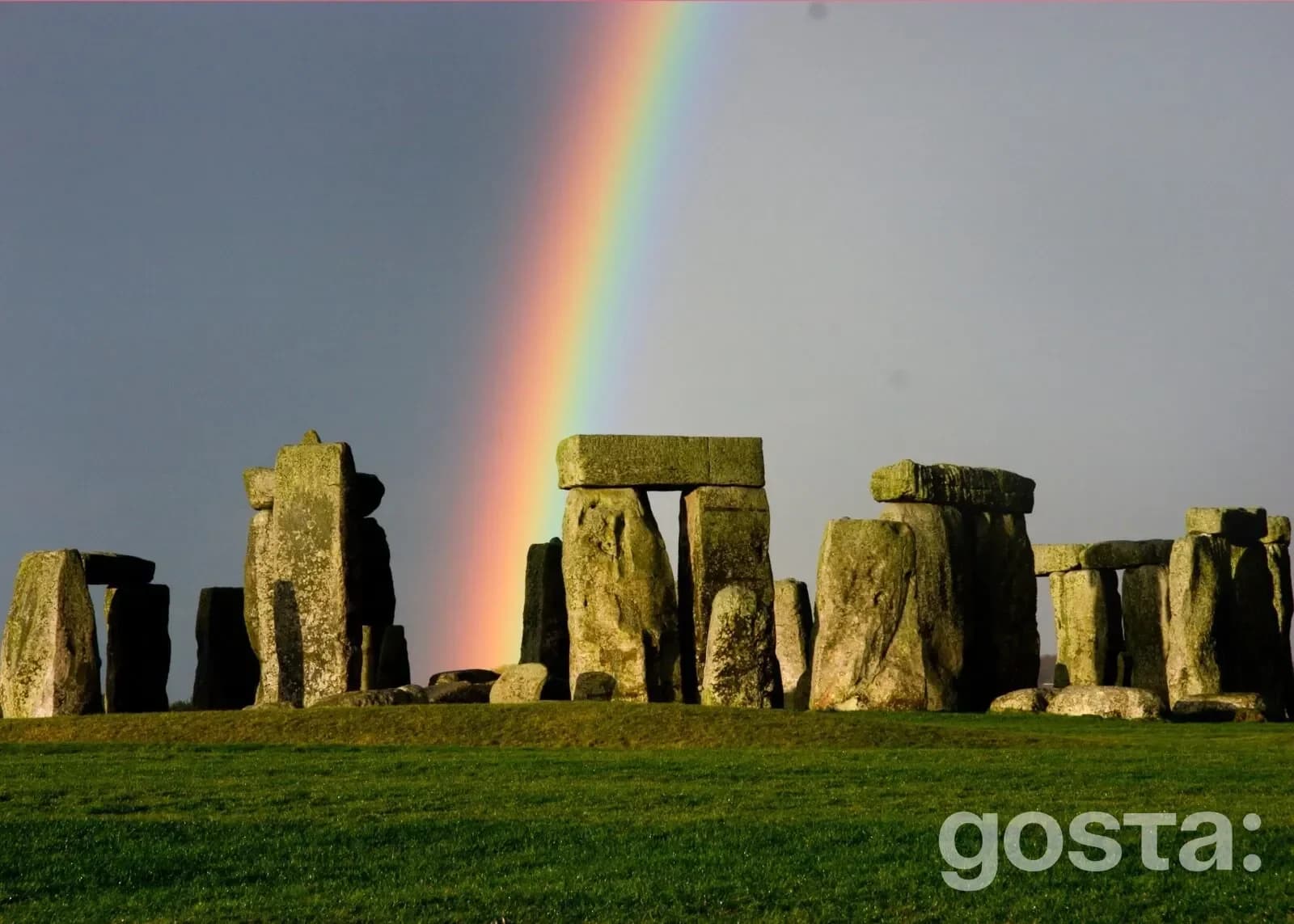
Stonehenge is one of the most famous megalithic monuments in the world. Almost everyone has heard of it—even those who've never been to Britain. It's a giant circle of stones standing in a field, thousands of years old, yet no one knows exactly why it was built. People still argue about its purpose: was it a place of worship, an observatory, a healing site, or maybe even something extraterrestrial? In this article, we'll look at who may have built it, why, and what legends surround it.
When Was Stonehenge Built?
Stonehenge wasn't built overnight. In fact, it took more than 1,500 years and was constructed in several stages. Each phase added something new or changed what came before:
- Stage One – Around 3100 BCE: Over 5,000 years ago, long before Egypt's pyramids or Greek temples, the site began with a circular ditch and earthen bank, over 100 meters wide. Wooden posts were placed in the center. There were no stones yet, but the site already seemed important.
- Stage Two – Around 2500 BCE: Massive sarsen stones were brought in, some weighing 20–25 tons. This was also when the famous bluestones arrived—believed by some to hold magical powers. The stones were arranged in rings and horseshoe shapes. Some were even placed horizontally on top of vertical ones to form stone arches.
- Stage Three – 2300–1600 BCE: This was a time of change. Some stones were moved or removed, others repaired or added. Processional avenues lined with chalk were created, aligned perfectly with the sunrise on the summer solstice. This suggests the site had an astronomical function.
Why Was Stonehenge Built? Leading Theories
There are several scientific theories about the purpose of Stonehenge:
- Astronomical Observatory: Some stones align with the sunrise on the summer solstice. This could mean Stonehenge was used as a calendar—for planting, harvesting, or celebrating seasonal events.
- Religious Site: Many believe it was a sacred place for rituals. It might have been a temple to the Sun or Moon. Burials found nearby suggest important people were laid to rest there.
- Center of Healing: Others think people came here seeking cures. The bluestones were thought to have magical properties, possibly believed to heal the sick.
- Social or Political Hub: Building Stonehenge required large-scale cooperation. It might have served as a gathering point for different tribes—a symbol of unity or power.
Who Built Stonehenge and How?
That's one of the biggest mysteries. The most accepted theory is that Neolithic tribes from Britain built it. They were farmers, hunters, and herders—skilled, organized, and forward-thinking. Hundreds or even thousands of people may have worked together, passing down knowledge and planning over decades.
DNA analysis of human remains nearby reveals people came from different parts of Britain—and even Central Europe. So the construction may have attracted visitors from across the continent.
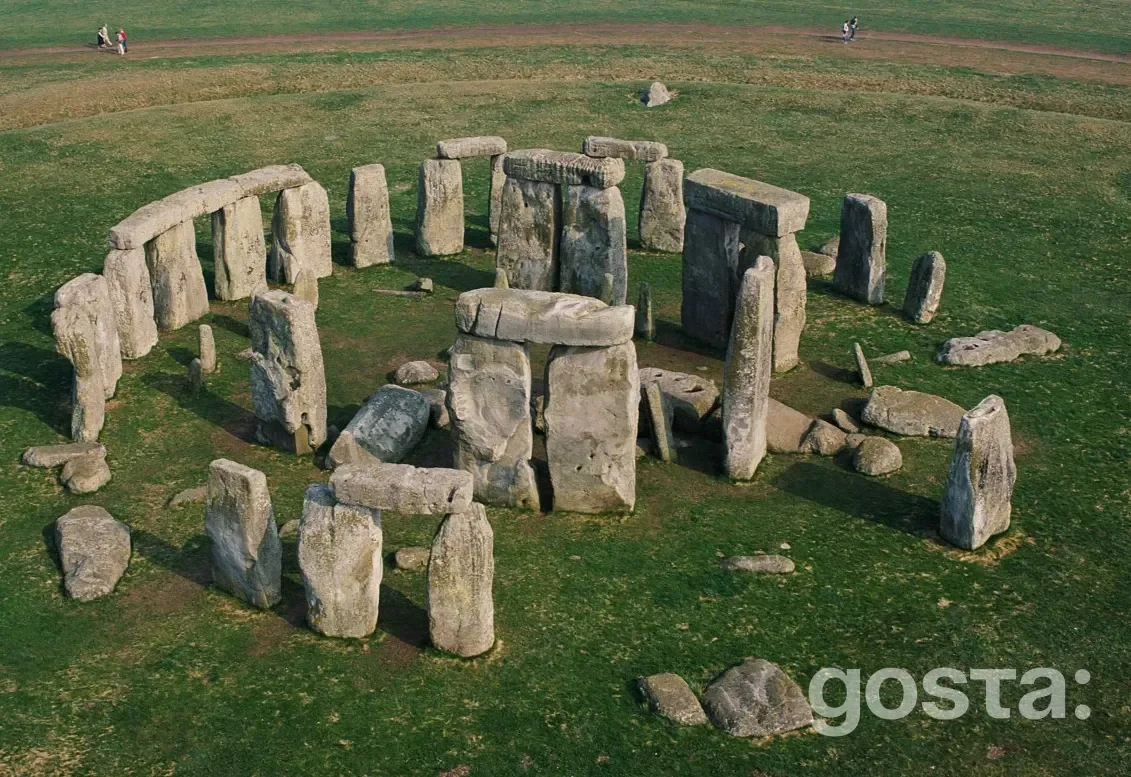
Unbelievably, the stones were moved by hand. Sarsens—each weighing up to 25 tons—were dragged on wooden sleds, possibly over greased paths or rolling logs. To raise a stone, they dug a pit, tipped it in, and filled the hole with earth. Horizontal stones were lifted using ramps, ropes, and the strength of dozens of people.
Or maybe it wasn't humans? That's a stretch, but some suggest druids, giants, Atlanteans, or even aliens built it. "No way humans could've done this," they say. But archaeologists are confident we could—and did. By the way, druids came to Britain at least 1,000 years after Stonehenge was completed. So, no—it wasn't them. But many later myths are linked to druids.
Myths and Legends of Stonehenge
What's Stonehenge without legends? Here are just a few:
- The wizard Merlin magically transported the stones from Ireland and built Stonehenge in a single night.
- Some tales connect the site to druids—ancient priests who actually appeared long after the stones were placed.
- One myth claims giants built it, carrying the stones from afar using their incredible strength.
- UFO believers think Stonehenge was a landing pad or beacon for alien spacecraft.
- Others say it's a portal to a parallel world—or a gateway to the spirit realm.
- Some believe it was a sacred solar temple, built by ancient priests.
- Legend says the bluestones could heal the sick. People traveled far just to touch them.
Stonehenge is very much alive. Every year, millions visit—especially on the summer solstice, when the sun rises right between the stones. Neopagans, hippies, tourists, photographers, shamans—they all gather. For some, it's spiritual. For others, it's a perfect Instagram shot. Stonehenge appears in books, movies, music videos, comics, and even ads. It's become a symbol of a mystery still waiting to be solved.
Scientists 'shocked' at new Stonehenge discovery. Watch the Video
Many questions about Stonehenge remain. But scientists around the world are still making discoveries. Here's one such find, explained in this video:
Conclusion
So, who built Stonehenge, and why? We still don't know for sure. It might've been an observatory, a temple, a healing site—or all of the above. But maybe the real point isn't having all the answers. The real wonder is how Stonehenge keeps inspiring us. It sparks curiosity, imagination, and discovery. After more than 4,000 years, it still holds its ancient secrets.
FAQ
What does Stonehenge mean?
Stonehenge is an ancient stone structure in England. The name comes from Old English and roughly means "hanging stones." It's one of the world's most famous megalithic sites.
Why was Stonehenge built?
No one knows for sure. It may have been a temple, an observatory, or a burial site. Some think it was sacred—a place for rituals or gatherings.
How old is Stonehenge?
Over 4,500 years old. The first phase began around 3100 BCE—making it older than the Great Pyramids of Giza.
When was Stonehenge completed?
Construction lasted over 1,500 years. Most of the major work was done by around 1600 BCE, and the site has changed little since.