Stories of people who built something incredible from nothing are always inspiring. But some journeys don’t just inspire — they become legend. Steve Jobs is one of those people. His name has become a symbol of innovation, bold thinking, and tech revolutions. From a humble garage to building Apple — one of the world’s most valuable companies — Jobs proved that the impossible can be done.
Who Was Steve Jobs and Why Is He One of the Most Famous People of Our Time?
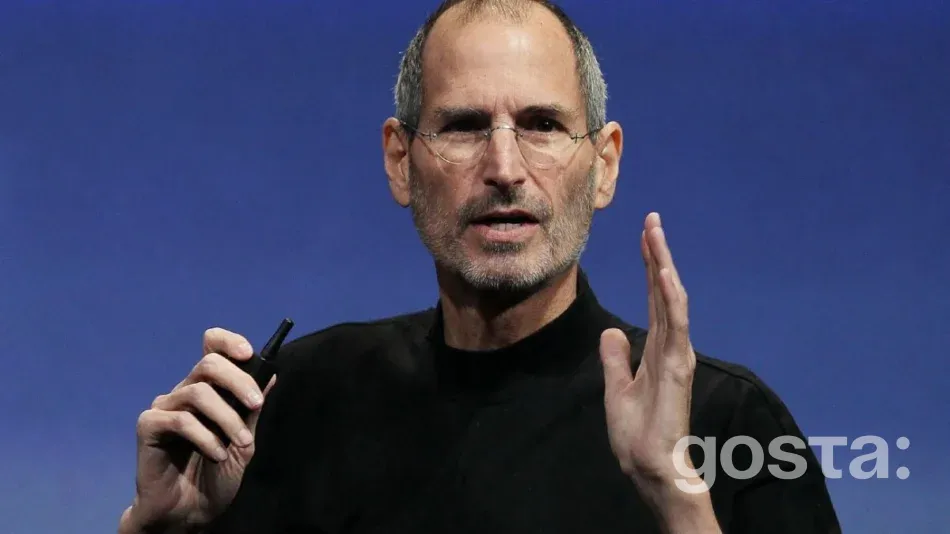
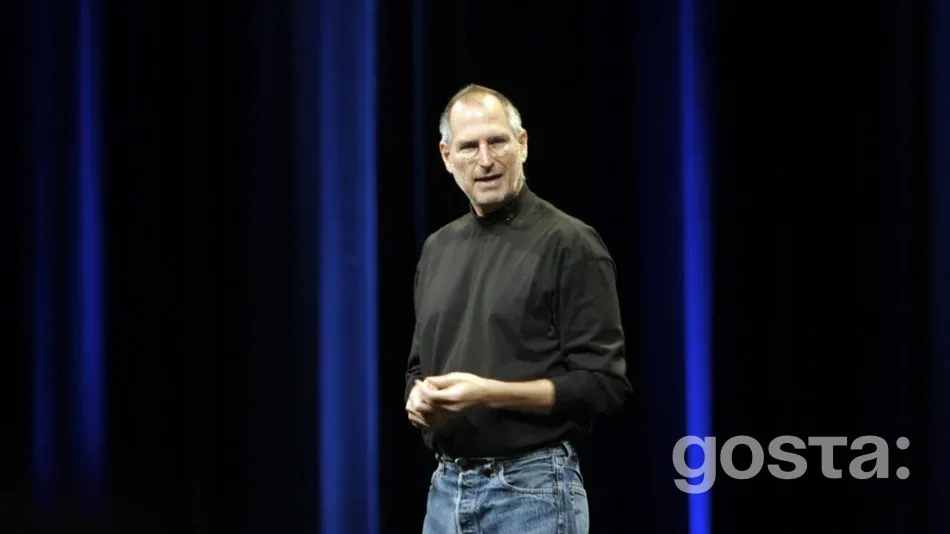
Steve Jobs was the co-founder of Apple, NeXT, and Pixar. He was an entrepreneur, inventor, and visionary. What made him stand out was his ability to blend technology with emotion. While most tech companies focused on specs and hardware, Jobs sold ideas, style, and experience. His vision didn’t just change the gadget industry — it reshaped how we listen to music, watch movies, work, and communicate.
Steve Jobs: A Closer Look at His Life
Early Life and Childhood
Steve Paul Jobs was born on February 24, 1955, in San Francisco. His biological parents, Joanne Schieble and Abdulfattah Jandali, gave him up for adoption. He was raised by Paul and Clara Jobs in Cupertino, California. From a young age, Steve was fascinated by electronics, engineering, and innovation.
Education and First Steps
Jobs dropped out of Reed College in Oregon after just six months. He traveled to India seeking spiritual growth, practiced meditation, and studied philosophy. After returning home, he worked at Atari, a gaming company.
Founding Apple
In 1976, Steve Jobs and his friend Steve Wozniak started Apple in a garage. They built their first computer — the Apple I. Just a year later, they released the Apple II, one of the first mass-market personal computers. In 1984, they launched the Macintosh — a groundbreaking PC with a graphical interface.
Leaving Apple, Founding NeXT and Pixar
In 1985, Jobs left Apple after a power struggle with the company’s leadership. He went on to start NeXT, which developed software for business and education. He also bought an animation studio that became Pixar — the creators of Toy Story and other iconic films.
Return to Apple and the Company’s Second Birth
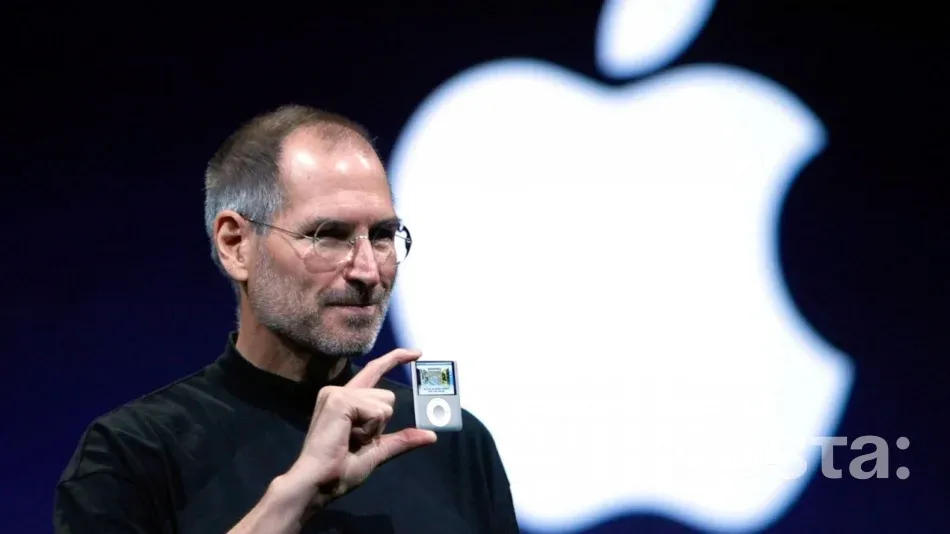
In 1997, Apple bought NeXT, bringing Jobs back into the company. He quickly transformed it into an industry giant. The launch of products like the iMac, iPod, iTunes, iPhone, and iPad marked a new era. Apple went from near bankruptcy to becoming the most valuable company in the world.
Final Years and Legacy
In 2003, Jobs was diagnosed with pancreatic cancer. He continued working while battling the illness. In 2011, a few months before his passing, he stepped down as CEO. Jobs died on October 5, 2011. He left behind not only groundbreaking products but a mindset that inspired a generation of entrepreneurs.
Apple and Steve Jobs — Building a Legend
Apple was founded in 1976 in California by Steve Jobs, Steve Wozniak, and Ronald Wayne. Wayne sold his share soon after — for just $800. The company’s first office? The garage at Jobs’ childhood home in Los Altos.
Wozniak, a brilliant self-taught engineer, built the Apple I — a bare-bones computer with no case, monitor, or keyboard. Jobs, on the other hand, had business instincts and a gift for persuasion. He secured their first big order — 50 Apple I units — from a store called Byte Shop.
In 1977, Apple released the Apple II — one of the first personal computers with color graphics, a keyboard, and a case. It was ready to use out of the box. Sales exploded. Apple went from garage startup to tech powerhouse almost overnight.
In 1980, Apple went public and made its founders instant millionaires. Jobs became a celebrity while still in his twenties.
In 1984, Apple launched the Macintosh — the first personal computer with a graphical interface and a mouse. Its legendary commercial, directed by Ridley Scott (1984), became one of the most iconic ads in history.
Although revolutionary, the Macintosh didn’t sell as well as expected at first. Tensions grew between Jobs and Apple’s CEO, John Sculley. In 1985, after a leadership clash, Jobs was pushed out of the very company he had created. It was a major setback — and a new beginning.
After Jobs left, Apple lost its creative spark. New products like the PowerBook, Newton, and Macintosh LC failed to make the same impact. By the 1990s, Apple was losing market share, and its financials were slipping.
In 1996, Apple bought NeXT, hoping to use its NeXTSTEP operating system. That deal brought Jobs back into the picture. In 1997, he returned as interim CEO — and quickly began reshaping the company.
Jobs shut down unprofitable projects, focused on design and simplicity, and kickstarted a new era of product innovation.
“Innovation distinguishes between a leader and a follower.” Real breakthroughs come from thinking differently.
“The only way to do great work is to love what you do.” Passion is what drives true excellence.
“Your time is limited, so don’t waste it living someone else’s life.” Be yourself. Don’t live by others’ expectations.
“Simplicity is the ultimate sophistication.” This became a core principle of Apple’s design philosophy.
Steve Jobs was a man who changed the course of history. His life proves that even the boldest dreams can become reality — if you believe in yourself, take risks, and follow through. His journey teaches us not to follow the crowd, but to carve our own path. Maybe that’s what success really means.
Frequently Asked Questions
Why Was Steve Jobs Fired from Apple?
In 1985, a power struggle erupted between Steve Jobs and Apple’s CEO, John Sculley. Jobs, though talented, was known for his intense and impulsive personality. After a series of clashes, Apple’s board sided with Sculley, and Jobs was pushed out. This turning point led him to found NeXT and buy Pixar — both of which became massively influential.
What Product Turned Things Around for Apple After Jobs Came Back?
The first big win after Jobs returned in 1997 was the iMac G3 (1998). With its colorful, transparent design, it reignited excitement around the brand. It also marked the start of Apple’s design-first era. Later hits like the iPod, iPhone, and iPad cemented the company’s dominance.
How Did Apple Change After Steve Jobs Died?
After Jobs passed away in 2011, Tim Cook became CEO. He brought a different leadership style — more collaborative and service-oriented. Under Cook:
Apple introduced the Apple Watch, AirPods, Apple Pay, Apple Music, and Apple TV+.
The company hit new financial records, becoming the first to reach a $3 trillion valuation.
It began focusing more on sustainability, user privacy, and its own processors — like the Apple Silicon M1, M2, and M3 chips.
Was Jobs a Programmer or an Engineer?
No, Steve Jobs wasn’t a technical engineer or a programmer. His strengths were vision, design sense, marketing, and an intuitive feel for what people wanted. He had a unique talent for building great teams, inspiring them, and turning complex tech into simple, elegant products. His superpower? Thinking differently — and predicting what would matter next.
Information
Цікаві статті про компанію Apple на Gosta Media
Apple є одним із глобальних лідерів в області технологій та розробки. Заснована в 1976 році, ця компанія завжди залишалась на першому ряді інновацій, виробляючи продукти, що змінюють світ. З Macintosh до iPhone, Apple постійно встановлює стандарти преміальної якості та дизайну. Аналізуємо вплив Apple на світ технологій У будь-якій дискусії про…
Subscribe to the monthly news digest from Gosta Media
The main news and updates from the team about gadgets, sports, cars, health, and lifestyle.
Get Your Personalized Synastry Chart (PDF)
We’ll email your full compatibility reading as a beautifully designed PDF. Just enter your email below and proceed to secure checkout.
One-time payment – just $9.99
Warning:
Access only for persons over 21 years of age
This section contains information about gambling and is available only to persons who are 21 years of age or older in accordance with the applicable laws of Ukraine. Please confirm that you are 21 years of age or older.
This platform does not have a Ukrainian license. The link is provided for informational purposes only. Participation in games on such sites may violate Ukrainian law.