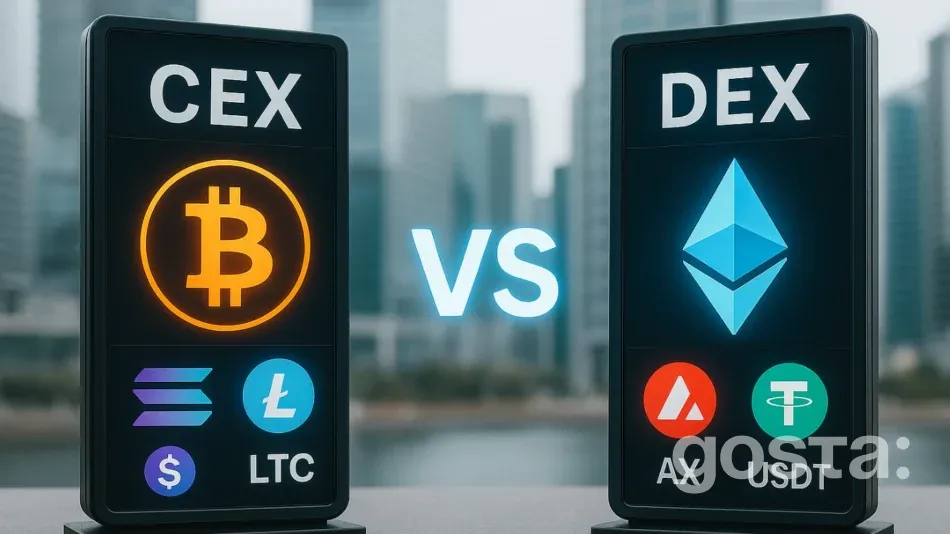
The crypto market offers two main ways to store your assets. Centralized exchanges (CEX) with Proof-of-Reserves promise transparency and a full set of trading services. Decentralized platforms (DEX) with private keys offer full control and financial freedom. CEX is better for those who value speed, support, and access to fiat gateways. DEX is for those ready to take full responsibility for their own security.
The choice depends on the goals: traders often leave assets on the exchange, investors choose cold wallets, businesses combine formats, and funds build complex storage systems with multi-level control.
Who Holds the Keys: Your Wallet or the Exchange?
In crypto, there are two main storage approaches. Centralized exchanges (CEX) — Platforms where your funds are held under the exchange’s control. You see your balance in your account, but the private keys are in the hands of the service operator. Modern CEXs now use Proof-of-Reserves — a public cryptographic report meant to prove they hold all client assets.
Decentralized exchanges (DEX) and self-custody wallets — Here you hold the private keys yourself. That means full control, but also full responsibility for security.
Self-custody wallets come in three main types:
Hot wallets — Online, convenient, but more vulnerable.
Cold wallets — Offline, much safer.
Warm wallets — A middle ground between convenience and security.
How Proof-of-Reserves Works
Proof-of-Reserves (PoR) is designed to confirm that a CEX has enough reserves to cover all customer deposits. It’s a cryptographic transparency tool.
Here’s the process:
The exchange creates a Merkle tree, where each leaf is an encrypted balance of a single user.
A signed snapshot of all balances is published.
Users can verify their own entry, while auditors confirm the total amount.
Exchanges like Binance, OKX, and Kraken use PoR reports. They provide extra confidence, but they’re not a full guarantee. The report shows the situation at the time of the snapshot, may not include all liabilities, and often omits the split between hot and cold wallets. Trust in PoR depends on the auditor.
Private Keys on DEX: Freedom and Responsibility
DEX platforms and self-custody wallets give you full control over your funds. No one can freeze your account or limit transactions. You can also maintain privacy by using privacy-focused tools.
Risks with DEX include:
Losing your key or seed phrase means losing your funds forever.
Phishing, malware, and signing malicious transactions.
Granting excessive permissions to smart contracts.
Code bugs and vulnerabilities in cross-chain bridges.
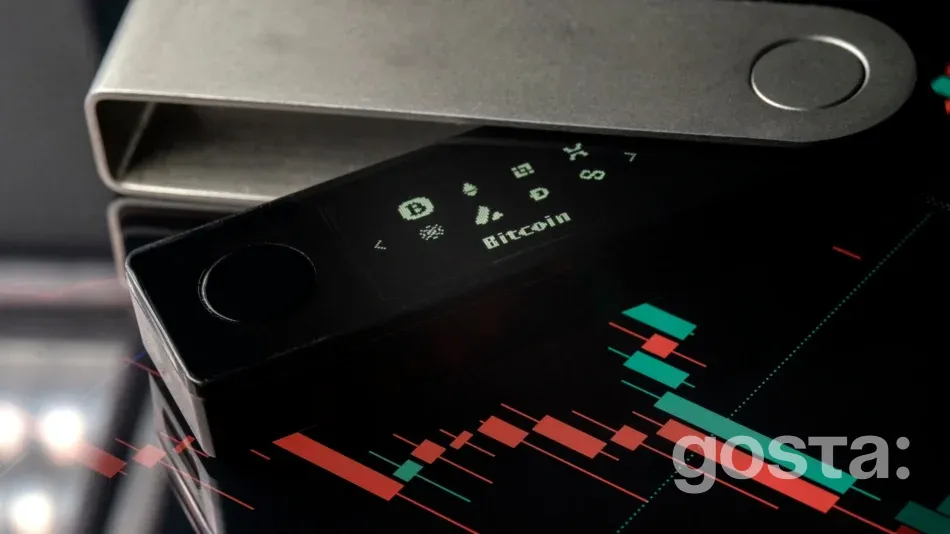
Hardware wallets such as Ledger, Trezor, and Keystone are used to store keys. For teams and funds, multisig or MPC solutions are used. There are methods of social recovery and dividing the seed phrase into parts for storage in different places.
CEX vs DEX: Key Differences and How to Choose
CEX and DEX differ in several core ways. On centralized exchanges, the platform controls your assets. In decentralized solutions, the key owner has full access to funds and is fully responsible for their security.
Transparency on CEX relies on PoR reports and regulatory requirements. In DEX, everything is visible directly on the blockchain, where every transaction is publicly recorded.
The risks are also different. For CEX, they include hacks, bankruptcies, or account freezes due to regulator demands. For DEX, they include lost keys, smart contract errors, and fraudulent transactions.
In terms of convenience, centralized platforms have the advantage. They offer a simple interface, support, fiat gateways, and access to margin trading, derivatives, and staking. DEX usability depends on user experience and often comes with a smaller product range.
When it comes to fees and spreads, the picture is mixed: exchanges sometimes charge higher fees, while in DeFi you need to pay network gas fees.
Is it safer to use CEX or DEX? Both CEX and self-custody have their own security tools:
On centralized CEX exchanges, you should use two-factor authentication via TOTP or hardware security keys. It is advisable to enable a withdrawal address whitelist, set an anti-phishing code, and restrict IPs and API key permissions. It also helps to separate accounts for trading and storage, and to regularly review PoR reports and the exchange’s incident history.
On DEX, it is better to store keys on hardware wallets. For teams, it is convenient to implement multisig or MPC so that transactions require multiple approvals. Offline signing and air-gapped devices help. To reduce theft risk, control smart contract permissions with services like revoke.cash and check transactions in simulators. Backup copies of the seed phrase should be duplicated in several secure locations and recovery should be tested from time to time.
Why in 2025 “And” Wins, Not “Or”
The most practical approach today is not CEX or DEX but a combination. Part of the assets can be kept on PoR exchanges for fast trading. This is the “trading fleet” with strict withdrawal limits. Treasury funds are stored in cold multisig or MPC wallets that are almost never connected to the network. For on-chain strategies, use only vetted protocols with whitelisted access.
Examples of such combinations include Ledger plus Binance, OKX Wallet with a cold reserve, or ClearLoop settlements that allow trading without actually transferring funds to the exchange.
For the strategy to work, you need clear KPIs: exchange and network limits, regular PoR checks, VaR control, and rebalancing triggers.
What Are CEX and DEX Exchanges, and How Do They Differ – Video
Centralized CEX and decentralized DEX platforms offer a similar set of services. At the same time, they take different approaches to asset storage. To sort this out, watch the video:
Conclusions
Combining CEX and self-custody reduces risks. Keep the operational minimum on the exchange, and the main capital in secure wallets. Monitoring of PoR reports and permissions should be automated, and key recovery tests should be regular.
The main advantage of the hybrid approach is that it combines the speed and liquidity of centralized CEX platforms with the control and resilience of decentralized DEX tools. In 2025, this is no longer a compromise but the basic standard for those who want to preserve assets and still use them effectively.
Frequently Asked Questions
Is It Safe to Keep Funds on a CEX Exchange?
Centralized CEX exchanges keep users’ keys. This is convenient and fast for trading, but there is a risk of hacks or bankruptcy. It is reasonable to keep only a portion of funds on a CEX for operations.
Proof-of-Reserves (PoR) is a cryptographic confirmation of client assets. It shows the state at the time of the snapshot but does not cover all of an exchange’s liabilities. Trust in PoR depends on the auditor and the CEX’s transparency.
Can You Use a DEX for Large Amounts?
Technically you can. A DEX allows it, but risks are high due to keys and smart contracts. Mistakes or vulnerabilities can lead to loss of funds. For large amounts, it is safer to combine DEX with cold storage and multisig wallets
Tags:
Report an error
Found a mistake? Highlight it in the text and send it to us at info@gosta.ua
Subscribe to the monthly news digest from Gosta Media
The main news and updates from the team about gadgets, sports, cars, health, and lifestyle.
Get Your Personalized Synastry Chart (PDF)
We’ll email your full compatibility reading as a beautifully designed PDF. Just enter your email below and proceed to secure checkout.
One-time payment – just $9.99
Warning:
Access only for persons over 21 years of age
This section contains information about gambling and is available only to persons who are 21 years of age or older in accordance with the applicable laws of Ukraine. Please confirm that you are 21 years of age or older.
This platform does not have a Ukrainian license. The link is provided for informational purposes only. Participation in games on such sites may violate Ukrainian law.