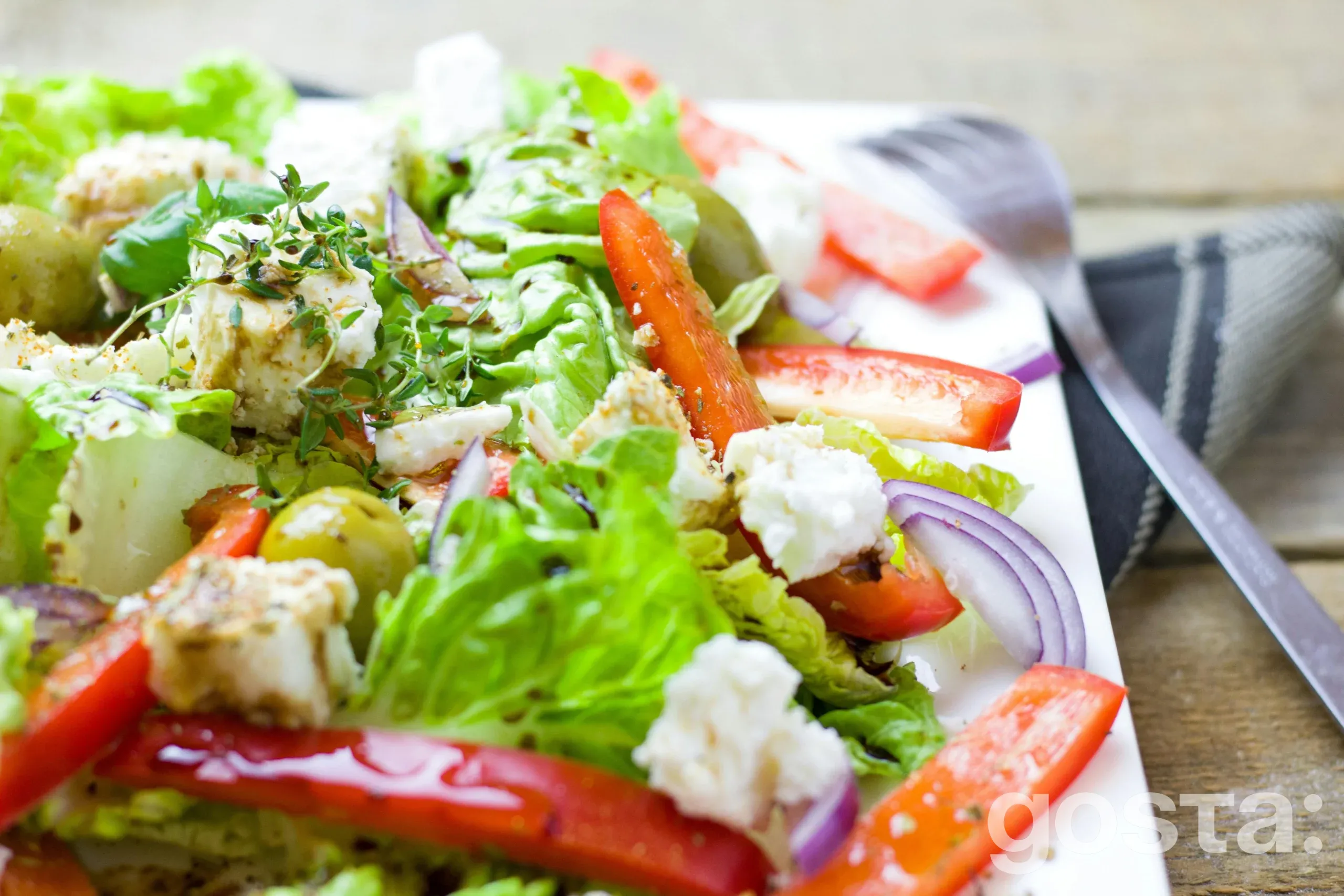
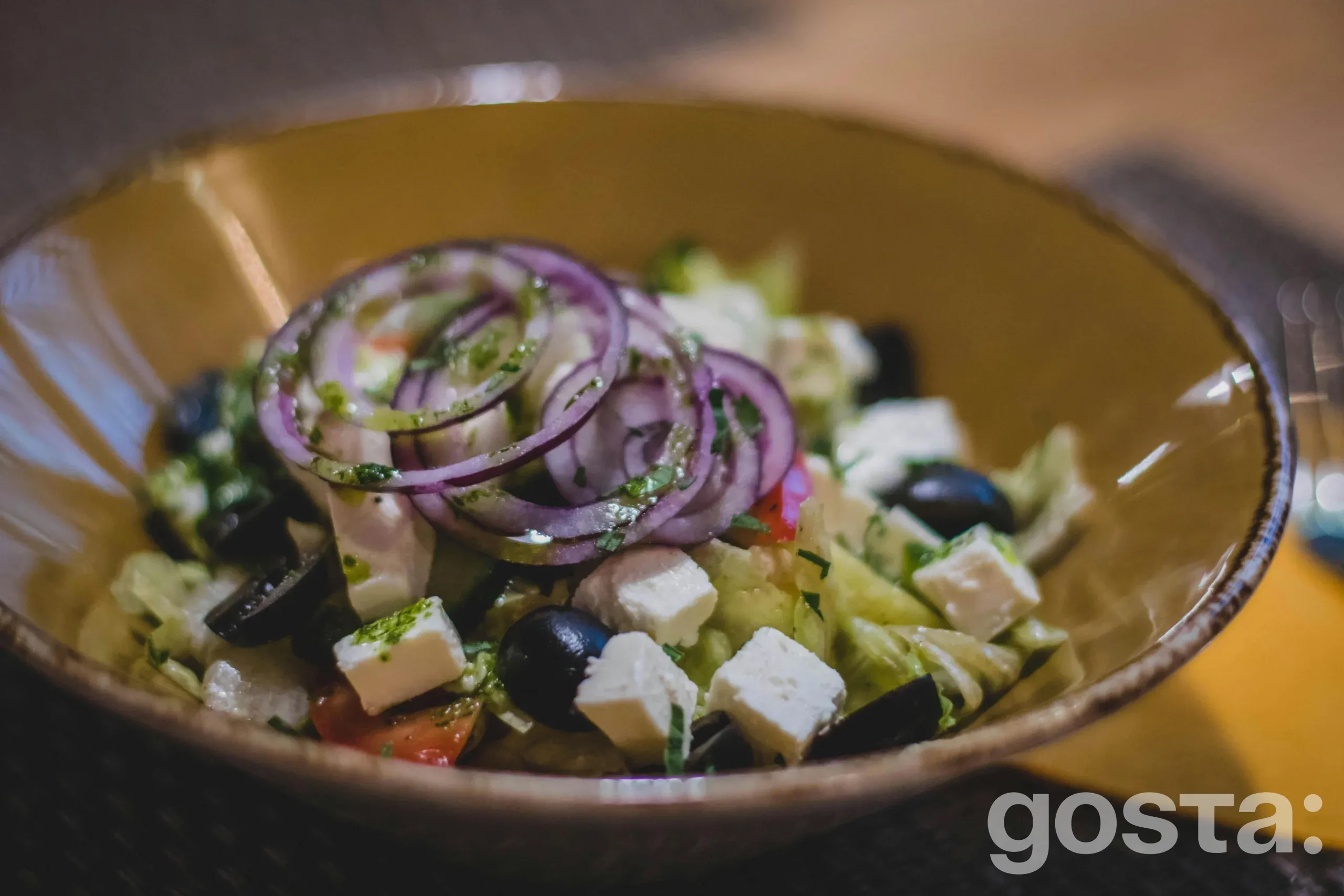
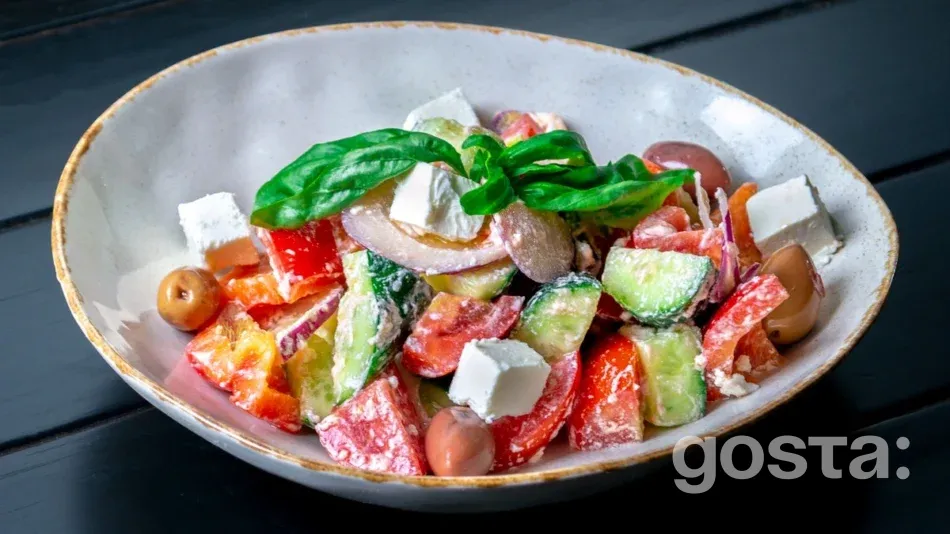
Greek salad captures the spirit of the Mediterranean. It was once a humble farmers’ dish built from the freshest vegetables, feta, and olive oil. Today it is a national symbol that never goes out of style.
The idea is simple – fresh vegetables, real olive oil, correct proportions. But recreating the taste “like in Greece” is not easy. Tiny mistakes in picking or cutting ingredients can change the flavor completely. That is why chefs share rules tested on thousands of plates.
Quality First: How to Choose the Right Ingredients
The secret starts before you cook – at the market. Tomatoes must be ripe yet firm, not watery. Cherry tomatoes or meaty varieties that don’t fall apart under the knife work best. Choose young cucumbers with thin skin and minimal seeds. If the seeds are large, scoop them out so the salad doesn’t get watery.
Sweet green pepper adds herbal freshness, while red onion brings a gentle bite. In Greece, feta is made from sheep’s milk with some goat’s milk – this gives it a firm, crumbly texture and a delicate tangy-salty taste. If you swap real feta for brined cheese or “feta-style” made from cow’s milk, the salad will taste different.
Another nuance is olives. Recipes vary by region: some skip them entirely, others use only Kalamata. These dark purple olives have soft flesh and a slightly sweet, nutty note that pairs beautifully with feta.
Core Ingredients of a Classic Greek Salad
Ingredient
Best amount (for 2 servings)
Notes
Cherry or meaty tomatoes
200 g
Ripe, juicy, no splits
Cucumber
1 large
Minimal seeds, peel if thick
Green pepper
1
Sweet and aromatic
Red onion
½
Slice into thin half-moons
Feta
200 g
Sheep’s milk, not pressed
Kalamata olives
50–70 g
Pitted, whole
Oregano
1–2 tsp
Dried or fresh
Extra-virgin olive oil
3–4 tbsp
High quality, first cold press
The classic combo keeps balance: feta’s saltiness, tomato acidity, and olive oil’s softness create harmony without any extra sauce.
Geometry of Flavor: How to Cut the Vegetables
Shape matters. Cut tomatoes into large wedges to keep them juicy and good-looking. Slice cucumbers into rounds or half-moons about 5 mm thick, peppers into narrow strips, and onion into thin rings.
Each piece should be big enough to feel on its own yet combine well with the rest. Cutting too small releases juices and turns the dish into a mushy mix.
Cooks suggest this order: tomatoes first, then cucumbers, pepper, and onion. Add feta, olives, and seasonings only after that. This way the vegetables keep their structure and do not soften from salt.
Do not toss the salad hard before serving – a drizzle of oil on top is enough. For a shared table, you can cube the feta, but keep it whole until the last moment.
A Dressing That Lifts, Not Masks, the Flavor
The dressing should enhance the natural taste, not cover it. The classic formula uses only three ingredients: extra-virgin olive oil, oregano, and a pinch of salt. Modern takes sometimes add lemon juice or a little wine vinegar. The acidity brightens tomatoes and softens onion. The key is restraint – balance in Greek salad depends on delicacy.
Chefs advise using oil less than a year old and never skimping on quality. Poor oil tastes bitter or metallic. Good oil smells of greens, fresh grass, and almonds.
Dressing Options for Greek Salad
Version
Ingredients
Flavor profile
Classic
Olive oil, oregano, salt
Pure vegetable character, maximum authenticity
Lemon
Olive oil, lemon juice, oregano
Bright citrus notes, great with fish
Yogurt
Olive oil, Greek yogurt, mayonnaise, basil
Creamy and gentle, a modern variant
Vinegar
Olive oil, wine vinegar, black pepper, oregano
Zesty and aromatic, restaurant-style
Mediterranean cooks say: mix the dressing separately and add it right before serving. Oregano will bloom, and the vegetables will stay crisp.
Serving Secrets
After dressing, do not mix aggressively. Layer in a bowl or on a plate: tomatoes, cucumbers, pepper, onion, feta on top. Clean presentation is part of the culture. In Greek tavernas, feta is often served as one large slab so each guest can break off as much as they wish.
Keep the look natural, without heavy decor. A few capers or a basil leaf won’t hurt, but too many spices make the salad “not Greek.” Chill for only 10–15 minutes before serving. Over-chilled salad loses the oil’s aroma, while too warm turns watery. The rule is fresh taste.
Proportions and Seasonality: How Not to Break the Balance
A classic Greek salad stands on proportions. For two servings, use 200 g of tomatoes, one large cucumber, one green pepper, half an onion, 200 g of feta, a handful of olives, and a few tablespoons of oil. Changing even one element shifts the balance.
In summer the dish shines thanks to sun-ripened produce. In winter, when tomatoes are greenhouse-grown, choose cherry tomatoes for better flavor and aroma. In the cold season, slightly saltier feta can compensate for milder vegetables.
Seasonality is the Mediterranean’s main spice. Greeks never make the salad from underripe produce. The dish should feed and also carry a hint of summer even in cool months.
Common Mistakes That Ruin Greek Salad
Before cooking, it is important to know what not to do. Despite its simplicity, Greek salad is very easy to ruin. The most common mistakes are listed below.
Knowing these details distinguishes culinary habits from a professional approach. Greek salad does not forgive carelessness – but rewards precision.
Step by Step: How to Make the Classic
Greek salad does not like haste. Its value is in accuracy and respect for ingredients. Every vegetable should be fresh, juicy, and crisp. The sequence matters.
Follow these stages:
Cut the vegetables. Halve cherry tomatoes; cut large tomatoes into wedges. Slice cucumbers into 5–6 mm half-moons so they stay juicy. Seed the pepper and cut into medium squares.
Assemble in order. Tomatoes on the bottom, then cucumbers, then pepper and onion. This keeps juices from pooling and preserves structure.
Add feta last. Do not crumble right away. In classic serving, place one big slab on top – a symbol of generosity and respect for the guest. For a shared dish, cut into large cubes.
Dress at the last moment. Right before serving add 3–4 tablespoons of extra-virgin olive oil, a pinch of oregano, and a pinch of salt. No extra spices are needed.
Do not overmix. Gently lift the vegetables with spoons to keep the feta intact. Salt at the end, since both cheese and olives contain salt. To brighten the taste, add a few drops of lemon juice – it refreshes the salad and highlights tomato sweetness.
You make it without rush, yet in just 10–15 minutes. The fresher the ingredients, the brighter the result. Each bite carries sun, sea salt, and the scent of real summer. That is why Greek salad remains a timeless symbol of simplicity.
Greek Salad Reimagined: A Modern Yogurt-and-Mayonnaise Version
Classics evolve. Even famous dishes gain new forms. Today chefs serve two versions: the traditional one that keeps the authentic character, and a modern one with creamy yogurt- or mayonnaise-based dressings. The second option is softer and a bit more filling, yet still light.
The idea is to combine textures. Crunchy vegetables stay the base, while a gentle dressing wraps the flavors. The products are the same, but the key is sauce balance.
How to make the modern version:
Mix the dressing. In a bowl, combine 2 tbsp mayonnaise, 1 tbsp Greek yogurt, a pinch of salt, basil, and oregano. Add a few drops of lemon juice. The sauce should be silky, not too thick.
Prep the vegetables. Use red or yellow peppers for a festive look. Pick cherry tomatoes so the salad doesn’t weep.
Add feta. Cut into cubes or crumble by hand for a homier texture.
Dress right before serving. This keeps the vegetables crisp.
The yogurt version adds a light creaminess that plays nicely with the cheese’s saltiness. It works as a side to hot dishes or a standalone lunch. The secret is moderation: a little acidity, a little softness, a little freshness. For extra interest, add a pinch of black pepper, a few drops of honey, or pomegranate seeds – they accent the feta’s salt.
This is not a replacement for the classic but its development. It keeps the simplicity and sounds modern. Easy to cook at home and it looks restaurant-level – bright, fresh, and balanced.
Greek Salad – A Taste That Doesn’t Age
Greek salad is more than vegetables under oil. It is a philosophy of simplicity and respect for product that has survived centuries. Its power is in honesty, where every ingredient matters. Nothing extra – and that makes it ideal, a slice of summer you can make anywhere.
It is about balance: tomato acidity, feta saltiness, olive oil softness, cucumber crunch. Keeping that harmony shows culinary culture. If you make Greek salad right, you grasp the essence of Mediterranean cooking: minimum ingredients, maximum flavor. The dish teaches you to feel, not just follow instructions.
Frequently Asked Questions
Do I Have to Add Olives to Greek Salad?
Not necessarily. Traditions vary by region: on some islands, olives are served on the side, on the mainlan,d they go into the bowl for a richer taste. At home, follow your preference.
What Can Replace Feta if I Don’t Have It?
The closest options are sheep or goat brined cheeses. They match the texture better than cow’s cheese. Still, real feta has a unique crumbly feel and a gentle tangy-salty balance.
Do People Add Vinegar or Lemon to Greek Salad?
Yes, in moderation. A few drops of lemon juice or wine vinegar add freshness, especially in winter when vegetables are milder. In the classic recipe, feta’s natural saltiness provides balance.
Why Not Add Lettuce Leaves?
Lettuce changes the dish’s nature – it makes it watery and “generic European,” and the Greek character is lost. Greek salad is about juicy vegetables, not greens. For freshness, add capers or a little basil instead.
How Long Can Greek Salad Be Stored?
No longer than 6–8 hours in the fridge under plastic wrap. It tastes best in the first 30 minutes, when vegetables are crisp and the feta holds its shape. For a party, prepare it right before serving so the flavor stays alive.
Tags:
Report an error
Found a mistake? Highlight it in the text and send it to us at info@gosta.ua
Subscribe to the monthly news digest from Gosta Media
The main news and updates from the team about gadgets, sports, cars, health, and lifestyle.
Get Your Personalized Synastry Chart (PDF)
We’ll email your full compatibility reading as a beautifully designed PDF. Just enter your email below and proceed to secure checkout.
One-time payment – just $9.99
Warning:
Access only for persons over 21 years of age
This section contains information about gambling and is available only to persons who are 21 years of age or older in accordance with the applicable laws of Ukraine. Please confirm that you are 21 years of age or older.
This platform does not have a Ukrainian license. The link is provided for informational purposes only. Participation in games on such sites may violate Ukrainian law.