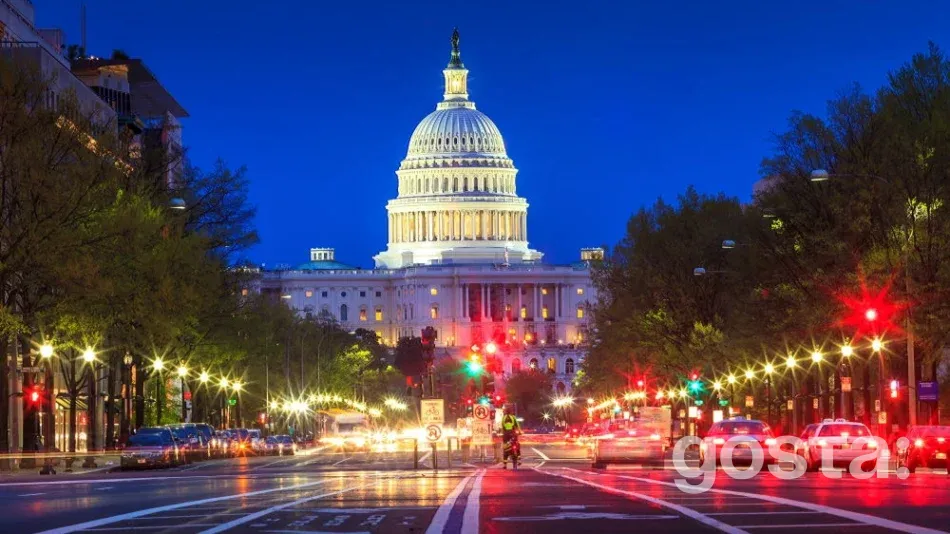
Washington, D.C. is the kind of place that embodies American history, power, and symbolism. It’s not the country’s largest city, but it’s where decisions are made that ripple around the world. In this article, we’ll explore why Washington became the capital, its fascinating backstory, what makes it unique, and what the city looks like today.
Why Is Washington the U.S. Capital When It’s Not the Biggest City?
When the United States was forming, leaders needed a neutral place for the government—not part of any state, to avoid any one state having too much influence. In 1790, Congress passed a law to create a brand-new capital on land carved out to form the District of Columbia. This was a compromise between Northern and Southern states. As a result, Washington became the political center, even though, in terms of population and size, it’s smaller than cities like New York or Los Angeles.
Another outstanding world capital is Beijing. We also wrote about it here.
How the U.S. Capital Came to Be — A Brief History
After the Declaration of Independence, America needed a capital that didn’t belong to any state. So in 1790, Congress passed the Residence Act, establishing the new capital along the Potomac River, straddling Maryland and Virginia. The District of Columbia was born, and the new city was named Washington, after the nation’s first president.
French architect Pierre Charles L’Enfant designed the city, planning broad avenues, monumental buildings, and grand circles. The Capitol and the White House were among the first major structures.
In 1814, during the War of 1812, British troops burned parts of the city—including the Capitol and the White House. But Washington was quickly rebuilt, maintaining its role as the capital.
Through the 19th and 20th centuries, it grew as the political heart of the nation. In 1963, one of the most unforgettable speeches in U.S. history took place here: Martin Luther King Jr.’s “I Have a Dream,” delivered on the steps of the Lincoln Memorial during the March on Washington.
Today, Washington remains the symbol of American democracy and the country’s political hub—though its residents are still fighting for full representation in Congress.
10 Interesting Facts About the U.S. Capital
Washington isn’t just about politics and government buildings—it has its quirky and unusual side. Here are ten fun facts that might surprise you:
No building in D.C. can be taller than the Capitol. A federal law keeps the skyline low to preserve the view.
Washington isn’t part of any state—it’s its own federal district, and neither Maryland nor Virginia govern it.
License plates say: “Taxation Without Representation.” That’s a protest: residents pay federal taxes, but don’t have voting representatives in Congress.
Most museums in the city are free. Thanks to the Smithsonian Institution, you can visit museums on natural history, space, American art, and more without paying.
The city was designed by a Frenchman. L’Enfant used Paris for inspiration—hence all the radiating avenues, circles, and symmetry.
Lots of green space. Despite being a government town, parks, gardens, and national mall account for about 20% of the city.
It’s one of the most visited U.S. cities—over 20 million tourists come each year.
The Metro has no ads on the walls. Stations are known for their clean, vaulted, and symmetrical architecture.
The National Mall isn’t a shopping mall—it’s a huge green space lined with monuments, memorials, and museums. The name often confuses visitors.
The White House’s pear tree garden is real. It’s a favorite spot for first ladies to host receptions, take photos, and promote wellness.
What to See in Washington, D.C.
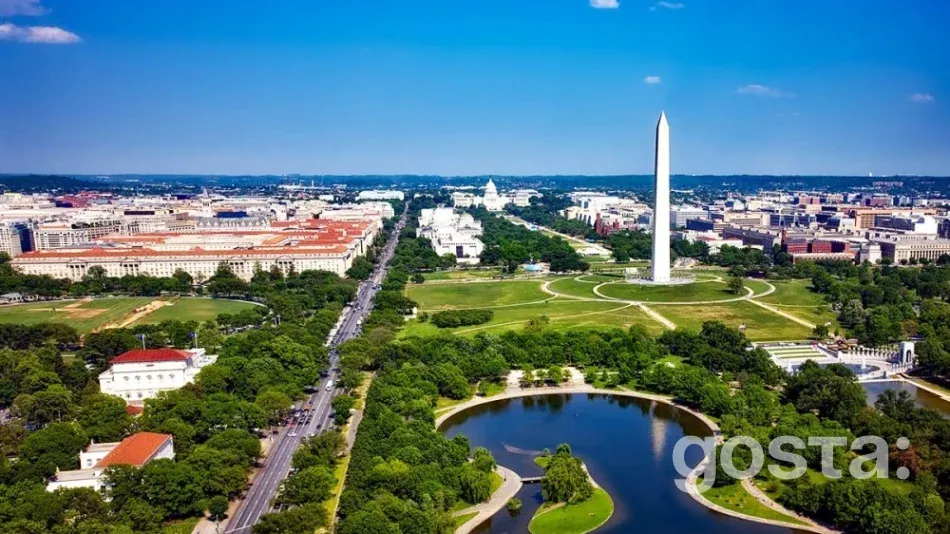
The U.S. capital is a paradise for anyone into history, politics, and culture. Everywhere you go, you’ll find places of national and global importance. The city is built so key landmarks are all accessible via the National Mall—a broad green corridor right in the center.
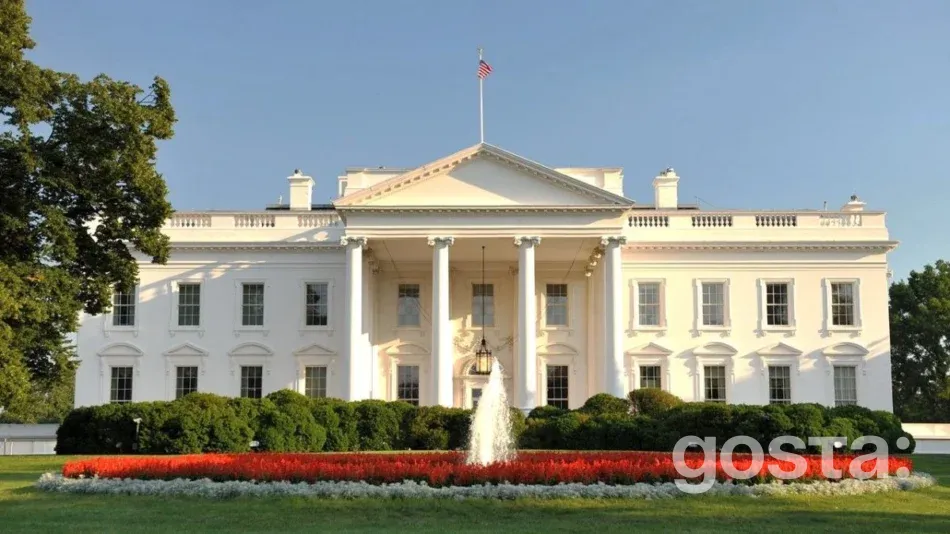
The White House: The official residence of the U.S. President since 1800. Iconic and always lively—with tourists, press, and protesters.
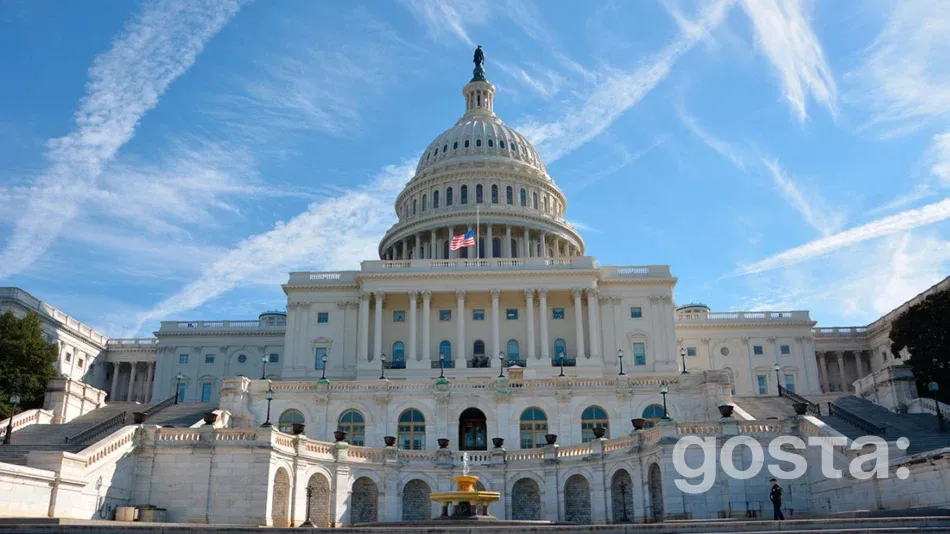
U.S. Capitol: The heart of the legislative branch, housing Congress’ Senate and House of Representatives. Its stately neoclassical building on a hill is a symbol of people’s power.
Washington Monument: A tall white marble obelisk honoring the first U.S. President. You can spot it from many parts of the city, and the view from the top is spectacular.
National Mall: A walking-lined stretch filled with memorials, museums, and government buildings. It’s also where inaugurations and big events take place.
Lincoln Memorial: A monument to President Abraham Lincoln. This is where Martin Luther King Jr. gave his historic 1963 “I Have a Dream” speech—a landmark for civil rights.
Smithsonian Institution: The world’s largest museum complex with over twenty museums, galleries, and the National Zoo. Many are free, such as the Air and Space Museum, American History Museum, and Museum of African American Culture.
These places capture the spirit of freedom, the story of America, and its unfolding culture. Washington leaves a mark on everyone who visits—even once.
What’s Life in Washington Like Today?
Modern Washington is a city of contrasts. On one side, it’s the political powerhouse—home to diplomats, officials, and journalists. On the other, it’s a vibrant urban center full of culture, green parks, great food, and modern infrastructure.
Despite its political stature, Washington has a unique everyday vibe. People live here, go to universities, visit art galleries, attend festivals and sports events. The city is growing while holding onto its historic grandeur.
Washington is the embodiment of the American spirit—its history, struggle, and ambitions for freedom and progress. It may not be the biggest city, but its importance can’t be overstated. To truly understand America, start in Washington.
Frequently Asked Questions
Why was Washington chosen over larger cities like New York or Philadelphia?
They wanted a brand-new capital on neutral ground—not tied to any one state. That’s how the independent, federal District of Columbia was created—a compromise between Northern and Southern states.
What makes Washington’s location and status unique?
It isn’t part of any state but is a separate federal district. Residents pay federal taxes but don’t have full representation in Congress.
Is it true you can’t build skyscrapers here? Why?
Yes. A law prohibits buildings taller than the Capitol to preserve visual harmony and keep federal monuments dominant.
Information
Explore the Diversity and Complexity of America
America is a vast and diverse continent with rich histories, cultures, and landscapes. On this page, you'll find a plethora of resources and insights into different aspects of America. From its tumultuous history and iconic landmarks to contemporary issues and cultural phenomena, our articles aim to provide Gosta Media readers…
Subscribe to the monthly news digest from Gosta Media
The main news and updates from the team about gadgets, sports, cars, health, and lifestyle.
Get Your Personalized Synastry Chart (PDF)
We’ll email your full compatibility reading as a beautifully designed PDF. Just enter your email below and proceed to secure checkout.
One-time payment – just $9.99
Warning:
Access only for persons over 21 years of age
This section contains information about gambling and is available only to persons who are 21 years of age or older in accordance with the applicable laws of Ukraine. Please confirm that you are 21 years of age or older.
This platform does not have a Ukrainian license. The link is provided for informational purposes only. Participation in games on such sites may violate Ukrainian law.