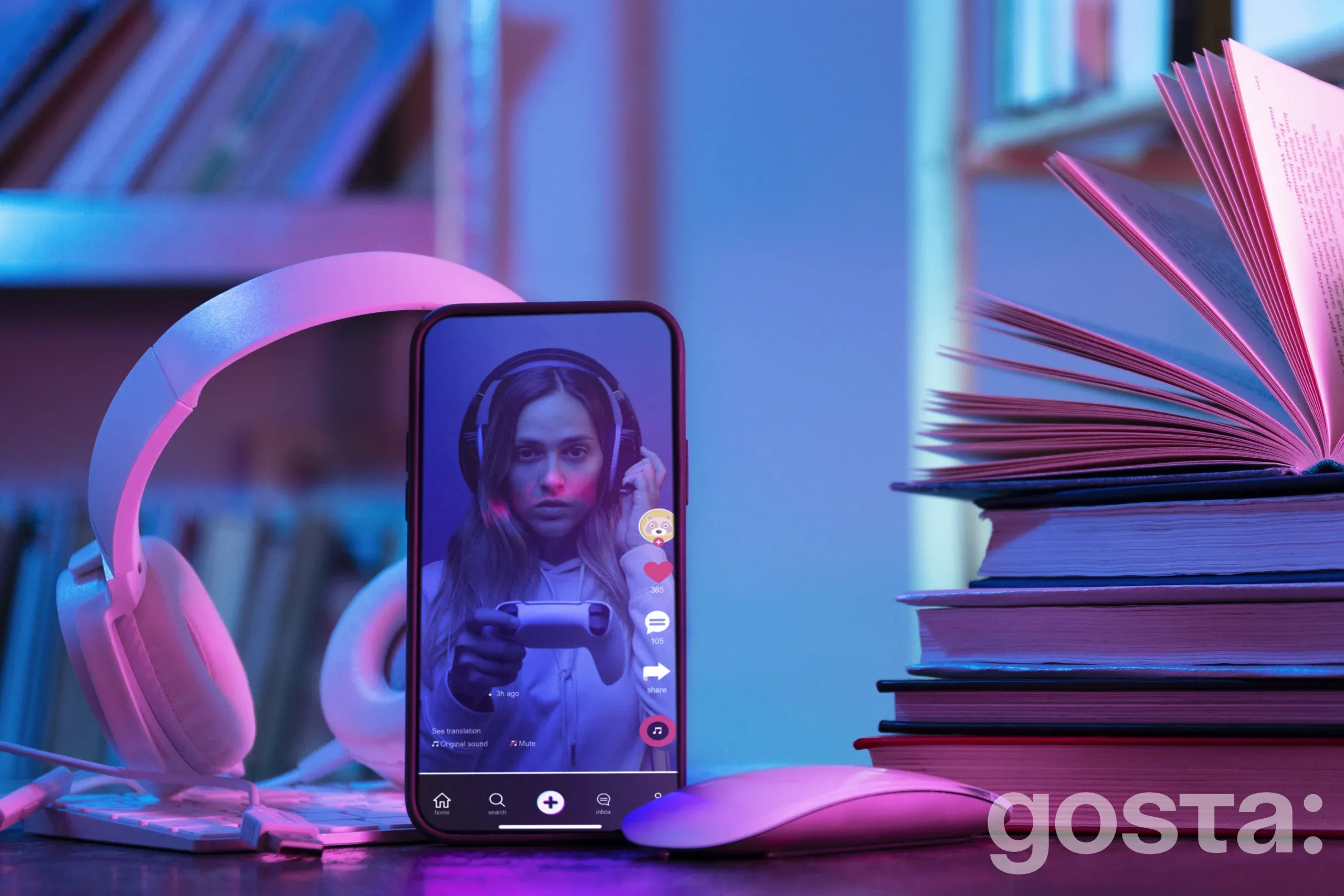
Teenagers are choosing TikTok over books more and more often, and this is not an accident. It is the result of changing habits and a digital world built around instant rewards. Short videos give quick emotions and a sense of being involved, while reading demands focus – something many young people now lack. To understand how to support a love of books, it helps to see why TikTok has become so attractive to them.
Why Teenagers Choose TikTok Instead of Books
When teenagers reach for their phones, it is not just “being too lazy to read”. TikTok meets several important needs at once – quick emotions, a feeling of community, a chance to express yourself, and at least some control over your own life. A book asks for patience, while TikTok gives a result in a few seconds – and that is exactly what makes it so appealing for young people.
The platform’s algorithms tune the feed to the teen’s interests, serving more and more “spot-on” videos – from anime and beauty tips to study advice. Teens feel understood and less alone with their worries. For many of them TikTok is not just entertainment but also a way to escape stress, difficult talks with adults, or school problems.
There is another important factor – time. Surveys show that teenagers spend several hours a day on social media on average, with TikTok among the most popular platforms and often used “almost constantly”. When so much free time goes into short videos, there is simply no emotional or mental energy left for a book.
It is important to see that teenagers do not “choose TikTok instead of books” to annoy adults. They choose what responds quickly to their emotions and fears. At this age, peer judgement, being accepted by the group, and the chance to show who you are become especially important. TikTok offers simple tools – from challenges to duets – that help them feel seen and significant, while a book does not give that kind of instant feedback.
Main advantages of TikTok:
TikTok meets the need for quick emotions and recognition.
The app works as “background noise” – teens can scroll between classes, on the bus, or before sleep.
A book needs silence, focus, and time – things a teenager often does not have or does not know how to create for themselves.
When you look at the situation this way, it becomes clear that simple bans will not work. You need a strategy that takes real teenage needs into account and helps not take TikTok away, but balance it with reading.
How Short Videos Change Teenagers’ Brains and Attention
Short TikTok videos that last 15–60 seconds seem like harmless fun, but their speed and brightness literally change how attention works. Researchers note that a stream of dynamic clips activates the brain’s “fast reward” system tied to dopamine – a neurotransmitter responsible for the expectation of pleasure. The brain quickly gets used to frequent “dopamine sparks” and starts looking for even stronger stimuli.
This means it becomes harder for teenagers to handle tasks that do not give instant feedback: long texts, textbooks, fiction, exam prep. When the brain is used to a picture changing every few seconds, a page of text feels boring and “too slow”. A false belief appears – “I just don’t like reading” – although in reality what has changed is the threshold at which attention switches on.
How Short Videos and Reading Affect the Teenage Brain
Parameter
Short TikTok videos
Reading books
Attention span
Trains the brain to switch quickly and lowers tolerance for “boring” tasks
Trains the ability to stay with one story for a longer time
Stress and tension
Gives short-term distraction but can raise anxiety and disturb sleep
Lowers stress levels and helps you relax after just a few minutes of reading
Memory and imagination
Mostly passive consumption, the brain “fills in” fewer details
Activates imagination, builds new neural connections, and improves long-term memory
Emotional regulation
Frequent emotional ups and downs, higher risk of emotional exhaustion
Helps process emotions through stories and develops empathy
The main challenge for adults is not to demonize TikTok but to help teenagers see that the brain needs balance. Short videos can stay in their lives, but they should coexist with activities that build concentration – and reading is one of the most powerful of them.
What Really Attracts Teenagers to TikTok
To change behavior, you first have to honestly admit that TikTok has strong sides that books cannot fully replace. The platform meets social, emotional, and even economic needs of teenagers – and that is why phrases like “there is nothing useful there” do not work.
Main reasons why teenagers choose TikTok:
Brevity and pace. Clips that last 15–60 seconds let you quickly get a new idea, joke, or life hack with very little effort.
Sense of community. Teens find “their people” on TikTok – anime fans, fans of a certain band, gamers, athletes, or the BookTok community. This eases the feeling of being alone.
Self-expression. Making a TikTok video is much easier than writing a story or drawing. A smartphone and basic effects are enough to feel like a creator.
Chance to earn money. For some teenagers, TikTok blogging looks like a real path to a career, financial freedom, and “fame”.
Besides entertainment, many teens watch educational or motivational content – explanations of school topics, language tips, exam prep advice, stories about overcoming difficulties. For them, TikTok is not just “dancing and silly stuff” but a huge library of short stories and bits of knowledge where the main skill is knowing how to filter.
A key task for adults is not to mock these sources but to teach critical thinking and fact-checking. If parents or teachers only dismiss TikTok, teenagers simply stop sharing what they watch there and are left alone with risky content.
Some TikTok formats can actually become allies of books. The popularity of BookTok – a community where users share their reactions to books – has already affected print sales around the world. For teenagers this is a clear signal: books can also be “viral” and trendy if people talk about them in their language.
The sooner adults stop seeing TikTok as an enemy and start seeing it as a space for dialogue, the easier it will be to offer books not as a replacement, but as a continuation of stories that already interest teenagers.
TikTok Without Bans: How To Talk With Teens About Safety and Balance
Many adults’ first reaction is “delete TikTok and the problem is solved”. But harsh bans often backfire: teenagers create secret accounts, end up in more toxic corners of the internet, and definitely do not talk about what worries them. What actually works is a mix of clear rules, explanations, and genuine interest in the teen’s digital life.
Core topics to cover when talking about TikTok with teenagers:
Communication safety. Explain who might hide behind a “peer” online, which offers they should say “no” to immediately, and why it is important to show parents any suspicious messages.
Personal boundaries. Talk about which photos and videos should never be posted on TikTok and how the “billboard rule” works: imagine this content hanging on a billboard outside the school.
Emotional wellbeing. Teach your teen to notice which videos leave them anxious, ashamed, or full of self-hate – and to deliberately unfollow such accounts.
When a teenager knows they can come with any strange situation from TikTok and will not get only yelling and bans in response, the chances of risky contact drop. At this age, trust is the main protection – not a perfectly configured list of filters on the phone.
Three practical digital safety rules worth repeating regularly:
A teenager can always report and block users who scare them, pressure them, or blackmail them.
No photos, videos, or personal details that could harm their reputation or safety – even “for close friends only”.
Any situation that causes fear, shame, or a strong inner “no” is a reason to talk to an adult, not to “put up with it so I don’t look weird”.
It is not enough to make things safer – you also need to agree on a routine. Together with the teenager, decide when TikTok is okay and when it is off-limits – for example, not before sleep and not during classes or homework.
How To Bring Teenagers Back to Books: Steps for Parents and Teachers
To get teenagers to read more, it is not enough to just “buy more books” or force them to read school reading lists. You need to create a situation where a book becomes a source of emotion, self-expression, and community – just like TikTok.
It helps to start with small, realistic steps:
Talk not about “how many pages you read” but about “what touched you in the story”.
Let the teenager choose some of the books themselves – by genre, cover, or blogger recommendations.
Show by example that reading is not just “good for you” but also enjoyable and something adults do in their free time too.
It is much easier for teens to accept a book when it “speaks their language” and does not sound like a lecture from another century.
Daily Habits That Help Teenagers Get Back Into Reading
Habit
Time per day
What it gives the teenager
“Quiet 10 minutes with a book” at night
10–15 minutes
Creates a bedtime ritual, lowers stress, and reduces screen time
Family reading once a week
30–40 minutes
Builds emotional connection and gives you something to talk about
Talking about a book over tea or a walk
15–20 minutes
Turns reading into part of real, live conversation
Choosing books together in a bookstore or library
Once every 2–3 weeks
Shows that the teen’s opinion matters and that books are not “just for school”
For teachers, the key is not only “assign a reading list” but also create a living context: reading short passages in class, discussing characters as if they were modern people, and comparing plots to TikTok trends or movies.
BookTok and TikTok-Friendly Formats: How To Use the Platform for Books
BookTok – the book lover community on TikTok – shows that the same platform many adults see as a threat to reading can actually support it. Teenagers share excerpts, reactions, and emotions after finishing a book and create around it the same “viral” effect you usually see with songs or memes.
Formats that work particularly well with teenagers:
short emotional reactions (“this book made me…”) instead of long reviews;
edits – video montages that show the mood of the story;
cosplay of characters or “a day in the life” of a hero;
time-lapses like “me reading for an hour” with honest reactions;
funny sketches about how a book “ruined my life”, made them cry, or changed their opinion.
Parents and teachers do not have to become TikTok bloggers themselves. It is enough to support the teenager: help set up a book shelf as a video backdrop, buy a print copy of a BookTok title everyone is talking about, or even suggest filming a short video together. When TikTok becomes an extension of book worlds instead of their rival, teens have a stronger reason to finish a book – so they can “post another video about it”.
Another idea is school or library BookTok challenges:
read a book and film a video about your favorite scene;
make a “duet” with a classic character – how they would react to today’s world;
create a series of short clips “why this book is better than the show or movie adaptation”.
These formats help teenagers keep TikTok in their lives but turn it into a space for creativity and reflection on what they read. Instead of “books versus screens”, you get synergy – stories live both on the page and in short videos.
When TikTok Helps: Healthy Formats for Teenagers
Although heavy TikTok use is linked to problems with focus and mood, it is important not to ignore the positive sides of the platform. These become especially visible when adults help teens choose content consciously and create their own.
Formats that can be genuinely helpful:
Educational videos. Short explanations of tricky topics in language, science, history, or basic money skills. They do not replace textbooks, but they can take away some of the fear around a subject.
Motivational stories. Real stories of people who changed habits, got through hard times, or switched careers give teenagers behavior models and hope.
Creative content. Music, drawing, animation, writing – anything that encourages making something, not just consuming.
BookTok videos. Book recommendations, “what to read if you love…”, or funny reactions to plots.
For many introverted or anxious teenagers, TikTok becomes a space where they dare to show themselves to the world for the first time – through their voice, dance, drawing, or book reactions. Adults’ job is not to crush this space, but to make it safer and deeper and slowly guide teens toward content that develops them rather than drains them.
It is worth agreeing with the teenager that if TikTok stays in their life, there should be room there for educational, book-related, and creative content too. This “content diet” works just like food – when there is not only “fast food made of memes” but also healthy “vegetables” like knowledge and books, the brain reacts very differently.
A Digital Childhood Without Panic: What Really Depends on Adults
TikTok, books, teenagers, gadgets – this is the reality we live in, and there is no way to escape it. Bans and panic will not bring kids back to reading if there is no living example around them, no emotional support, and no honest talk about what is going on in their lives – both online and offline.
Books have not “lost” to TikTok – they just need a different approach. You need small daily habits, shared rituals, BookTok as a bridge between screens and printed pages, and adults who are willing to learn new things together with teenagers. In this world there is room for both short videos and long stories – and the role of parents and teachers is to help teenagers see the value of both without losing their health, depth of thinking, or the joy of reading.
Answers to Common Questions From Parents About Teenagers, TikTok, and Reading
How Much Time on TikTok Is “Too Much” for a Teenager?
There is no universal number, but if a teen spends more than 2 hours a day on TikTok, sacrifices sleep or schoolwork, and cannot stop scrolling, it is a warning sign. A useful guideline is total screen time: when social media takes 4–5 hours every day, school performance, mood, and physical activity usually suffer.
Should You Completely Ban TikTok if a Teenager Does Not Read at All?
A total ban rarely works. A teenager will find a way around it but will stop trusting adults. It is more effective to agree on a routine (for example, TikTok only after homework and a short reading time) and on age limits for content. A full ban makes sense only when there is a real threat to safety or mental health – and even then it should come with explanations, not as punishment “because I said so”.
What If My Child Says They “Hate Books”?
Very often “I hate books” hides a history of boring texts, pressure, and shame for reading slowly. Try changing the approach: suggest graphic novels, YA fiction, fantasy, or books based on favorite shows. You can also start with audiobooks – listen together on the way somewhere, and then offer the print version.
How Can I Use TikTok to Get My Teenager to Read More?
Agree that some of the TikTok feed will be book-related: BookTok accounts, recommendations from trusted bloggers, short reactions to stories. Suggest that your teenager film their own videos about books that moved them – this ties reading to self-expression and tech skills instead of making it feel like homework.
How Do I Know When My Teenager Needs Professional Help, Not Just “Less TikTok”?
You should see a psychologist or doctor if you notice sharp mood changes, long periods of apathy, sleep problems, a sudden drop in grades, or a refusal to see friends and do things they used to enjoy. If TikTok becomes their only source of joy and they panic without their phone, time limits alone are not enough – they need broader support where digital habits are discussed along with emotional struggles.
Information
Explore Expert Insights on the Fascinating World of Children
Welcome to Gosta Media, an informational hub that caters to your curiosity about the enchanting world of children. If it's accurate and insightful data you're after, rest assured that our content not only nurtures your interest, but also guides you through the complex yet enjoyable journey of understanding children better.…
Subscribe to the monthly news digest from Gosta Media
The main news and updates from the team about gadgets, sports, cars, health, and lifestyle.
Get Your Personalized Synastry Chart (PDF)
We’ll email your full compatibility reading as a beautifully designed PDF. Just enter your email below and proceed to secure checkout.
One-time payment – just $9.99
Warning:
Access only for persons over 21 years of age
This section contains information about gambling and is available only to persons who are 21 years of age or older in accordance with the applicable laws of Ukraine. Please confirm that you are 21 years of age or older.
This platform does not have a Ukrainian license. The link is provided for informational purposes only. Participation in games on such sites may violate Ukrainian law.