
Zelda: Ocarina of Time Remake Is Out on Switch 2 — What's New and How It Compares to the Original
One of Nintendo's most beloved games has returned after 28 years. The Ocarina of Time remake brings modern graphics, revamped controls, orchestral music and fully voiced cutscenes to Nintendo Switch 2. But does it offer enough for returning players?

Contents14
- Ocarina of Time Switch 2 remake: release date, price and platforms
- What changed in the Ocarina of Time remake?
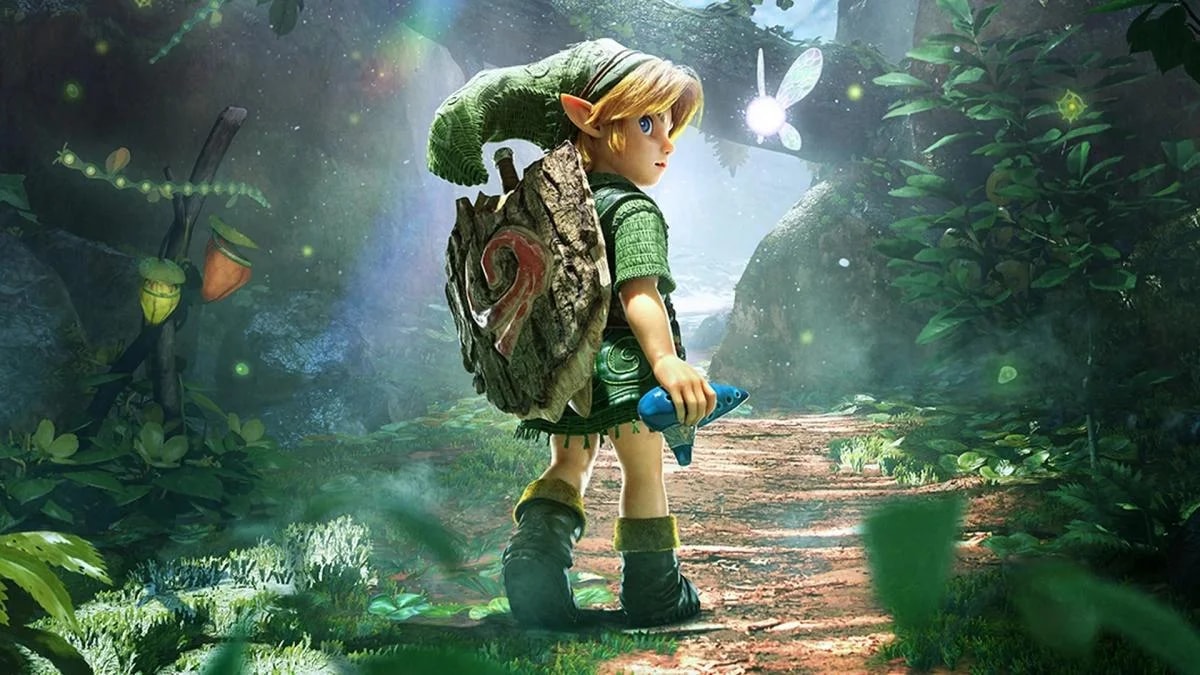
- Hyrule looks completely different in the 2026 remake
- How well does Ocarina of Time run on Switch 2?
- The new camera and controls make a major difference
- What happened to Navi in the remake?
- Ocarina of Time's music gets an orchestral upgrade
- What's new in the story and cutscenes?
- The Water Temple and other dungeons: are they better?
- New features in Ocarina of Time Switch 2
- Is Master Quest included in the remake?
- Should you buy Ocarina of Time remake in 2026?
- Ocarina of Time Switch 2 FAQ
- Final verdict: a classic Zelda adventure rebuilt for a new generation
The Legend of Zelda: Ocarina of Time remake launched exclusively for Nintendo Switch 2 on November 5, 2026, bringing one of gaming's most influential adventures back with dramatically upgraded graphics, modern controls, orchestral music, and newly voiced cutscenes. The release forms part of Nintendo's celebration of The Legend of Zelda franchise's 40th anniversary.
Originally released for Nintendo 64 in 1998, Ocarina of Time helped establish many conventions of modern 3D adventure games. Its combination of exploration, puzzle-solving, combat, and a story unfolding across two time periods influenced generations of developers.
The new version is not simply the original game running at a higher resolution. Nintendo has rebuilt its presentation and updated major interaction systems while preserving the core structure of Link's journey through Hyrule.
For new players, the remake offers a more accessible introduction to a classic. For longtime fans, the question is whether the improvements justify returning to an adventure they may already know by heart.
Ocarina of Time Switch 2 remake: release date, price and platforms
The Ocarina of Time remake became available on November 5, 2026, exclusively for Nintendo Switch 2. The US digital version is listed at $59.99, while physical retail pricing is approximately $69.99.
Detail | Information |
|---|---|
Game | The Legend of Zelda: Ocarina of Time |
Release date | November 5, 2026 |
Platform | Nintendo Switch 2 |
Publisher | Nintendo |
Digital US price | $59.99 |
Physical US price | Approximately $69.99 |
Genre | Action-adventure |
Original release | 1998, Nintendo 64 |
Players | Single-player |
Prices may vary by retailer, region, and promotional offers. Buyers should check Nintendo's official storefront for current availability and final checkout pricing.
Nintendo has not announced this remake for the original Switch, PlayStation, Xbox, or PC.
The game is also separate from the original Nintendo 64 release and its previous Nintendo 3DS remake. Those versions remain important parts of the franchise's history, but the 2026 version is specifically designed around Switch 2 hardware.
What changed in the Ocarina of Time remake?
The 2026 Ocarina of Time remake replaces much of the original audiovisual presentation while updating controls and adding convenience features for modern players. Nintendo has confirmed redesigned visuals, voiced cutscenes, expanded dialogue, orchestral music, and improvements to camera movement and character control.
The remake retains the essential story of Link traveling through Hyrule, collecting powerful items, solving dungeon puzzles, and confronting Ganondorf.
However, interacting with that world now feels substantially different.
Original vs. remake: key differences
Feature | Nintendo 64 original (1998) | Switch 2 remake (2026) |
|---|---|---|
Visual presentation | Nintendo 64-era 3D graphics | Fully overhauled modern visuals |
Camera | Context-dependent controls | Modernized camera movement |
Music | Original synthesized soundtrack | New orchestral arrangements |
Cutscenes | Primarily text-based | Expanded scenes with voice acting |
Dialogue | Original script and presentation | Expanded and revised dialogue |
Item selection | Classic inventory interface | Streamlined modern interface |
Navi | Frequent interruptions | Reduced interruptions |
Combat | Original Z-targeting system | Refined controls and feedback |
Performance | Hardware limitations of the era | Modern Switch 2 presentation |
The most important distinction is that the new version does not abandon the identity of the original game.
Its structure remains recognizable, even though nearly every major element of the presentation has been reworked.
Hyrule looks completely different in the 2026 remake
The Ocarina of Time remake transforms Hyrule with detailed environments, enhanced lighting, new character models, and substantially more elaborate visual effects. Locations that appeared relatively simple on Nintendo 64 now contain additional environmental detail and a stronger sense of scale.
Hyrule Field, Kokiri Forest, and the game's dungeons benefit from the visual overhaul.
Modern rendering techniques make foliage, architecture, water, and other surfaces appear more elaborate than in the original release.
Nintendo has also adopted a stylized visual approach rather than attempting to make every character photorealistic.
This choice preserves some of the fairy-tale atmosphere associated with the original game while taking advantage of more powerful hardware.
The results have attracted positive attention from reviewers, although not every visual decision has been universally praised.
Nintendo Life noted that distant environmental details can appear unusually smooth in certain situations, particularly when the camera moves.
The criticism suggests that the visual overhaul involves tradeoffs rather than representing an unqualified improvement in every technical area.
How well does Ocarina of Time run on Switch 2?
The Ocarina of Time remake targets smooth 60fps gameplay on Switch 2, with reviewers highlighting fluid performance alongside some compromises in image quality. The visual presentation can vary between docked and handheld play.
TechRadar praised the game's modernized presentation and overall execution, while Nintendo Life reported that handheld mode can look noticeably softer than docked play.
This is a common consideration for games designed to deliver high-quality graphics while maintaining consistent performance on portable hardware.
A higher frame rate can make combat, camera movement, and general exploration feel more responsive.
However, rendering the game at a lower resolution in certain situations can produce softer images or visible shimmering.
Players who prioritize maximum image sharpness may prefer playing on a television.
Those who value portability may find handheld mode's visual compromises acceptable, particularly if the frame rate remains stable.
The overall experience therefore depends partly on how the player uses the console.
The new camera and controls make a major difference
One of the remake's most meaningful improvements is the redesigned control system, which makes navigation, combat, and item use more convenient than in the Nintendo 64 version. Modern games have established expectations for camera movement and player responsiveness that were not standard in 1998.
The original Ocarina of Time introduced innovative targeting mechanics, but its control scheme was built around the Nintendo 64 controller.
The remake preserves the basic combat structure while making character movement and camera control more intuitive.
Players can better manage what they see while exploring environments, making it easier to navigate complex spaces.
Item access has also been redesigned.
Rather than relying entirely on older menu interactions, players can switch among available equipment through a streamlined interface.
These changes are especially useful in dungeons, where players frequently alternate between weapons, tools, and other items.
Does the remake make Ocarina of Time easier?
The updated controls can reduce frustration, but they do not fundamentally eliminate the puzzles and combat encounters that define the adventure.
Experienced players may find certain areas easier because they already know the solutions.
New players benefit from modern controls and clearer presentation, but they still need to understand dungeon mechanics, environmental clues, and combat strategies.
Nintendo Life's review noted that longtime fans may find the overall challenge limited because much of the original structure remains intact.
That is a consequence of the remake's relatively faithful approach.
What happened to Navi in the remake?
Navi remains part of Ocarina of Time, but the remake reduces some of the frequent interruptions associated with the original companion system. This addresses one of the best-known criticisms of the Nintendo 64 release.
In the original game, Navi frequently attracted the player's attention with hints and notifications.
While helpful to new players, the repeated interruptions could become frustrating, especially during exploration.
The 2026 remake retains the character's role in guiding Link without demanding attention quite as often.
This change helps the player remain immersed in the environment while still receiving assistance.
Nintendo has also introduced additional informational features that can provide context and guidance.
The result is a more flexible experience that respects the original design while reducing some of its dated conventions.
Ocarina of Time's music gets an orchestral upgrade
The remake replaces the original game's distinctive synthesized music with orchestral arrangements designed to give Hyrule a richer sound. The melodies remain recognizable, but their presentation benefits from modern audio production.
Music is particularly important in Ocarina of Time because songs are integrated into the story and gameplay.
Link uses the ocarina to perform melodies that influence events and unlock certain interactions.
The soundtrack therefore does more than create atmosphere.
It functions as part of the game's identity and mechanics.
Reviewers have praised the orchestral reinterpretations for preserving familiar themes while giving them greater depth.
The remake also introduces new audio details, including voiced cutscenes and additional character performances.
These additions help make the story more accessible to players accustomed to contemporary presentation standards.
What's new in the story and cutscenes?
The 2026 remake keeps the central Ocarina of Time storyline but expands dialogue and introduces fully voiced cutscenes. The core plot still follows Link's effort to protect Hyrule from Ganondorf through a journey spanning childhood and adulthood.
Players encounter familiar characters, visit recognizable locations, and progress through major story events from the original adventure.
However, the updated presentation gives many scenes additional emotional and dramatic weight.
Expanded dialogue can provide more context for character relationships and motivations.
Voice acting also changes how important moments are experienced, particularly for players discovering the story for the first time.
The remake does not need an entirely new plot to offer a different experience.
Changes in pacing, sound, visual direction, and character presentation can alter how familiar events feel.
The Water Temple and other dungeons: are they better?
The remake preserves Ocarina of Time's major dungeon structure while improving navigation, controls, and the presentation of puzzles. These changes are especially noticeable in areas that were historically associated with awkward inventory management.
The Water Temple is a prominent example.
In earlier versions, repeatedly changing equipment and navigating the environment could feel cumbersome.
The remake's updated controls and interface reduce some of that friction.
That does not mean every puzzle has been redesigned.
Instead, much of the improvement comes from making the game's existing mechanics easier to use.
Other dungeons benefit from more detailed environments, upgraded sound design, and clearer visual presentation.
For longtime players, this can make familiar areas feel more immersive without removing the challenge of the original puzzle structure.
New features in Ocarina of Time Switch 2
The Switch 2 remake introduces additional features beyond its visual and control upgrades, including the Hall of Fallen Foes and collectible fairy thoughts. Nintendo specifically highlighted these additions in its release announcement.
The Hall of Fallen Foes provides opportunities to revisit powerful enemies.
Fairy thoughts are scattered across Hyrule and offer additional information for players interested in exploring the world more thoroughly.
These features give returning players reasons to interact with familiar locations in new ways.
They also offer optional activities that do not require a complete rewrite of the main story.
Importantly, these additions are different from an entirely new campaign.
Players should approach the remake as an expanded and modernized version of the classic adventure rather than as a sequel.
Is Master Quest included in the remake?
The 2026 Ocarina of Time remake does not include a Master Quest-style hard mode at launch, according to Nintendo Life's review. This is a notable omission for players who have already completed the original game multiple times.
Master Quest is associated with alternative dungeon layouts and additional challenges in earlier versions.
Its absence means that experienced players may find familiar puzzles relatively easy.
That does not necessarily reduce the remake's value for everyone.
New players still have a substantial adventure to discover, while returning players can appreciate the visual and mechanical improvements.
However, anyone purchasing the remake specifically for more difficult dungeon layouts should understand that this is not part of the announced launch package.
Should you buy Ocarina of Time remake in 2026?
The Ocarina of Time remake is most appealing to Switch 2 owners who want a modern version of the classic Zelda adventure, especially those who have never completed the original. Its updated graphics, controls, music, and presentation address many of the practical limitations of playing a 1998 game today.
The decision is less straightforward for longtime fans who know every dungeon and puzzle.
Player type | Recommendation |
|---|---|
Never played Ocarina of Time | Strong choice |
Enjoys traditional Zelda dungeons | Strong choice |
Wants modern graphics and controls | Strong choice |
Has only played Breath of the Wild | Worth considering for classic Zelda design |
Recently completed the original | Depends on interest in technical upgrades |
Wants an entirely new Zelda story | Not the best choice |
Wants a harder Master Quest mode | Consider the missing feature |
For many players, the remake's greatest strength is making an influential adventure easier to enjoy on modern hardware.
Its greatest limitation is that the underlying adventure remains familiar.
Ocarina of Time Switch 2 FAQ
When did the Ocarina of Time remake come out?
The Legend of Zelda: Ocarina of Time remake launched on November 5, 2026, exclusively for Nintendo Switch 2. It is part of the franchise's 40th anniversary celebrations.
How much does the Ocarina of Time remake cost?
The US digital version is listed at $59.99, while physical retail pricing is approximately $69.99. Prices may vary by retailer, promotion, and region.
Is Ocarina of Time remake only on Switch 2?
Yes. Nintendo announced the 2026 remake exclusively for Nintendo Switch 2. It has not been announced for the original Switch, PlayStation, Xbox, or PC.
Is it a full remake or a remaster?
It is a remake with significantly overhauled graphics, controls, music, and presentation. The central story and major game structure remain based on the 1998 Nintendo 64 original.
Does the remake have voice acting?
Yes. Nintendo confirms that the new version includes fully voiced cutscenes and expanded dialogue, providing a more modern presentation of the story.
Does Ocarina of Time run at 60fps?
Reviewers report that the remake targets 60fps on Switch 2. Image quality may vary between handheld and docked modes, with some visual compromises noted during portable play.
Is Ocarina of Time remake worth buying?
For new players and fans of traditional Zelda adventures, the remake offers a more accessible and visually modern experience. Longtime fans should consider whether the technical improvements justify revisiting the familiar story.
Final verdict: a classic Zelda adventure rebuilt for a new generation
The 2026 Ocarina of Time remake succeeds in making a landmark Nintendo 64 game feel far more accessible to modern audiences without abandoning its original identity. Improved visuals, orchestral music, updated controls, and expanded storytelling address many of the limitations associated with the 1998 release.
The absence of a substantial new campaign or Master Quest-style difficulty mode may disappoint players looking for an entirely different adventure.
However, the original game's exploration, dungeon design, and sense of discovery remain central to the experience.
For Nintendo Switch 2 owners who want to understand why Ocarina of Time became so influential, the remake provides a modern way to experience one of gaming's most important stories.
Best of the week — in your inbox
No spam. Only top Gosta stories. Unsubscribe in one click.
Comments