Enterovirus infection is often the hidden cause behind "strange" cases of fever, rash or sudden stomach upset. At first, it may look like a regular cold or food poisoning. But for some patients, enterovirus infection leads to meningitis, myocarditis or severe illness in infants. The tricky part is that the same group of viruses can cause very different pictures – from a mild fever to life-threatening conditions.
Both children and adults can get sick. The most vulnerable are children aged three to six, infants, pregnant women and people with weak immune systems. Most cases occur in the warmer months, when people have more contact with open water and fresh produce.
What Enterovirus Infection Is and Why It Looks So Different
The term "enterovirus infection" hides a whole group of viruses rather than a single pathogen. These are RNA viruses from the picornavirus family. They include Coxsackie viruses, ECHO viruses, poliovirus, respiratory enteroviruses and others. Each type has its own "favorite" organs. That is why one child may have a rash and sore throat, while another has diarrhea and signs of meningitis, and in both cases the cause is enterovirus infection.
Some of these viruses primarily affect the gastrointestinal tract. In such cases the illness looks like an intestinal infection: stomach pain, vomiting, diarrhea and fever. Other types are more "interested" in the airways. They cause a cold-like picture: runny nose, cough, sore throat and general weakness. There are also viruses that can reach the nervous system, brain membranes and heart and cause serous meningitis, encephalitis or myocarditis.

The pathogens of enterovirus infection are quite resistant to the environment. They can survive for a long time in open water, sewage and moist soil. These viruses may remain on vegetables, fruit, berries, children's toys and dishes. In a fridge, they can live for weeks, in frozen foods – even for months. Regular boiling and proper heat treatment of food destroy the virus.
After an enterovirus infection, the body builds immunity, but only to that specific type. A person who has been sick once can get infected again – with another serotype. Because of this, enterovirus infection can "follow" a person throughout life, but usually does not cause serious consequences if symptoms are noticed in time.
How Enterovirus Infection Spreads
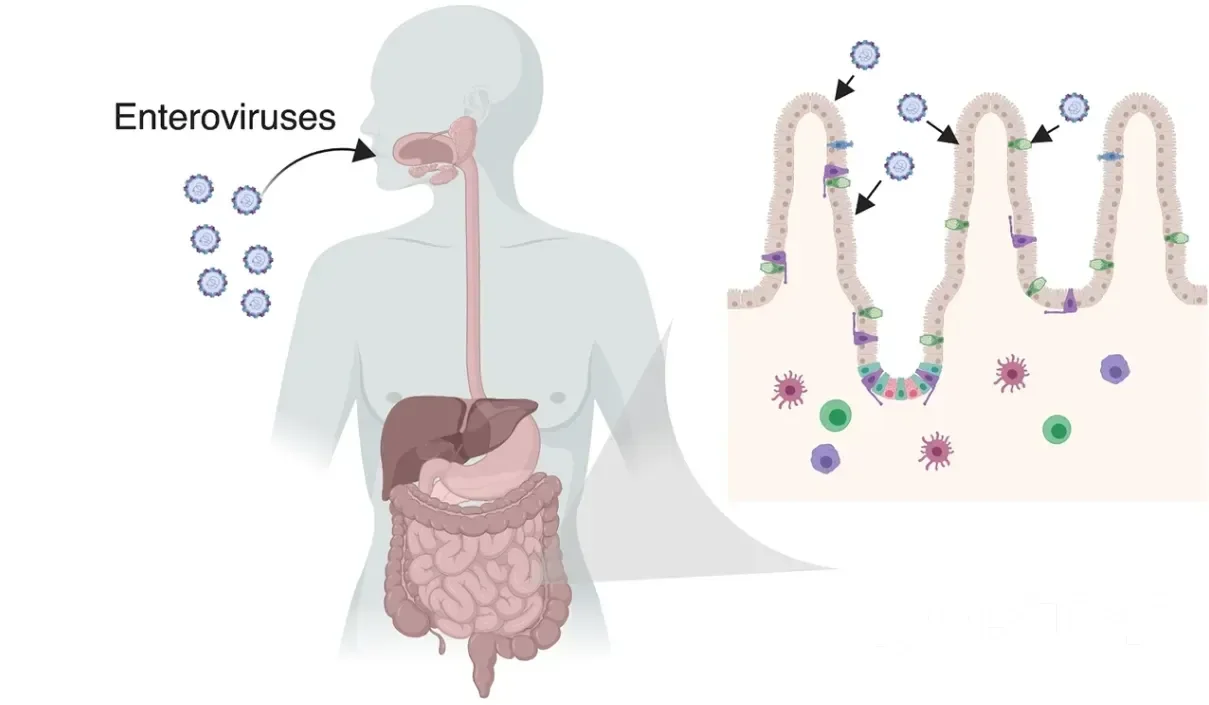
The main route of spread is fecal–oral. The virus leaves the body with stool. From there it gets into water, onto hands, surfaces and food. Then it enters another person's body through the mouth. The second important route is airborne droplets. When someone coughs, sneezes or talks, tiny drops of mucus from the nasopharynx spread around and carry the virus.
In real life, enterovirus infection most often spreads:
- through unwashed hands
- through shared dishes, towels, toys, door handles and handrails
- through water from open or contaminated bodies of water
- through poorly washed vegetables, fruit and greens
- through food that has been stored in poor conditions
- through close contact with a sick person or carrier
An extra risk factor is swimming in still ponds, rivers without official beaches, fountains or children's pools with questionable disinfection. In such places, enterovirus infection often causes group cases or outbreaks. Transmission from mother to fetus during pregnancy is also possible.
Another important point is asymptomatic carriage. Estimates suggest that up to 80% of infected people may have very mild symptoms or not notice any illness at all. At the same time the virus is shed from the nasopharynx and intestines. In other words, the source of enterovirus infection can be a person without obvious fever or rash, which is why steady hygiene matters even when no one around "seems sick".
Clinical Forms and Symptoms of Enterovirus Infection
The picture of illness varies a lot. It depends on the virus, age and overall health. Some people go through an enterovirus infection like a mild cold. Others experience it as a severe illness that requires hospital care.
In adults, the most common symptoms are:
- fever
- weakness and a "washed-out" feeling
- headache
- muscle and joint pain
- nausea, diarrhea, discomfort or pain in the abdomen
- runny nose, nasal congestion, sore throat and cough
Sometimes a rash appears on the palms, soles or trunk. It may be blotchy or made up of small blisters. In most cases, an adult recovers in one to two weeks. The highest risks are in people with chronic heart, lung or immune system diseases.
In children enterovirus infection often runs a more severe course. The temperature quickly rises to 39–40 °C. The child becomes sluggish, refuses food and sleeps poorly. On top of this you may see:
- sore throat or redness in the throat
- cough, runny nose and sneezing
- enlarged, tender lymph nodes
- red eyes and tearing
- nausea, vomiting and diarrhea
- sharp or pulling pain in the abdomen
- rash on the palms, soles, inside the mouth and on the trunk
- irritability, crying, sleep disturbances
The combination of high fever, sore throat or stomach pain, diarrhea and rash is a serious warning sign. In such a situation, enterovirus infection is very likely and the child needs to be examined by a doctor.
The most severe forms are serous meningitis, encephalomyocarditis and generalized infections. They are accompanied by severe headache, vomiting, sensitivity to light and sounds, seizures, intense chest pain and shortness of breath. These conditions require immediate hospital treatment.
How to Tell Enterovirus Infection from a Cold or Food Poisoning
At first glance enterovirus infection looks very similar to both acute respiratory viral infections and intestinal infections. This makes it hard to assess the situation on your own. Still, there are a few signs that help at least suspect an enterovirus.
The incubation period for enterovirus infection is usually 2–3 days. This means there are a couple of days between contact and symptoms. With food poisoning, there are often only a few hours between the doubtful food and the first complaints. Respiratory infections can also have a 1–3 day period, but they less often cause diarrhea and rash.
Intestinal symptoms in enterovirus infection usually come "in a bundle" with other signs – sore throat, runny nose and rash. Food poisoning is more often limited to gastrointestinal symptoms and weakness.
Differences Between Enterovirus Infection, ARVI and Food Poisoning
This scheme is not a "home test". It only helps to understand that the situation may be more complex than a simple cold or obvious food poisoning. With high fever, repeated vomiting, severe headache or abdominal pain, rash or signs of dehydration, a medical examination is needed rather than searching for tips on social media.
Diagnosing Enterovirus Infection: What Doctors Look At and Which Tests Are Done
Diagnosis always starts with an examination. The doctor assesses the general condition, checks the throat, skin, rash and eyes and palpates the abdomen and lymph nodes. It is important to know whether there was contact with sick people, visits to kindergarten or school, mass events or swimming in open water. To confirm enterovirus infection and rule out other causes, laboratory tests are ordered. The standard set includes:
- complete blood count
- urine test
- stool test
- throat and nose swabs
- PCR for enteroviruses
- if needed – immunological tests for antigens or antibodies
In difficult cases other methods are added. If meningitis is suspected, cerebrospinal fluid is examined. To rule out myocarditis, an ECG is done and sometimes a heart ultrasound. With severe abdominal pain and prolonged intestinal symptoms, an ultrasound of the abdominal organs is performed.
A full workup makes it possible to confirm enterovirus infection, assess severity and identify which organs are affected. The earlier the picture is clear, the higher the chance of stopping complications in time.
Treating Enterovirus Infection in Children and Adults
There are no specific drugs that "switch off" all enteroviruses. Treatment focuses on symptoms and overall condition. The main goals are to reduce fever, prevent dehydration, ease pain and support the body.
In children therapy most often includes:
- fever reducers for high temperature
- anti-inflammatory drugs when indicated
- oral rehydration solutions for vomiting and diarrhea
- sorbents as an additional component
- probiotics and prebiotics to support the gut
- throat and nose remedies – rinses, sprays and saline solutions
If there is a rash, the doctor may prescribe antiseptic solutions or ointments to treat the affected skin. If there is itching, local or systemic antihistamines may be used. Antibiotics are prescribed only when a bacterial infection has joined the viral one.

In adults the approach is similar. Fever reducers, painkillers and sometimes anti-diarrheal drugs are used. An important point is drinking enough fluids, choosing light food and avoiding alcohol and heavy meals. In severe cases enterovirus infection is treated in hospital under medical supervision.
You should seek emergency care immediately if seizures, very severe headache, confusion, sharp chest pain, trouble breathing, signs of dehydration or repeated vomiting without relief appear against the background of enterovirus infection.
Preventing Enterovirus Infection: Hygiene, Water and Group Settings
Since there is no vaccine against most enteroviruses, prevention is mostly about everyday habits. They may seem simple, but they are what break the chain of transmission.
Key rules:
- wash hands with soap regularly – after being outside, after using the toilet and before eating
- drink only safe water – bottled or boiled
- wash vegetables, fruit and greens thoroughly
- cook meat, fish and eggs well
- avoid swimming in still or dubious bodies of water and fountains
- do not swallow water while swimming
- clean the home with wet cleaning regularly, especially if someone is sick
In children's groups it is important not to admit children with fever, diarrhea, vomiting or rash. Toys, tables and handrails should be disinfected regularly. It is worth limiting contact between very young children and people who show signs of infection.
General recommendations also include enough sleep, a balanced diet and moderate physical activity. Breastfeeding during the first year of life significantly reduces the risk of severe intestinal infections in infants. Thanks to these simple steps, enterovirus infection has far fewer chances to enter a family.
Enterovirus Infection in High-Risk Groups: Pregnant Women, Infants and People With Weakened Immunity
For healthy adults enterovirus infection usually passes without consequences. But there are groups in which even a "mild" virus can cause severe illness. They need to be especially careful.
In pregnant women enterovirus infection, especially in the second half of pregnancy, can complicate its course. There is a risk of fetal damage, intrauterine infection and neonatal complications. That is why any unexplained fever, intense pain, rash or prolonged intestinal symptoms are a reason for a pregnant woman to see a doctor.

Infants and very young children react to enteroviruses faster and more sharply. Their symptoms can worsen within just a few hours. The most dangerous forms are serous meningitis, encephalomyocarditis and generalized infections. Any sudden deterioration in a child's condition during a fever – especially with vomiting, rash or seizures – is a reason to seek urgent medical help.
People with immune deficiencies, cancer patients and those taking immunosuppressive drugs are also at higher risk. In them enterovirus infection can be prolonged and cause more complications. For all these groups, prevention needs to be as strict as possible, and any signs of infection should prompt quick medical advice.
What to Remember About Enterovirus Infection
Enterovirus infection is a common reality rather than a rare diagnosis. It can look like a mild cold or like a severe systemic disease. Much depends on age, health and how carefully the first symptoms are noticed. The most effective protection is a mix of simple hygiene habits and timely medical care.
In most people enterovirus infection passes without serious consequences. But ignoring high fever, strong pain, vomiting, diarrhea or rash can be risky. Knowing how the virus spreads and how it shows up makes it possible to react calmly and on time – without panic, but also without dangerous delays.
Frequently Asked Questions About Enterovirus Infection
Does Enterovirus Infection Always Mean a Severe Condition?
No, most cases of enterovirus infection are mild or moderate. It often looks like a regular cold or intestinal infection. Severe forms are more common in infants, pregnant women, and people with weakened immune systems.
Can an Enterovirus Infection Occur Without Vomiting and Diarrhea?
Yes, intestinal symptoms are not always present. There is a respiratory form of enterovirus infection with a sore throat, cough, and runny nose without diarrhea. There are also forms with a rash or neurological symptoms without digestive problems.
How Long Does the Rash Last in an Enterovirus Infection?
On average, the rash in enterovirus infection lasts 7-10 days. The duration depends on the virus type and the state of the immune system. Usually the rash goes away on its own and does not leave scars.
Is There a Vaccine Against Enterovirus Infection?
There is no specific vaccine against most enteroviruses. The polio vaccine protects only against one enterovirus. So hygiene, safe water, and quality food remain the main protection.
When Should You See a Doctor Urgently if You Suspect an Enterovirus Infection?
Urgent care is needed for a very high temperature that is hard to bring down, repeated vomiting, and signs of dehydration. Seizures, severe headache, confusion, chest pain, and shortness of breath are also alarming. In very young children and pregnant women, any rapid worsening of the condition requires immediate medical examination.