
The Altruists on Netflix: Cast, Episodes and the True Story Behind the Drama
Meet Julia Garner and Anthony Boyle in The Altruists, Netflix’s eight-episode drama about Sam Bankman-Fried, Caroline Ellison and FTX.


Contents11
- What is The Altruists about?
- Who is in The Altruists cast?
- How many episodes does The Altruists have?
- Is The Altruists a documentary or a true-story drama?
- Do you need to understand cryptocurrency before watching?
- What were FTX and Alameda Research?
- How did the real FTX case differ from ordinary investment losses?
- Which financial terms help explain The Altruists?
- Why is the series called The Altruists?
- Is The Altruists suitable for viewers who want a documentary?
- Should you read about the ending before watching?
The Altruists is an eight-episode Netflix limited series about Sam Bankman-Fried, Caroline Ellison and the rise and collapse of FTX. Anthony Boyle plays Bankman-Fried, while Julia Garner plays Ellison. The series is streaming as of November 19, 2026.
It is a scripted drama inspired by real events, so it helps to separate three things before watching: the actors, the people they portray and the historical record behind the story.
What is The Altruists about?
The Altruists follows the personal and professional relationship between Bankman-Fried and Ellison within the world of cryptocurrency businesses. Netflix presents the series as a rise-and-fall drama about ambitions to improve the world and the decisions that helped destroy a financial empire.
Netflix places the relationship at the center of the story. That suggests a useful viewing lens: watch how private loyalties and professional judgment interact, rather than expecting a technical tutorial on cryptocurrency trading.
Who is in The Altruists cast?
The Altruists stars Julia Garner as Caroline Ellison and Anthony Boyle as Sam Bankman-Fried. Netflix's official cast guide also identifies the wider group around them.
These are some of the main actor-and-character pairings to keep track of:
Actor | Character |
|---|---|
Julia Garner | Caroline Ellison |
Anthony Boyle | Sam Bankman-Fried |
Alex Lawther | Sam Trabucco |
Madison Hu | Constance Wang |
Karan Soni | Nishad Singh |
Eugene Young | Gary Wang |
Using the cast guide is a simple way to avoid mixing up the real person, the character's role in the drama and the performer's previous work.
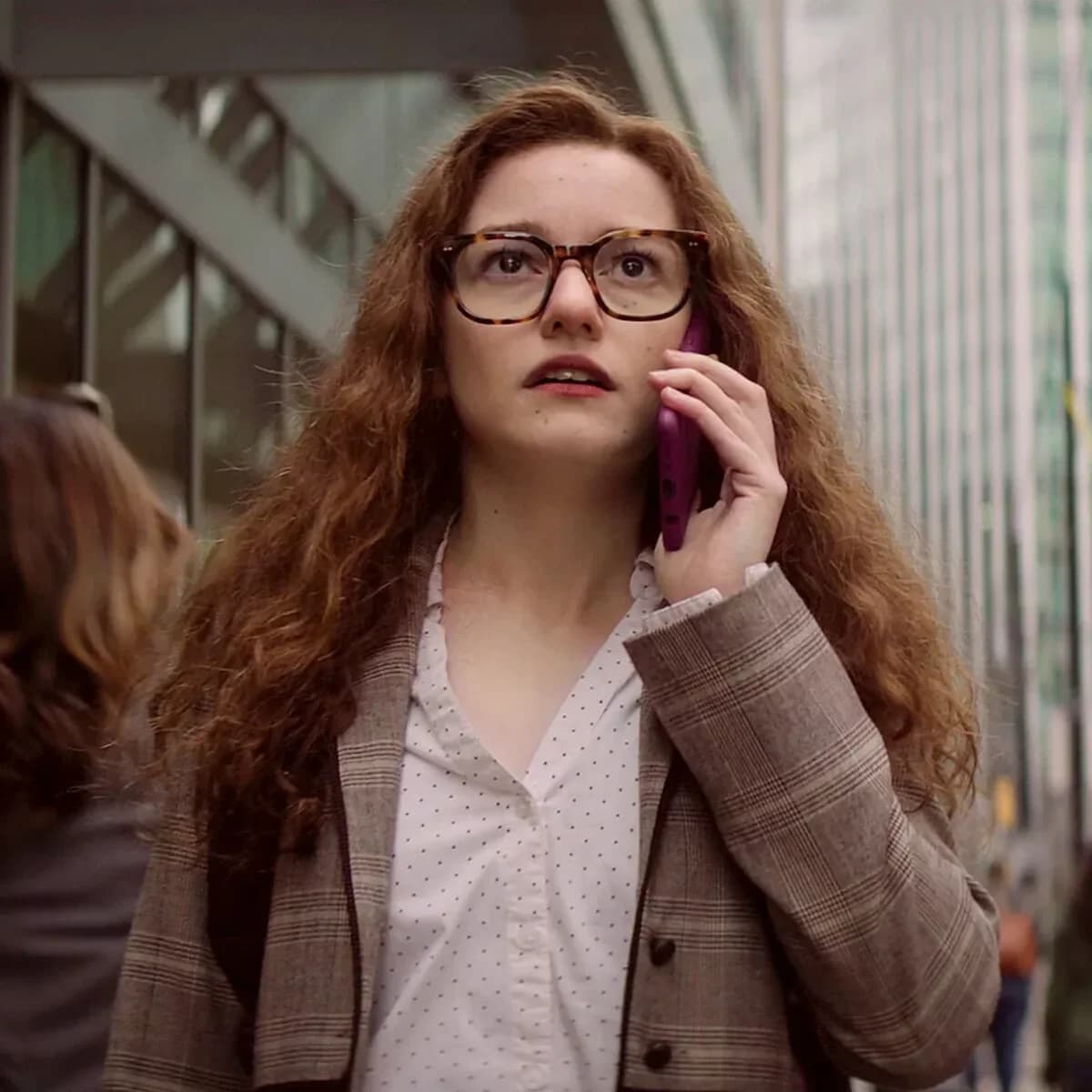
Julia Garner appears as Caroline Ellison in this official production image, giving a face to one of the two central performances.
How many episodes does The Altruists have?
The Altruists has eight episodes, and Netflix's cast guide says all eight are available to stream. It is presented as a limited series rather than an open-ended weekly serial.
If you want to avoid spoilers, choose a cast or premise guide before searching for an episode recap. An ending explanation is designed to discuss later events, even if its opening paragraph looks like an ordinary introduction.
Is The Altruists a documentary or a true-story drama?
The Altruists is a dramatization inspired by real people and events, not a documentary record of every conversation. Private exchanges and performances should be understood as parts of the adaptation.
A useful way to watch is to keep questions about the drama separate from questions about evidence. "Why does the character do this in the scene?" is a question about storytelling. "What did investigators prove?" requires the relevant public record.
That distinction matters particularly when a financial scandal becomes entertainment. A convincing performance can make a scene feel authoritative without turning imagined dialogue into a transcript.
Do you need to understand cryptocurrency before watching?
You do not need to be a cryptocurrency trader to approach The Altruists as a drama about relationships, power and trust. If a business detail becomes confusing, first identify which person or company the scene concerns rather than trying to master every term at once.
The criminal case and its legal outcome are part of the historical background, while the series uses performance and dramatized dialogue to tell its story.
What were FTX and Alameda Research?
FTX was a cryptocurrency exchange, while Alameda Research was a cryptocurrency trading business associated with Bankman-Fried. Keeping the two businesses separate is the most useful starting point for understanding the story.
An exchange provides a place for customers to transact. A trading firm makes its own trading decisions. Those are different roles, even when people, ownership or working relationships connect the businesses.
In the real criminal case, the Justice Department described customer money being routed from FTX to Alameda and used for other purposes. That is why the story concerns custody, trust and misuse of funds rather than simply a disappointing change in cryptocurrency prices.
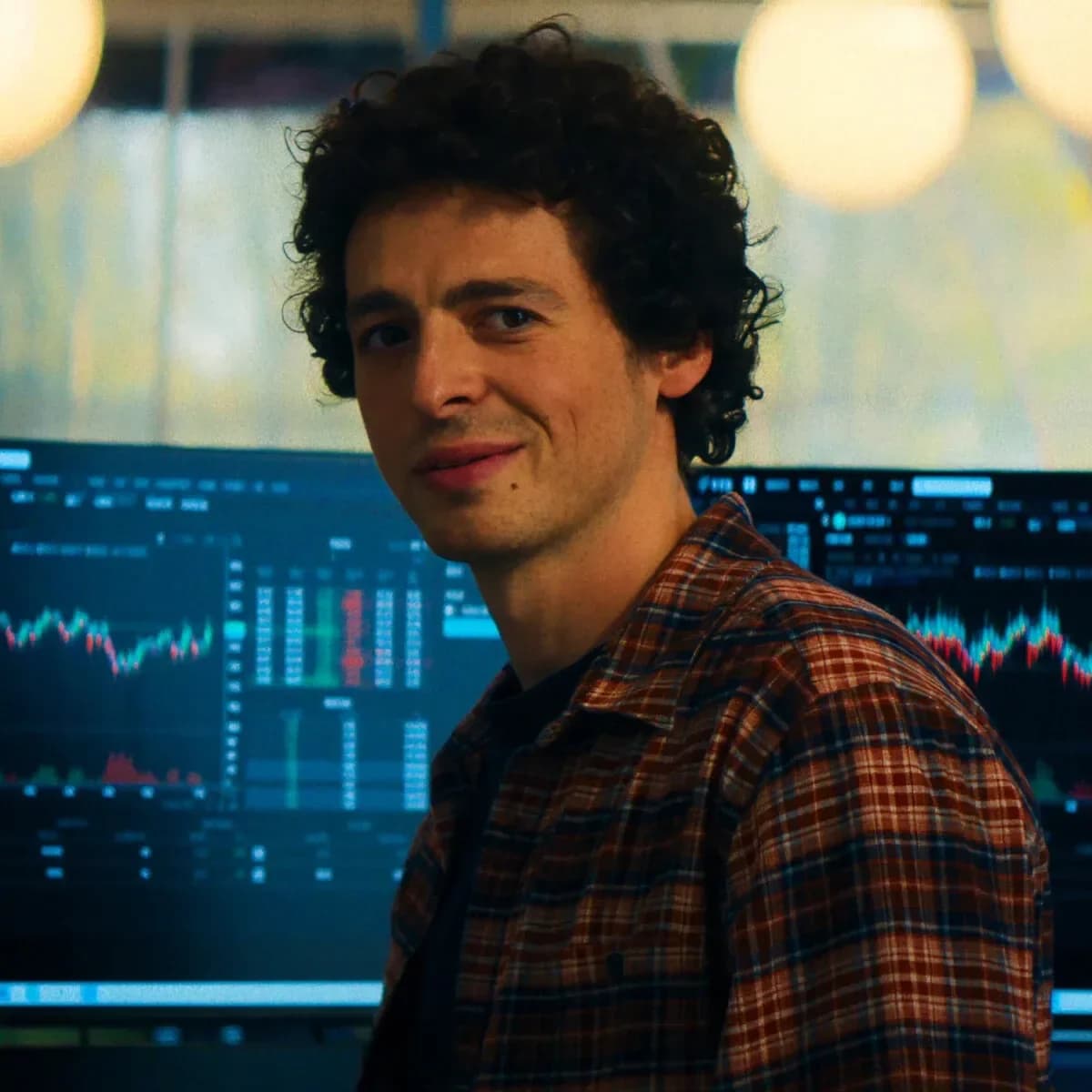
Anthony Boyle's Sam Bankman-Fried is pictured at a workstation in the drama; this is a production still, not a documentary photograph of the real founder.
How did the real FTX case differ from ordinary investment losses?
The FTX criminal case involved fraud and the misuse of customer funds, not merely an investment that fell in value. Bankman-Fried was sentenced to 25 years in prison in March 2024 after a criminal conviction.
A falling market and stolen customer assets are different explanations. A viewer does not need to approve or reject cryptocurrency as a whole to understand that distinction. The legal question concerns what people did with funds and what they represented to customers and others.
For a drama, the financial setting provides pressure and scale. For the real people affected, however, the consequences extend beyond a compelling plot. It is useful to keep that human cost in view without treating every dramatized exchange as a factual reconstruction.
Which financial terms help explain The Altruists?
A small set of financial terms makes The Altruists easier to follow without turning your viewing into a trading lesson. Start with the role each term plays in the scene, then connect it to the character or business involved.
These plain-language distinctions are useful background:
Term | Meaning for a viewer |
|---|---|
Exchange | A venue or service through which customers trade |
Trading firm | A business taking positions and making trades |
Customer funds | Assets held for or owed to customers, rather than freely available company money |
Liquidity | The ability to meet immediate payment or withdrawal needs |
Conflict of interest | A situation in which one responsibility or interest can compromise another |
Due diligence | Checking information before relying on a person, claim or transaction |
These definitions do not resolve every detail of the case, but they make the central conflicts less opaque. If a scene becomes confusing, identify whose money is being discussed and who is making the decision.
Why is the series called The Altruists?
The title The Altruists points to the characters' stated desire to do good and the tension between that self-image and the consequences of their actions. Netflix's creators frame the story around ambitious people whose intentions and choices become increasingly difficult to reconcile.
As a viewing question, ask when a good intention is being used to evaluate a decision and when it is being used to excuse one. Those are different functions. A person can speak sincerely about a goal while still making choices that harm others.
This theme does not require accepting the characters' account of themselves. The drama invites you to examine how people explain their conduct, especially when private loyalty and professional responsibility point in different directions.
Is The Altruists suitable for viewers who want a documentary?
The Altruists is best approached as a scripted limited series, so viewers looking for documentary evidence should distinguish its scenes from reporting, interviews and public records.
A useful way to keep that boundary clear is to separate three questions:
What is documented? Events established through reporting or legal records.
What is dramatized? The performances, private conversations and scenes created for television.
What is interpreted? The meaning a viewer draws from the way those scenes are arranged.
That framework makes a true-story drama easier to enjoy critically. It lets a performance be persuasive without demanding that every line happened exactly as written.
Should you read about the ending before watching?
You should read an ending explanation for The Altruists only if you are comfortable learning how the series arranges its final events. Knowing the broad historical case does not mean you know how a dramatization chooses to tell it.
For a first viewing, the premise, cast and basic business relationships are enough. Leave episode-specific analysis for later if you want to experience the pace, revelations and performances without a guide telling you what to expect.
The series is ultimately easier to follow when you watch both the personal relationship and the responsibilities around it. The question is not only what the characters want from each other, but what their decisions mean for everyone outside the room.
Best of the week — in your inbox
No spam. Only top Gosta stories. Unsubscribe in one click.
Comments