
How to Layer for Cold Weather in Fall Without the Bulk
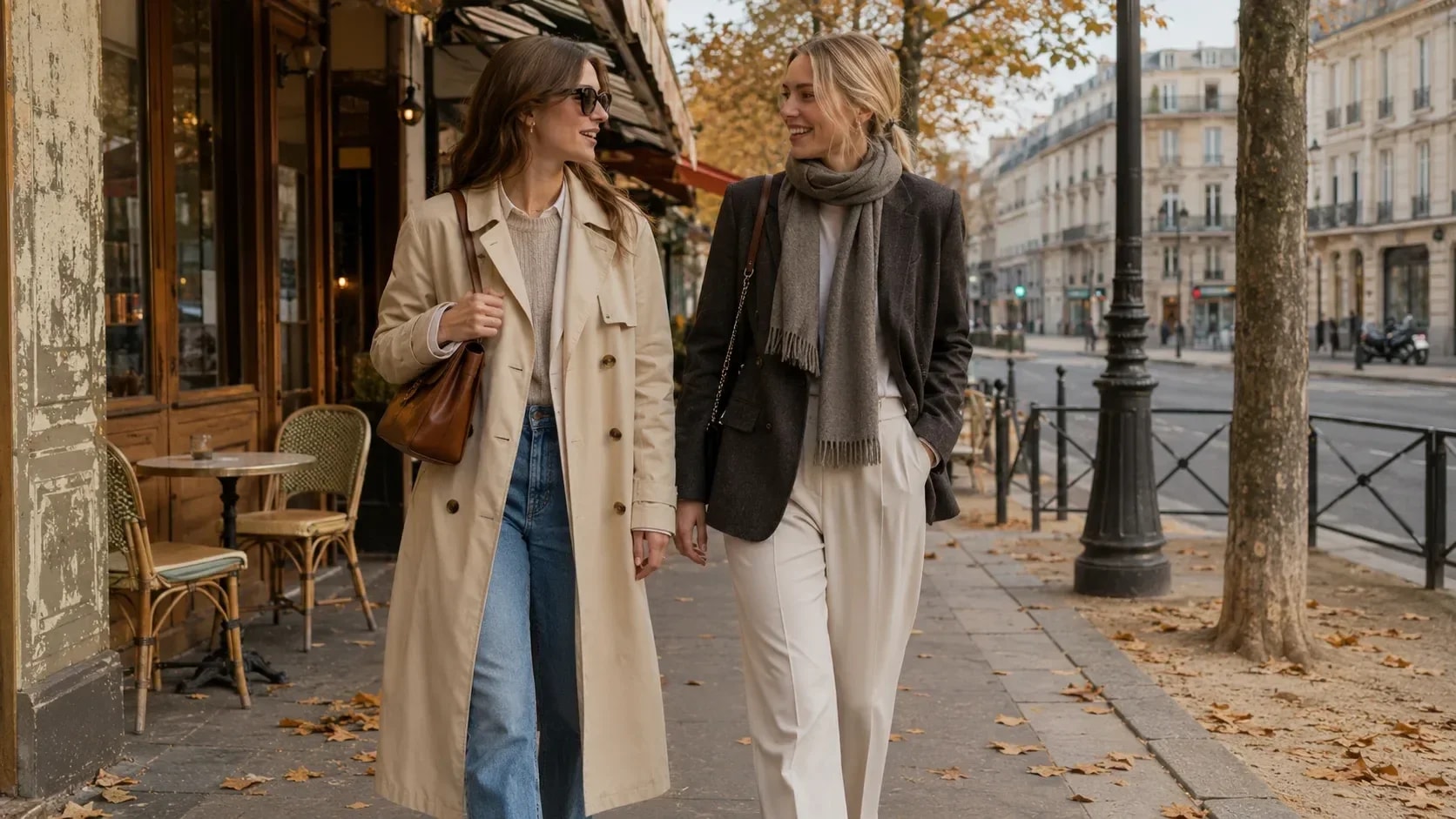
Learning how to layer for cold weather does not mean putting on the thickest possible version of every garment. The cleanest fall outfits use several thin, compatible layers: a close base, a shirt or fine knit, an insulating middle layer, and outerwear that still has enough room to move. In fall 2026, layering also looks less formulaic. Shirts under sweaters remain useful, but scarves, brooches, longer silhouettes, knitwear over the shoulders, tailored jackets, and mixed textures make the layers

Contents14
- How to Layer for Cold Weather: How Multi-Layering Works in Clothes
- The Main Rule: From Thin to Thick
- How Not to Look Bulky in a Multi-Layered Look
- Multi-Layering and Different Lengths of Things
- What Colors to Use for Layering
- How to Mix Textures
- Shirt + Sweater: How to Make It More Modern
- How to Wear a Jacket in a Layered Look
- How to Use Summer Things in Autumn
- 10 Simple Layered Looks for Fall
- Layering for the Office
- What Mistakes Make Layering Difficult
- Layering in Autumn 2026: What Has Changed
- How to Dress in Layers and Not Overheat
Learning how to layer for cold weather does not mean putting on the thickest possible version of every garment. The cleanest fall outfits use several thin, compatible layers: a close base, a shirt or fine knit, an insulating middle layer, and outerwear that still has enough room to move. In fall 2026, layering also looks less formulaic. Shirts under sweaters remain useful, but scarves, brooches, longer silhouettes, knitwear over the shoulders, tailored jackets, and mixed textures make the layers look intentional rather than purely practical.
The goal is simple: trap warmth, keep freedom of movement, and make it easy to remove one layer indoors.
How to Layer for Cold Weather: How Multi-Layering Works in Clothes
Start with a thin base that sits comfortably against the body.
Add a shirt, long-sleeve top, or fine knit.
Use a warmer mid-layer such as wool knitwear, fleece, or a light cardigan.
Finish with a wind- or rain-resistant outer layer when the weather requires it.
Adjust accessories—scarf, hat, gloves—before adding unnecessary torso bulk.
Several thin layers trap air between them, and that trapped air helps insulate. Just as important, you can remove a layer when a bus, office, café, or classroom is warmer than the street.
The Main Rule: From Thin to Thick
Put smoother, thinner pieces closest to the body and increase thickness outward. A fine merino top under a shirt and blazer moves better than a chunky sweater squeezed under a fitted jacket.
The outer layer must have enough ease for what is underneath. If the armholes are tight or the sleeves twist, the problem may be coat fit rather than the number of layers.
How Not to Look Bulky in a Multi-Layered Look
Keep the base layer close to the body.
Use only one genuinely bulky piece at a time.
Show vertical lines: an open coat, long scarf, unbuttoned shirt, or visible trouser crease.
Define one area—waist, wrist, ankle, or neckline—rather than hiding every part of the silhouette.
Choose outerwear with clean shoulders and enough internal room.
Avoid stacking three thick knits just because they are warm individually.
Bulk usually comes from competing volumes, not from the number of layers alone.
Multi-Layering and Different Lengths of Things
Visible length differences make layering readable. Let a shirt hem show slightly beneath a sweater, wear a longer coat over a shorter jacket, or place a midi dress below a cropped knit.
The difference should look deliberate. A shirt hanging 2–5 cm below a sweater can look polished; a twisted hem showing randomly at one side looks accidental. Long layers also work best when at least one vertical edge remains visible.
What Colors to Use for Layering
The easiest approach is two or three related neutrals plus one accent. Examples:
cream + camel + chocolate;
gray + navy + burgundy;
black + charcoal + plum;
olive + beige + dark brown;
denim blue + white + red accent.
You can also use monochrome layering, but vary texture so each piece remains visible. A gray cotton tee, gray wool sweater, and charcoal coat are more interesting than three identical flat gray surfaces.
How to Mix Textures
Start with one smooth fabric, such as cotton jersey or poplin.
Add one textured material, such as wool, suede, corduroy, or brushed knit.
Use leather or polished shoes as a sharper contrast.
Keep very fuzzy textures away from equally bulky outerwear if you want a cleaner line.
Repeat one texture in a small accessory if the look feels disconnected.
Texture lets you keep colors quiet without making the outfit flat.
Shirt + Sweater: How to Make It More Modern
Choose a sweater with enough neck and armhole room for the shirt.
Let the collar show naturally rather than forcing it into a perfect triangle.
Show a little cuff or hem, not every edge at once.
Try a half-zip, polo knit, crewneck, or sleeveless knit instead of only a V-neck vest.
Pair with relaxed trousers or straight jeans so the outfit does not feel like an old office uniform.
A striped or pale-blue shirt under gray, chocolate, navy, or burgundy knitwear is especially easy for fall.
How to Wear a Jacket in a Layered Look
Use a thin base under the jacket.
Add fine knitwear only if the jacket still closes comfortably.
Put a trench, long coat, or roomy raincoat over the jacket for colder weather.
Keep the jacket and outer coat different in length so the combination looks intentional.
If both pieces are structured, keep trousers or skirt simpler.
A blazer under a trench is one of the most practical office combinations because each layer can be removed separately.
How to Use Summer Things in Autumn
Wear a slip dress over a fine long-sleeve top or under a cardigan.
Add tall boots and a trench to a summer midi dress.
Put a shirt or knit over a lightweight dress and treat it like a skirt.
Layer a blazer over a T-shirt and summer trousers.
Add tights, socks, boots, and a warm outer layer before retiring lighter skirts.
The key is fabric. Very sheer beachwear may still look seasonal, while cotton, denim, viscose, and substantial dresses transition easily.
10 Simple Layered Looks for Fall
White T-shirt + blue shirt + trench + straight jeans + loafers.
Fine turtleneck + blazer + long coat + tailored trousers + ankle boots.
Striped shirt + gray crewneck + wide-leg jeans + trench + sneakers.
Slip dress + fine knit underneath + cardigan + tall boots.
Long-sleeve tee + denim shirt + quilted jacket + dark trousers.
White shirt + sleeveless knit + blazer + midi skirt + boots.
Thermal base + wool sweater + leather jacket + scarf + jeans.
Fine polo + cardigan + long wool coat + relaxed trousers.
Summer midi dress + cropped knit + trench + knee-high boots.
T-shirt + hoodie + oversized coat + straight trousers + substantial sneakers.
Each formula has one warm middle layer and one outer layer, rather than several thick pieces competing.
Layering for the Office
Keep the innermost layer comfortable enough to wear alone indoors. A fine knit, shirt, or long-sleeve top under a blazer works better than a heavy sweater you cannot remove during a warm meeting.
Good office combinations include a turtleneck + blazer + coat, shirt + fine sweater + trench, or knit dress + blazer + long coat. Leave bulky scarves and heavy accessories at the entrance if the office is heated.
What Mistakes Make Layering Difficult
Common problems include:
every layer being oversized;
tight coat sleeves over thick knitwear;
too many collars stacked at the neck;
three heavy textures in one small area;
no visible difference in garment lengths;
overheating because the base layer cannot be removed;
ignoring wind and moisture while adding only more knitwear;
choosing colors that compete without a common neutral.
Fix the silhouette first, then add warmth strategically.
Layering in Autumn 2026: What Has Changed
Fall 2026 fashion keeps classic layering but makes accessories more visible. Current runway coverage highlights scarves, brooches, statement tights, hats, and belts, while long silhouettes and expressive outerwear remain important. Trench coats are still central transitional pieces, including cropped and oversized versions.
That means you can update a basic layered outfit without buying three new jackets. Add a silk scarf to a sweater-and-trench combination, pin a brooch to a lapel, or use one strong belt over a cardigan or coat. The clothes underneath can remain simple.
How to Dress in Layers and Not Overheat
Use a breathable base layer rather than a thick cotton sweatshirt as the first layer.
Keep the warmest layer removable.
Open the coat or remove the scarf before you become hot, not after.
Choose wool or technical fabrics that manage temperature better than several heavy synthetic layers.
Avoid dressing for the coldest five minutes of your commute if most of the day is indoors.
Carry a lightweight bag with enough room to store gloves, scarf, or a fine cardigan.
Being slightly cool when you first step outside can be more comfortable than sweating after ten minutes of walking.
FAQ
What Is Layering in Clothes?
It is wearing several garments in an intentional order so you can combine warmth, weather protection, and styling flexibility.
How Do You Dress in Layers and Not Look Bigger?
Keep inner layers thin, use one main volume, show vertical lines, and choose outerwear with clean proportions.
How Many Layers Are Enough?
For ordinary fall weather, three or four functional layers are usually plenty: base, mid-layer, optional jacket, and outerwear.
What to Wear Under a Jacket in Autumn?
A T-shirt, long-sleeve top, shirt, fine turtleneck, or lightweight knit works best, depending on temperature.
How Do You Combine a Shirt and a Sweater?
Use a sweater roomy enough for the shirt, show a little collar or cuff, and keep the lower half of the outfit relaxed and modern.
Is Multi-Layering Relevant in Autumn 2026?
Yes. It remains practical and fashionable, with current emphasis on expressive accessories, trench coats, long lines, and mixed textures.
What Colors Are Better to Use?
Two or three compatible neutrals plus one accent are easiest. Monochrome also works when textures differ.
Can You Wear a Summer Dress in Autumn?
Yes. Add a fine knit, cardigan or blazer, tights if needed, boots, and weather-appropriate outerwear.
Best of the week — in your inbox
No spam. Only top Gosta stories. Unsubscribe in one click.
Comments