
Hosting Thanksgiving 2026? A Practical Timeline from Shopping to Leftovers
Thanksgiving in 2026 falls on Thursday, November 26.

Contents8
- Where should Thanksgiving planning start?
- A practical Thanksgiving timeline for 2026
- How to thaw a Thanksgiving turkey safely
- How do you know the Thanksgiving turkey is cooked?
- Which Thanksgiving dishes should you delegate?
- How to keep Thanksgiving hosting manageable
- What to do with Thanksgiving leftovers
- FAQ
Thanksgiving in 2026 falls on Thursday, November 26. If you are hosting, the most useful preparation is a realistic sequence: confirm the guests, plan the menu, check the equipment, and work backward from the meal. A smaller dinner that arrives calmly is usually more enjoyable than an ambitious menu competing for the same oven.
A Thanksgiving plan should leave room for people as well as food. Decide what you genuinely want to cook, what someone else can bring, and which tasks can be completed ahead of time. Clear decisions early in the week reduce the number of small emergencies on the day itself.
Where should Thanksgiving planning start?
Thanksgiving planning should start with the guest list and practical requirements, not a long recipe collection. Confirm how many people are coming, when they can arrive, and any food allergies or dietary needs that affect the meal. Ask directly rather than guessing from what somebody ate last year.
Then choose the size and style of the Thanksgiving meal. A whole turkey, a smaller centerpiece, and a shared buffet create different shopping, cooking, and serving needs. There is no requirement to produce every traditional dish in order to host warmly.
Write one Thanksgiving menu that fits the kitchen you actually have. Count oven shelves, burners, refrigerator space, serving dishes, and the tools needed to check food safely. A Thanksgiving recipe that looks simple can still create a bottleneck if it needs the oven at a conflicting temperature.
A practical Thanksgiving timeline for 2026
A practical Thanksgiving timeline assigns tasks to the days when they can be done safely and comfortably. The exact schedule depends on your menu and the condition and size of any turkey. Use official thawing guidance rather than assuming a frozen bird will be ready after one night.
Thanksgiving stage | Useful tasks |
|---|---|
Before the final shopping trip | Confirm guests, dietary needs, menu, equipment, and refrigerator space |
Early in the week | Buy what you need and begin safe thawing where required |
The day before | Prepare suitable make-ahead items, label serving dishes, and set the table if practical |
Thanksgiving morning | Follow the cooking plan and keep raw-food handling separate |
After the meal | Handle leftovers promptly and send guests home with food stored appropriately |
Keep the Thanksgiving timeline somewhere everyone helping can see it. It should answer who is doing what and when the oven or workspace is available. A plan that lives only in the host's head is harder for other people to support.
How to thaw a Thanksgiving turkey safely
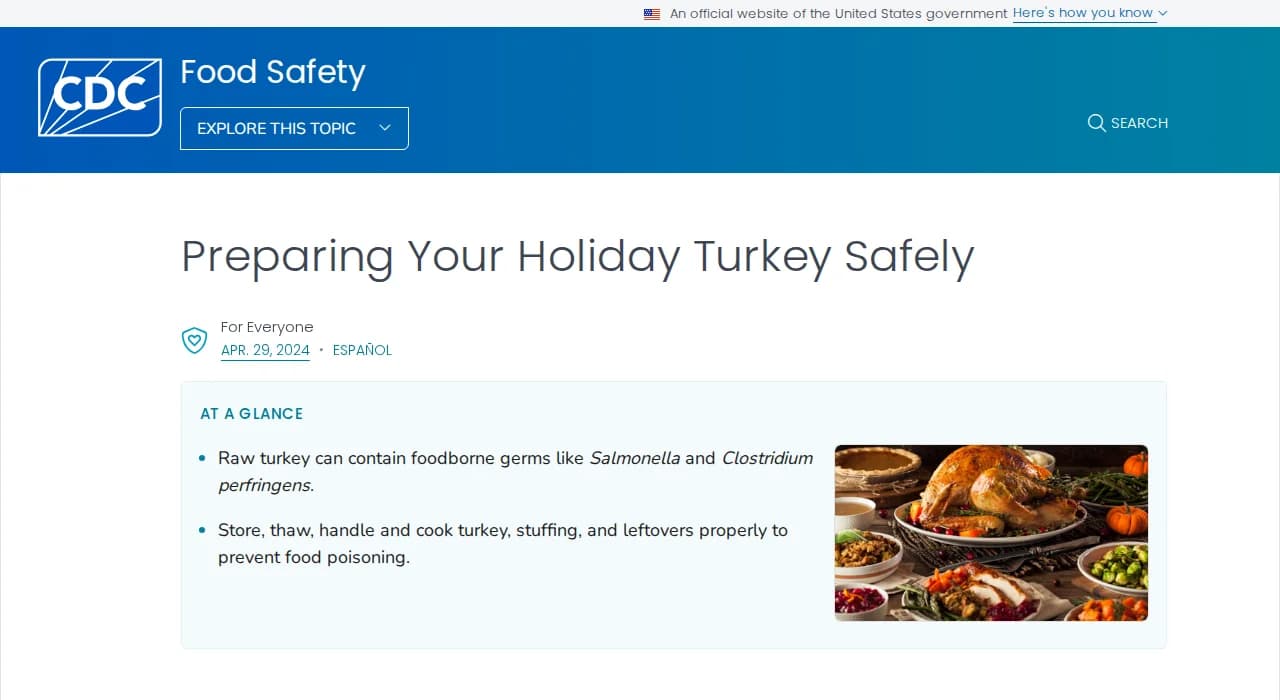
Thaw a Thanksgiving turkey using an approved method and allow enough time for its size. The CDC's holiday-turkey guidance explains refrigerator thawing at 40°F or below and allows roughly 24 hours for each 4 to 5 pounds. A turkey thawed this way can remain refrigerated for another 1 to 2 days before cooking.
Keep the Thanksgiving bird in a container that prevents juices reaching other food. Do not thaw it on the counter. If your schedule requires a different method, follow the specific official instructions rather than improvising with warm water or leaving the bird out overnight.
The FoodSafety.gov charts distinguish refrigerator and cold-water methods. Cold-water thawing requires appropriate wrapping, regular water changes, and cooking immediately afterward. Check the complete instructions for the method you choose.
How do you know the Thanksgiving turkey is cooked?
Know that a Thanksgiving turkey is cooked by using a food thermometer in the relevant places, not by relying only on color, juices, or a timetable. The CDC specifies a safe minimum internal temperature of 165°F, checking the thickest breast portion and the innermost thigh and wing areas.
A cooking time is useful for planning, but it is not a substitute for measurement. Oven performance, the bird, and the cooking method can affect timing. Build some flexibility into the Thanksgiving serving plan so the meal does not depend on a prediction being exact to the minute.
Keep raw turkey and its juices away from ready-to-eat Thanksgiving food, and follow the official guidance on cleaning hands, surfaces, and utensils. Avoid washing raw turkey, which can spread contamination around the kitchen.
Which Thanksgiving dishes should you delegate?
Delegate Thanksgiving dishes that travel well and do not unexpectedly need the same last-minute equipment as your main meal. Ask guests what they can bring, then agree on the dish, quantity, and whether it arrives ready to serve.
Instead of saying bring anything, offer a specific role: a dessert, a salad with ingredients listed, drinks, or a side that can be served without occupying the oven. This makes a Thanksgiving contribution easier for the guest and more useful for the host.
Keep allergy information attached to the Thanksgiving dish when appropriate. If a guest has a serious food-related requirement, discuss handling and ingredients directly rather than assuming a homemade label such as gluten-free answers every practical question.
How to keep Thanksgiving hosting manageable
Keep Thanksgiving hosting manageable by choosing a few priorities and allowing the rest to be simple. If the main course matters most to you, use an easy dessert. If the gathering is the point, accept help and reduce the number of dishes.
Choose one final Thanksgiving menu rather than adding recipes all week.
Put serving utensils beside the dishes before guests arrive.
Leave space for coats, bags, and people moving through the kitchen.
Give Thanksgiving helpers a clear task instead of asking them to guess.
Keep a backup plan for a side dish that does not work out.
A good Thanksgiving does not require a photographic table or a host who never sits down. Plan a moment when you can eat and enjoy the company, even if a few serving dishes do not match.
What to do with Thanksgiving leftovers
Handle Thanksgiving leftovers promptly, following official time and temperature guidance rather than leaving the meal on the table for an open-ended afternoon. Use suitable containers and divide large quantities so they can cool and be stored appropriately.
The official cold-storage chart helps you check how long specific foods can be refrigerated or frozen. Label Thanksgiving containers with the date and contents, and plan a use for what you keep. A vague intention to eat everything later is not a storage system.
Thanksgiving questions
When is Thanksgiving in 2026?
Thanksgiving is Thursday, November 26, 2026.
Can I thaw a Thanksgiving turkey on the counter?
No. Thaw the Thanksgiving turkey using an approved method and the relevant official instructions. Counter thawing can leave parts of the bird at unsafe temperatures.
Is a brown Thanksgiving turkey safely cooked?
No. Check the Thanksgiving turkey with a food thermometer, ensuring the relevant areas reach the recommended minimum temperature. Keep the thermometer available throughout cooking rather than searching when guests arrive.
Best of the week — in your inbox
No spam. Only top Gosta stories. Unsubscribe in one click.
Comments