
September 6 Orthodox Feast: The Miracle of Archangel Michael at Chonae — What Saint Day Is Today
If you are asking what saint day is today for September 6, 2026, the main Orthodox commemoration is the Miracle of Archangel Michael at Chonae. The calendar also honors Venerable Archippus, several early Christian martyrs and bishops, saints connected with the history of Kyivan Christianity, and two icons of the Mother of God.

Contents13
- What saint day is today: What is today's church holiday, September 6, 2026 on the Orthodox calendar (Julian date)
- What happened during the miracle of Archangel Michael in Khony
- Who is Reverend Arkhip in Hony
- Who are the martyrs Eudochius, Zinon and Macarius
- Who is the martyr Romil of Rome
- Who is the hieromartyr Kyrylo Hortynskyi
- Who are Faust, Aviv and 11 martyrs
- Who is David Hermopolskyi?
- Which Ukrainian saints are honored on September 6
- What icons of the Mother of God are honored on September 6
- Is there a fast on September 6, 2026
- What is important to know about the church holiday of September 6, 2026
- FAQ
If you are asking what saint day is today for September 6, 2026, the main Orthodox commemoration is the Miracle of Archangel Michael at Chonae. The calendar also honors Venerable Archippus, several early Christian martyrs and bishops, saints connected with the history of Kyivan Christianity, and two icons of the Mother of God.
September 6, 2026 falls on a Sunday. There is no ordinary weekly fast on this date, and the feast itself does not establish a separate fast.
What saint day is today: What is today's church holiday, September 6, 2026 on the Orthodox calendar (Julian date)
The central commemoration on September 6 is the Miracle of Archangel Michael at Chonae, an event preserved in Orthodox church tradition. The daily calendar also includes:
Venerable Archippus of Chonae;
the martyrs Eudoxius, Zeno, and Macarius;
the martyr Romulus of Rome and other martyrs remembered with him;
Hieromartyr Cyril, Bishop of Gortyna;
Faustus the presbyter, Abibus the deacon, and 11 other martyrs;
Venerable David of Hermopolis;
Bishops Michael and Marin of Yuriv;
Bishops Lazarus and Sylvester of Pereiaslav;
the Kyiv-Bratsk and Arapet, or Arabian, icons of the Mother of God.
The Orthodox Church of Ukraine uses the New Julian calendar for fixed feasts. Older sources that follow the Julian calendar can therefore show these fixed commemorations 13 days later on the civil calendar.
What happened during the miracle of Archangel Michael in Khony
According to church tradition, a Christian sanctuary dedicated to Archangel Michael stood near ancient Colossae in Asia Minor, in a place later known as Chonae. A spring near the shrine was associated in tradition with healing, and Venerable Archippus lived and served there for many years.
The account says that opponents of the sanctuary attempted to destroy it by redirecting water from nearby rivers toward the church. Archippus prayed for help, and Archangel Michael appeared. The water was then directed into a cleft in the rock instead of destroying the sanctuary.
The church commemorates the event as a sign of divine protection rather than as a historical engineering account. The name Chonae is traditionally connected with the opening or chasm into which the water flowed.
Who is Reverend Arkhip in Hony
Venerable Archippus, sometimes written Archip or Arkhip in Slavic transliteration, is the ascetic associated directly with the sanctuary at Chonae. Orthodox tradition describes him as a man who dedicated many years to prayer and service near the church of Archangel Michael.
He is remembered especially because he was present when the sanctuary was threatened. In the traditional account, Archippus did not leave the church but prayed for its preservation.
His commemoration therefore appears together with the Miracle of Archangel Michael. The two parts of the September 6 feast are closely linked: one recalls the event, while the other remembers the person whose life and prayer are part of the story.
Who are the martyrs Eudochius, Zinon and Macarius
Eudoxius, Zeno, and Macarius are early Christian martyrs traditionally associated with the beginning of the fourth century. Their commemoration belongs to the period when Christians in the Roman Empire could still face persecution for openly practicing their faith.
Detailed biographies are not equally well preserved for every saint listed in an ancient church calendar. In this case, the calendar primarily preserves their names and their status as martyrs.
They are honored on September 6 for fidelity to their Christian confession. English spellings can vary because the names reached modern calendars through Greek, Church Slavonic, and other linguistic traditions.
Who is the martyr Romil of Rome
Romulus, also rendered Romil in some Slavic sources, is remembered as a Christian martyr of the Roman period. Church calendars commemorate him together with a large group of other martyrs.
The surviving tradition emphasizes the collective witness of Christians who remained faithful during persecution. It does not provide a modern-style biography for every person in the group.
For readers comparing English and Ukrainian calendars, the main point is that small spelling differences usually reflect transliteration rather than different saints. Romulus, Romil, and related forms can refer to the same commemoration.
Who is the hieromartyr Kyrylo Hortynskyi
Cyril of Gortyna was a bishop associated with Gortyna on the island of Crete. Orthodox tradition remembers him as a hieromartyr, meaning a bishop or priest who died because of his Christian faith.
He is generally placed in the era of Roman persecution of Christians. The September 6 calendar preserves his memory as both a church leader and a martyr.
The title "hieromartyr" is useful when reading Orthodox calendars because it identifies both the person's ministry and the type of commemoration. It distinguishes a martyred bishop or priest from a martyr who did not hold ordained church office.
Who are Faust, Aviv and 11 martyrs
Faustus was a presbyter and Abibus, or Aviv in some transliterations, was a deacon. They are commemorated with 11 other martyrs from the early Christian period.
The names illustrate another common feature of Orthodox daily calendars: some commemorations preserve groups rather than one central figure. The group can include clergy and lay Christians remembered together because their witness belongs to the same historical tradition.
Different English sources may spell Faustus, Abibus, Aviv, or the names of the other martyrs differently. The variations do not change the September 6 commemoration.
Who is David Hermopolskyi?
Venerable David of Hermopolis is remembered as an Egyptian Christian ascetic. Unlike the martyrs listed elsewhere on September 6, his commemoration is connected primarily with monastic life and spiritual discipline.
Hermopolis was an important city in ancient Egypt, a region that became one of the major centers of early Christian monasticism. Many saints from the Egyptian desert tradition are remembered for lives centered on prayer, simplicity, and withdrawal from ordinary public life.
David's presence in the calendar broadens the character of September 6. The date does not commemorate only martyrs or bishops; it also includes the monastic tradition that had a major influence on Eastern Christianity.
Which Ukrainian saints are honored on September 6
The September 6 calendar also includes saints connected with the history of Christianity in the lands of Kyivan Rus. Among them are Michael and Marin, bishops of Yuriv, and Lazarus and Sylvester, bishops of Pereiaslav.
Their inclusion gives the date a specifically Ukrainian historical dimension. Pereiaslav and the wider Kyiv region were important centers of medieval church life, and the memory of local bishops links the universal Orthodox calendar with the history of Christianity in Ukraine.
Lazarus and Sylvester are also associated in church tradition with Kyiv's monastic environment. For modern readers, these commemorations are a reminder that a daily Orthodox calendar often combines saints from the ancient Mediterranean world with figures from local church history.
What icons of the Mother of God are honored on September 6
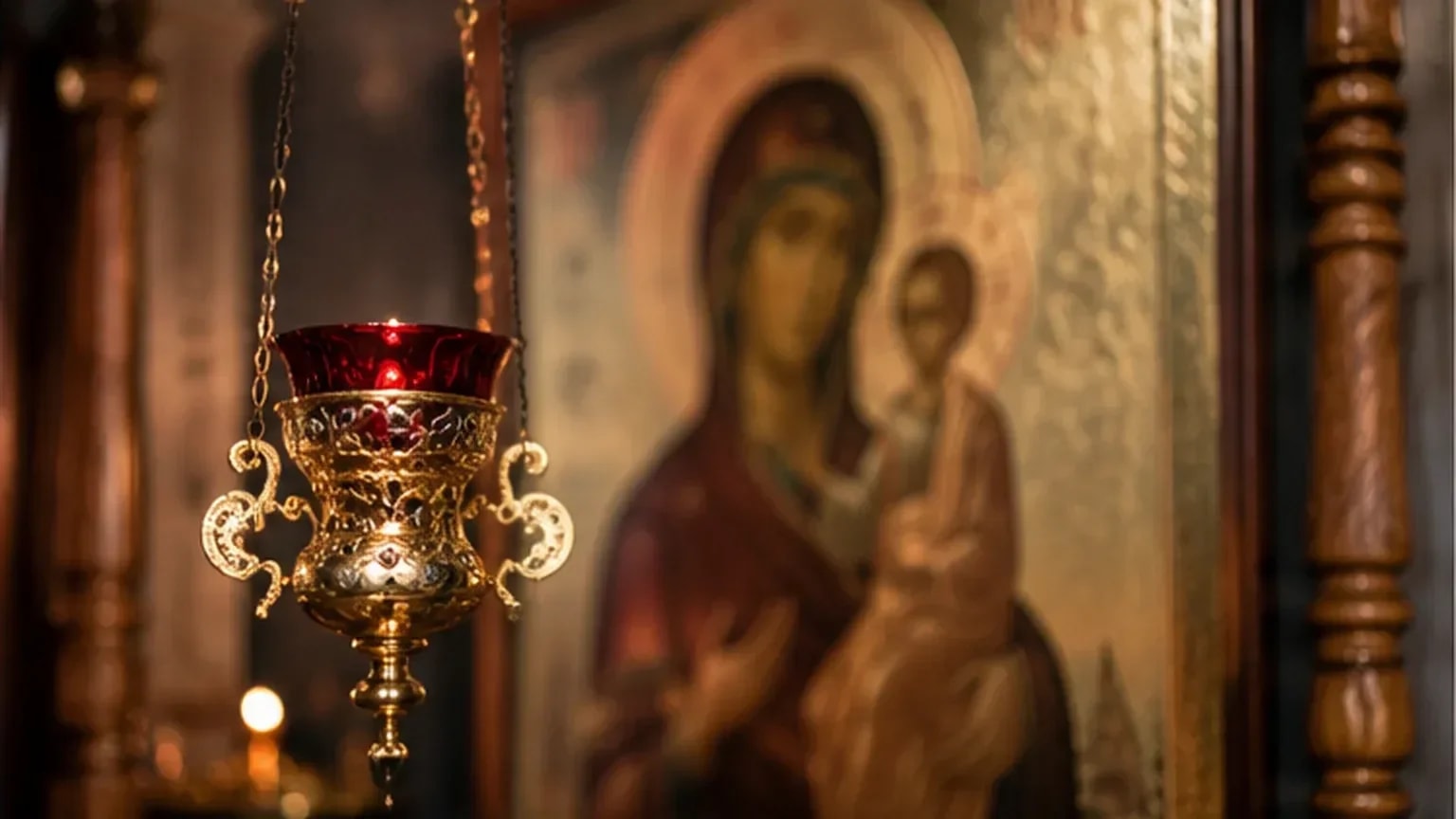
Two Marian icons are listed for September 6: the Kyiv-Bratsk Icon of the Mother of God and the Arapet Icon, also called the Arabian icon in some sources.
The Kyiv-Bratsk icon has a direct connection with Kyiv's religious history and the Kyiv Brotherhood tradition. Its name is associated with the Brotherhood Monastery and the historical church community around it.
The Arapet or Arabian icon is known under several forms of its name in different church sources. As with saint names, transliteration and translation can make the same icon appear under slightly different English titles.
Commemorating an icon does not mean the material object itself is treated as a separate deity. In Orthodox theology, an icon is honored in relation to the person depicted, in this case the Mother of God.
Is there a fast on September 6, 2026
No. September 6, 2026 is a Sunday, so the ordinary Wednesday-and-Friday weekly fast does not apply. There is also no separate one-day fast established specifically for the Miracle of Archangel Michael at Chonae.
The date falls outside the major multi-day fasting periods that would otherwise change the rule. Parish practice can still vary for personal spiritual disciplines, but those are different from a general church fast required for everyone.
For a practical calendar check, it is better to distinguish three things: the saint or event commemorated that day, the day of the week, and whether a major fasting period is in progress. They are related but not identical.
What is important to know about the church holiday of September 6, 2026
The main Orthodox feast on September 6, 2026 is the Miracle of Archangel Michael at Chonae. Church tradition connects the event with Venerable Archippus and the preservation of a sanctuary dedicated to the archangel.
The date also commemorates martyrs, bishops, an Egyptian monastic saint, Ukrainian church figures, and two icons of the Mother of God. That makes September 6 a good example of how an Orthodox daily calendar can bring together several historical periods and types of sainthood on one date.
For readers checking older calendars, remember that the Orthodox Church of Ukraine now uses the New Julian calendar for fixed feasts. A 13-day difference in an older source usually reflects the calendar system rather than a disagreement about the saint.
There is no general rule forbidding ordinary work on September 6. The religious focus of a Sunday is traditionally worship, prayer, and rest where possible, but everyday responsibilities do not become automatically prohibited because a saint or church event is commemorated.
FAQ
What is the church holiday today, September 6, 2026?
The main commemoration is the Miracle of Archangel Michael at Chonae. The Orthodox calendar also honors Venerable Archippus and a number of other saints.
What is the miracle of Archangel Michael in Khona?
According to Orthodox tradition, Archangel Michael protected a Christian sanctuary at Chonae when water was redirected toward it. The water instead flowed into a cleft in the rock.
Who else is honored on September 6?
The calendar includes Eudoxius, Zeno, Macarius, Romulus, Cyril of Gortyna, Faustus, Abibus, David of Hermopolis, several bishops connected with Ukrainian church history, and other saints.
What icons are honored on September 6?
The Kyiv-Bratsk and Arapet, or Arabian, icons of the Mother of God are commemorated on this date.
Is there a fast on September 6, 2026?
No. The date falls on a Sunday, and there is no separate fast established for this feast.
Can you work on September 6, 2026?
Yes. The church feast does not create a blanket prohibition on ordinary work. Sunday worship and rest are traditionally encouraged where circumstances allow, but necessary household, study, care, and professional responsibilities are not automatically forbidden.
Best of the week — in your inbox
No spam. Only top Gosta stories. Unsubscribe in one click.
Comments