
How to Sell Your Car Privately: Paperwork, Pricing, Ads, and a Safe Handover
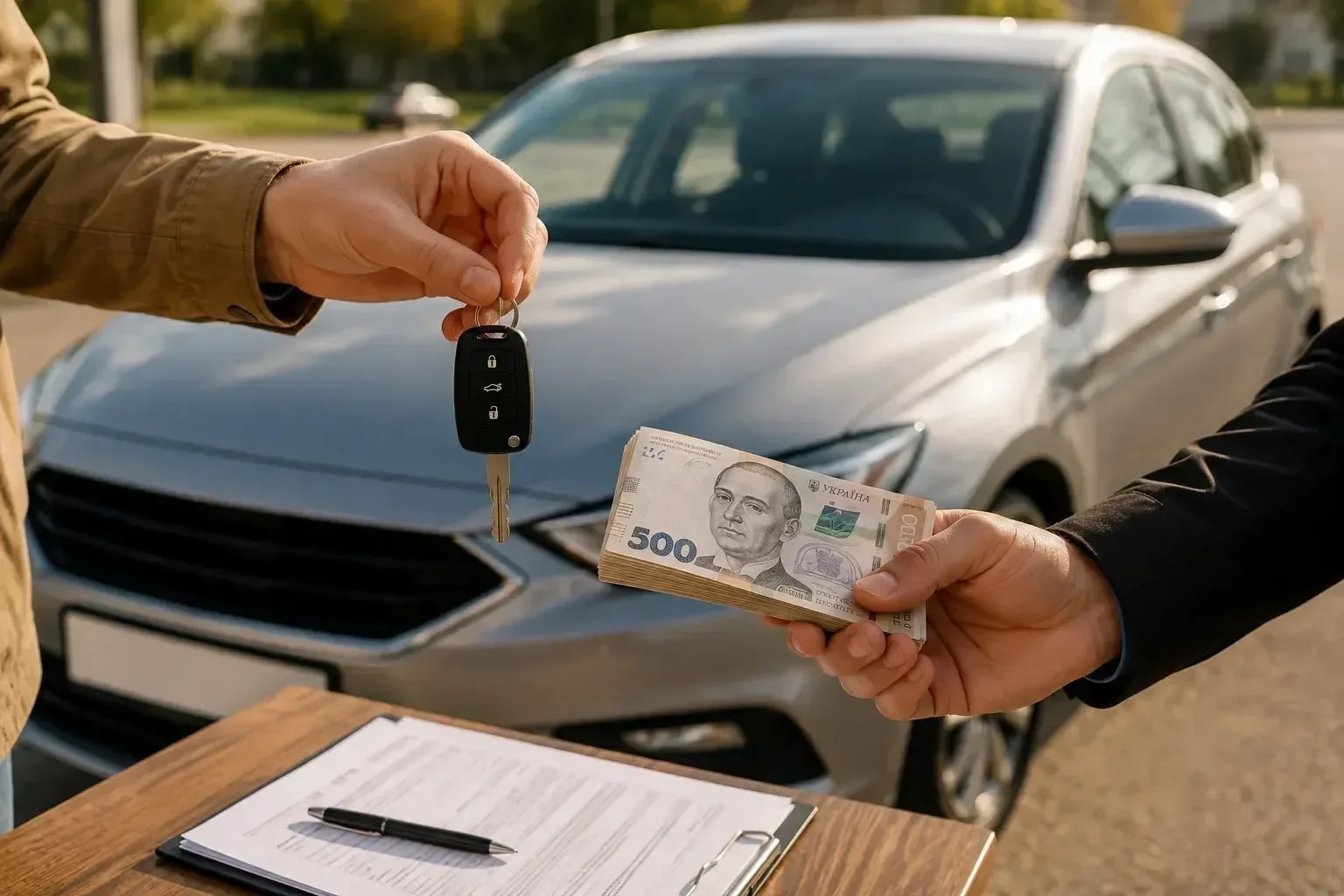
If you are asking how to sell my car privately in Ukraine in 2026, think of the sale as four separate jobs: prepare the vehicle honestly, set a realistic price, complete the ownership transfer through an official channel, and hand over the car only after payment and registration details are clear. The safest transaction is not the one with the fastest buyer; it is the one in which the car, money, documents, and new owner all line up correctly.

Contents14
- How to Sell My Car Privately: a Short Algorithm From Preparation to Handover
- How to Prepare a Car for Sale
- Do You Need to Repair the Car Before Selling It?
- Should You Hide Car Defects?
- How to Determine the Price of a Car Before Selling It
- Why Too High a Price Prevents You From Selling a Car
- Is It Necessary to Evaluate the Car Before Selling It?
- How to Take Photos of Cars for Advertising
- How to Write an Ad to Sell a Car Faster
- What Should Not Be Written in an Ad for the Sale of a Car
- What Documents Are Required to Sell a Car in 2026
- How to Arrange the Sale of a Car Through the Service Center of the Ministry of Internal Affairs
- Do You Need to Bring the Car to the MIA Service Center?
- Is an Examination Required When Selling a Car?
If you are asking how to sell my car privately in Ukraine in 2026, think of the sale as four separate jobs: prepare the vehicle honestly, set a realistic price, complete the ownership transfer through an official channel, and hand over the car only after payment and registration details are clear. The safest transaction is not the one with the fastest buyer; it is the one in which the car, money, documents, and new owner all line up correctly.
Ukraine currently allows private sales through an MIA service center and, for eligible vehicles and users, through the Diia app. The exact online eligibility can change, so check the current Diia and Main Service Center of the MIA requirements before the transaction.
How to Sell My Car Privately: a Short Algorithm From Preparation to Handover
Check the registration certificate, your identity documents, and whether the car has legal restrictions or unresolved issues.
Inspect the car and decide what you will repair, disclose, or leave as-is.
Compare similar listings and set a realistic asking price with a small negotiation margin.
Clean the car and photograph it in daylight.
Write an ad with the real mileage, equipment, ownership history, known defects, and service information.
Screen inquiries and arrange viewings in a safe public location.
Agree on the price and the official transfer method: an MIA service center or Diia if the transaction is eligible.
Confirm payment through a method you can verify yourself.
Complete the official ownership transfer and save the sale contract.
Hand over the keys, registration items, service records, spare set, and accessories included in the deal.
Remove your personal data from the infotainment system and connected apps.
Keep copies or digital records of the transaction documents.
Do not treat a handwritten receipt or general power of attorney as a substitute for a proper ownership transfer.
How to Prepare a Car for Sale
Wash the exterior and clean the windows, wheels, lights, and door jambs.
Vacuum the cabin and remove personal items from every pocket and compartment.
Replace cheap obvious consumables if they are due, such as a burned-out bulb or worn wiper blade.
Gather service invoices, the owner's manual, both key sets, and any documents for installed equipment.
Check tire pressure and basic fluid levels.
Photograph existing scratches and defects for your own record before viewings.
Make sure the VIN and registration information are readable and consistent.
A clean car photographs better and makes inspection easier, but avoid cosmetic work designed to disguise oil leaks, accident damage, rust, or warning lights.
Do You Need to Repair the Car Before Selling It?
Not every repair produces a return. Safety-critical problems, active warning lights, obvious leaks, broken lighting, and inexpensive defects that make the car look neglected are usually worth addressing. Expensive cosmetic work or a major mechanical repair may not be recovered in the sale price.
Get a quote before committing. Sometimes the better decision is to disclose the problem, price the car accordingly, and show the buyer the diagnostic result. A documented defect is easier to discuss than a vague suspicion that something has been hidden.
Should You Hide Car Defects?
No. Deliberately concealing known defects creates distrust and can create legal disputes after the sale. Describe material issues accurately: accident repairs, warning lights, corrosion, air-conditioning faults, major oil consumption, transmission problems, or equipment that does not work.
You do not need to list every tiny stone chip in the first line of the ad, but a buyer should not discover a major known issue only after paying. If you have a recent diagnostic report, service invoice, or repair estimate, keep it available.
How to Determine the Price of a Car Before Selling It
Find listings for the same model, generation, engine, gearbox, and similar year.
Narrow the comparison by mileage and equipment.
Separate dealer asking prices from private asking prices.
Check how long comparable cars have been listed if the platform shows it.
Adjust for documented accident history, corrosion, mechanical needs, tire condition, and service records.
Add only a reasonable negotiation margin rather than 15–20% "just in case."
Reassess after a week or two if there is almost no serious interest.
The listed price is not necessarily the transaction price. A car can look expensive online simply because the cheaper examples have already sold.
Why Too High a Price Prevents You From Selling a Car
Buyers filter by budget and compare many cars quickly. If your car is far above similar listings, some buyers will never open the ad, even if you expect to negotiate later. A stale listing can then create a second problem: people assume there is a hidden reason it has not sold.
A slightly ambitious price is normal. A fantasy price usually wastes time and attracts only aggressive bargaining.
Is It Necessary to Evaluate the Car Before Selling It?
A formal valuation is not automatically required for every ordinary private sale. For pricing, market comparison and a pre-sale inspection may be enough. However, valuation can matter in particular legal, tax, inheritance, company, or dispute situations.
For tax purposes, Ukraine applies statutory rules to the taxable value of certain vehicle transactions. If your transaction is not a straightforward first private sale of the year, verify the current tax basis with the State Tax Service or a qualified professional.
How to Take Photos of Cars for Advertising
Photograph the car clean and dry, preferably in bright overcast light or soft morning/evening light.
Use a simple background with enough space around the vehicle.
Take front three-quarter, rear three-quarter, both sides, front, and rear views.
Photograph the dashboard with the engine on so mileage and warning lights are visible.
Show the front seats, rear seats, trunk, wheels, tires, engine bay, and key sets.
Photograph noteworthy options such as cameras, multimedia, panoramic roof, or special seats.
Include honest close-ups of visible damage.
Do not use filters that change paint color or hide defects.
A complete photo set reduces repetitive questions and signals that you are not afraid of inspection.
How to Write an Ad to Sell a Car Faster
Put the exact model, year, engine, gearbox, and important trim information in the title.
State how long you have owned it and whether you are the registered owner.
Give the real mileage and explain if you have service records to support it.
List meaningful equipment rather than every standard feature.
Summarize maintenance done recently.
State known defects clearly.
Mention accident or paint history accurately if known.
Say what is included: second key, winter tires, roof rack, charging cable, and so on.
Give a realistic location and viewing schedule.
Keep the tone factual. Buyers distrust exaggerated claims.
A strong ad answers the questions a careful buyer will ask anyway.
What Should Not Be Written in an Ad for the Sale of a Car
Avoid "ideal," "like new," "no investment needed," and "only sat in church parking" unless they are literally defensible. Do not claim "original paint" if you have not measured or verified it. Do not hide that the seller is acting through a representative.
Also avoid publishing sensitive document images with full identifiers, tax numbers, home address, or other personal data. Buyers can inspect necessary documents during a serious transaction.
What Documents Are Required to Sell a Car in 2026
For an in-person re-registration through an MIA service center, the official guidance generally requires the seller and buyer to have identity documents, taxpayer numbers, and the vehicle registration certificate. A sale contract or other document proving lawful acquisition is also required; for a direct private sale, the contract can be completed at the service center.
Depending on the person's documents and situation, proof of registered residence or additional documents may be needed. If a representative acts for the owner, a properly executed power of attorney and other supporting documents can be required.
Always check the current MIA service-center list before the appointment because document requirements can change by transaction type.
How to Arrange the Sale of a Car Through the Service Center of the Ministry of Internal Affairs
Choose an MIA service center and check whether an appointment is required or available.
Seller and buyer prepare identity documents, taxpayer numbers, and the vehicle registration certificate.
If desired, arrange an expert vehicle examination before the sale; it is recommended for many used-car purchases even when not mandatory.
At the service center, complete the sale contract or present another valid ownership-transfer document.
The service center verifies the data and legal restrictions.
The buyer completes the re-registration and chooses number-plate options where applicable.
Pay the official service and document fees.
Receive the updated registration result and keep the contract.
Do not hand over final control of the vehicle based only on "we will re-register it later."
Do You Need to Bring the Car to the MIA Service Center?
Not in every ordinary ownership-change case. Official 2026 guidance states that many re-registration actions can be completed without mandatory expert involvement, and the requirement to physically present the vehicle depends on the specific registration action.
A used-car expert examination is still recommended when buying from a private seller because it can help check VIN markings and documents. It is mandatory in some cases, including first Ukrainian registration of a used vehicle imported from abroad.
Is an Examination Required When Selling a Car?
For a normal re-registration due to a private sale, an expert examination is generally not automatically mandatory in 2026. The Main Service Center of the MIA says it can be performed at the owner's or buyer's request and recommends it for used cars purchased "from hand."
An expert examination is mandatory for certain procedures, notably the first state registration in Ukraine of a used vehicle that was previously operated abroad. Specific cases can differ, so verify the current rule before a nonstandard transaction.
How to Sell a Car Through Diia in 2026
Diia supports eligible online vehicle re-registration. Current 2026 MIA guidance says the seller needs the vehicle registration certificate and required identity/tax information displayed electronically in Diia. The service is not available for every vehicle or every situation, and it can temporarily be unavailable during registry maintenance.
The important point is that Diia is an official re-registration channel, not a marketplace payment tool. The buyer and seller still need to agree on inspection, price, payment, and handover separately.
How to Sell a Car in Diia
Update Diia and check that your vehicle registration certificate appears in the app.
Check that the required identity document, registered residence information, and taxpayer number are available in the system.
Open the vehicle re-registration service and start the seller flow.
Enter or confirm transaction details requested by the app.
The buyer completes their part of the process in Diia.
Review all vehicle and personal data carefully before signing electronically.
Complete the digital agreement and re-registration steps.
Download and save the electronic sale contract after successful completion.
Because interface wording can change, follow the live app prompts rather than an old screenshot tutorial.
Why the Sale of a Car Through Diia May Not Go Through
Common reasons include missing electronic documents, incorrect or inconsistent registry data, legal restrictions, an ineligible vehicle or transaction, technical maintenance, or a mismatch in identity or residence information.
If Diia refuses the transaction, official 2026 guidance recommends contacting an MIA service center to clarify the cause and complete the re-registration there when possible.
Diia or the MIA Service Center: How Best to Sell a Car
Choose Diia when both parties and the vehicle are eligible, the electronic documents display correctly, and you want a remote registration process. Choose an MIA service center when the online service rejects the transaction, a representative is involved, documents need clarification, or you simply prefer in-person processing.
For a buyer who wants an expert vehicle examination before purchase, the service-center route may also be more practical.
Is It Possible to Sell a Car by Power of Attorney?
A power of attorney can authorize a representative to perform certain actions on behalf of the owner, but a so-called "general power of attorney" is not the same as transferring ownership. The vehicle remains legally registered to the owner until a proper ownership transfer is completed.
If you cannot attend personally, use a properly executed power of attorney and complete the official re-registration. Do not treat permission to use or dispose of a car as a safer substitute for a sale contract.
What Taxes Must Be Paid When Selling a Car in 2026
For a private individual selling a passenger car, motorcycle, or moped, current State Tax Service guidance for 2026 states:
the first sale in a calendar year is not subject to personal income tax;
the second sale is subject to 5% personal income tax;
the third and each subsequent sale is subject to 18% personal income tax;
taxable vehicle-sale income can also be subject to the 5% military levy under the current rules.
Different rules apply to other types of transport and to special circumstances. Tax law can change, so verify the exact treatment for your transaction with the State Tax Service before signing if tax is due.
How to Safely Get Money for a Car
Agree on the payment method before arriving for the final transaction.
Prefer a bank transfer or another method that you can verify directly in your own bank account.
Do not trust a screenshot, PDF, SMS, or buyer's phone as proof that money arrived.
If cash is used, count it in a secure place and use a bank or cash-counting service where practical.
Do not share one-time banking codes, passwords, or remote-access permissions.
Be suspicious of "overpayment" schemes where the buyer asks you to send money back.
Coordinate payment with the official ownership-transfer step so neither side is left exposed for long.
The exact sequence can be agreed between the parties, but "payment confirmed by seller" and "official transfer confirmed" should happen as close together as practical.
When to Hand Over the Car Keys to the Buyer
Hand over the keys when you have verified payment and the official ownership-transfer process is complete or has reached the agreed legally effective point. Do not give unrestricted possession based only on a promise to finish the paperwork later.
If the buyer needs a test drive before purchase, accompany them, keep control of the documents, and agree on the route and conditions first.
Do You Need a Receipt for Receiving Money?
If payment and the sale contract already clearly document the transaction, a separate receipt may not always be legally required. However, a written acknowledgment can still be useful, especially for cash, because it records the amount, date, parties, and purpose of the payment.
For a high-value transaction or any unusual payment arrangement, ask a Ukrainian lawyer or notary which evidence is appropriate rather than relying on an internet template.
How to Organize a Car Show Safely
Meet during daylight when possible.
Choose a public place or a service station rather than an isolated location.
Tell another person where you are going and who you are meeting.
Do not hand over original documents for the buyer to take away.
For a test drive, verify that the driver is legally permitted to drive and accompany them.
Keep valuables and personal documents out of the car.
If the buyer wants an inspection, agree on a reputable service location.
Leave if the situation becomes pressuring, confusing, or inconsistent with what was agreed.
A genuine buyer does not need you to ignore basic safety precautions.
How to Behave During a Trade
Decide your realistic minimum price before the meeting.
Let the buyer inspect the car before arguing about price.
Separate factual defects from bargaining theater.
If a new defect is found, ask for evidence or a diagnostic opinion before accepting a large discount.
Do not negotiate against yourself by repeatedly lowering the price without a counteroffer.
Be willing to walk away if the buyer changes the payment or paperwork terms at the last minute.
Good negotiation is calm. Pressure such as "decide in five minutes" is a reason to slow down, not speed up.
What to Hand Over to the New Owner Together With the Car
Give the buyer everything included in the agreement: all keys, relevant registration documents after re-registration, owner's manuals, service records you agreed to provide, security codes where appropriate, spare wheel or repair kit, charging equipment for an EV or plug-in hybrid, and any extra tires or accessories included in the price.
Make a simple checklist so a second key or winter-wheel set is not forgotten after the buyer leaves.
What to Do With Your Data in Multimedia Before Selling
Delete paired phones, contact lists, call history, navigation favorites, home and work addresses, Wi-Fi networks, voice-assistant data, garage-door integrations, streaming accounts, and app logins. Sign out of the manufacturer's connected-car account and remove the vehicle from your account where the platform requires it.
Perform a factory reset only after you have saved anything the next owner legitimately needs, such as vehicle settings or service information. Also remove physical memory cards, USB drives, toll devices, and garage remotes.
What Happens to the Car After the Sale
Once the ownership transfer is properly completed, the buyer becomes the registered owner and receives the updated registration result. The seller should keep the contract and proof of the transaction in case questions arise later.
Check any insurance, parking, toll, connected-car, charging, or subscription services linked to you personally and cancel or transfer them as appropriate.
The Most Common Mistakes When Selling a Car
The biggest mistakes are pricing from emotion rather than the market, hiding defects, posting poor photos, handing over the car before ownership transfer, trusting fake payment proof, using a power of attorney instead of a real sale, leaving personal data in the infotainment system, and failing to check current tax obligations.
Another common mistake is rushing because the buyer says someone else is waiting. A legitimate transaction can survive a few extra minutes spent verifying documents and payment.
How to Sell a Car Quickly: a Checklist Before Publishing an Ad
Registration certificate and identity documents are in order.
Known legal restrictions have been checked.
The car is clean and photographed in daylight.
Mileage and service history are ready to explain.
Known defects are listed honestly.
The price has been compared with genuinely similar cars.
You know whether you will use Diia or an MIA service center.
You have decided how payment will be verified.
Both key sets and included accessories are ready.
Personal data can be removed quickly after the deal.
A complete, credible ad plus clean paperwork usually sells faster than aggressive "urgent sale" wording.
Before the final meeting, it is useful to write down the agreed price, payment method, what accessories are included, and who pays any optional inspection or additional service costs. This does not replace the official contract; it simply prevents misunderstandings when the buyer arrives with a different interpretation of the deal. If the buyer wants new conditions at the last minute, stop and reconsider rather than assuming you must continue because you already spent time on the sale.
Sellers should also distinguish between a buyer's normal due diligence and pressure tactics. It is reasonable for a buyer to check the VIN, service records, paint thickness, diagnostic data, and public registry information. It is not reasonable to demand passwords, banking access, original identity documents to take away, or remote-control software on your phone. Keep the transaction inside normal vehicle, payment, and registration channels.
If the car has finance, enforcement restrictions, inheritance complications, multiple owners, company ownership, foreign registration history, or another nonstandard legal status, do not rely on a generic private-sale checklist. Resolve the legal status first and use the appropriate official or professional process. A small paperwork issue can block re-registration even when the buyer and seller have already agreed on everything else.
Finally, save evidence in an organized way: the contract, payment record, final mileage photo, handover date, and any written list of accessories. You may never need it, but if a toll, fine, subscription, or ownership question appears later, a clean transaction record makes the timeline much easier to prove.
Before the buyer arrives, prepare a simple handover checklist for yourself: identification documents, vehicle documents, both sets of keys if available, service records you intend to pass on, and any accessories included in the price. Remove personal data from the infotainment system, delete saved home and work addresses, sign out of connected apps, and take personal belongings out of the car. If the vehicle has a mobile application linked to your account, check the manufacturer's procedure for transferring or removing ownership access.
Do not treat payment and re-registration as two unrelated events. Agree in advance on the sequence, where the transaction will take place, what form of payment is acceptable, and when the keys will be handed over. For a bank transfer, verify that the money has actually arrived in your account rather than relying on a screenshot or notification shown by the buyer. Keep copies or electronic confirmations of the sale documents and note the date and time of handover. A clear sequence reduces disputes about fines, damage, or possession after the deal.
A final practical check is insurance and account access. Confirm what your insurer requires after ownership changes, cancel or transfer any services linked to the vehicle when appropriate, and keep proof that the car left your possession on the agreed date.
FAQ
How to sell a car in Ukraine in 2026?
Prepare the car, agree on price and payment, then complete the official ownership transfer through an MIA service center or Diia if the transaction is eligible. Keep the sale contract and verify payment yourself before final handover.
What documents are needed to sell a car?
For a standard service-center transaction, expect identity documents, taxpayer numbers, the vehicle registration certificate, and a valid ownership-transfer document or sale contract. Additional documents depend on the situation.
How to sell a car through the MIA service center?
Seller and buyer attend the service center with the required documents, complete the sale contract or submit another valid transfer document, and re-register the vehicle to the buyer.
Is it possible to sell a car through Diia?
Yes, for eligible vehicles and users. Required electronic documents must be available in Diia, and registry data must pass the service checks.
How many times a year can you sell a car through Diia?
Online-service eligibility and tax treatment are separate questions. Check Diia's current transaction limits and the State Tax Service rules before a repeated sale in the same year.
Is it possible to sell a car without an examination?
For an ordinary re-registration due to a private sale, an expert examination is generally optional in 2026, although the MIA recommends it for many used-car purchases. It is mandatory in some other registration cases.
Is it necessary to bring the car to the service center for re-registration?
Not for every ownership-change transaction. Whether the vehicle must be presented depends on the specific registration action and whether an expert examination is being performed.
Is it possible to sell a car by general power of attorney?
A power of attorney can authorize actions but does not itself transfer ownership. For a genuine sale, complete the official ownership transfer.
What is the tax on the first sale of a car?
For an individual's first sale in a calendar year of a passenger car, motorcycle, or moped, current 2026 State Tax Service guidance states 0% personal income tax.
What is the tax on the second sale of a car?
Current 2026 guidance states 5% personal income tax for the second sale of a passenger car, motorcycle, or moped in the calendar year; current military-levy rules may also apply to taxable income.
What is the tax on the third sale of a car?
Current 2026 guidance states 18% personal income tax for the third and each subsequent sale, with the applicable military levy also relevant under current rules.
How to determine the price of a car for sale?
Compare the same model, year, engine, gearbox, mileage, equipment, and condition, then adjust for service history, defects, tires, accident history, and how urgently you want to sell.
Best of the week — in your inbox
No spam. Only top Gosta stories. Unsubscribe in one click.
Comments