
Is Niko Bellic in GTA 6? What the Official Credits Actually Confirm
Michael Hollick appears in GTA 6’s official credits as The Hitman. Here is what that confirms and why the character’s identity needs separate evidence.


Contents11
- What do the GTA 6 credits say about Michael Hollick?
- Why does Michael Hollick's return raise questions about Niko?
- What would establish that the character is Niko Bellic?
- Can you check the credits without spoiling GTA 6?
- What is the safest conclusion from the available credits?
- Who is Niko Bellic, and why do GTA players remember him?
- What is the difference between a cameo, a reference and an Easter egg?
- Does The Hitman credit mean Niko is playable?
- Can a GTA 6 cameo settle GTA IV's ending?
- How can you evaluate a claimed Niko scene?
- What should you take away from the Niko Bellic discussion?
GTA 6's official credits confirm Michael Hollick as "The Hitman"; that credit alone does not confirm the character's name as Niko Bellic. Hollick played Niko in GTA IV, which explains the connection fans are investigating, but an actor's return and a named character's return are different claims.
If you want a spoiler-light answer, that is the most precise distinction to keep in mind. A familiar performer is concrete evidence. Identifying the role as a particular returning character requires additional evidence from the game or an explicit statement.
What do the GTA 6 credits say about Michael Hollick?
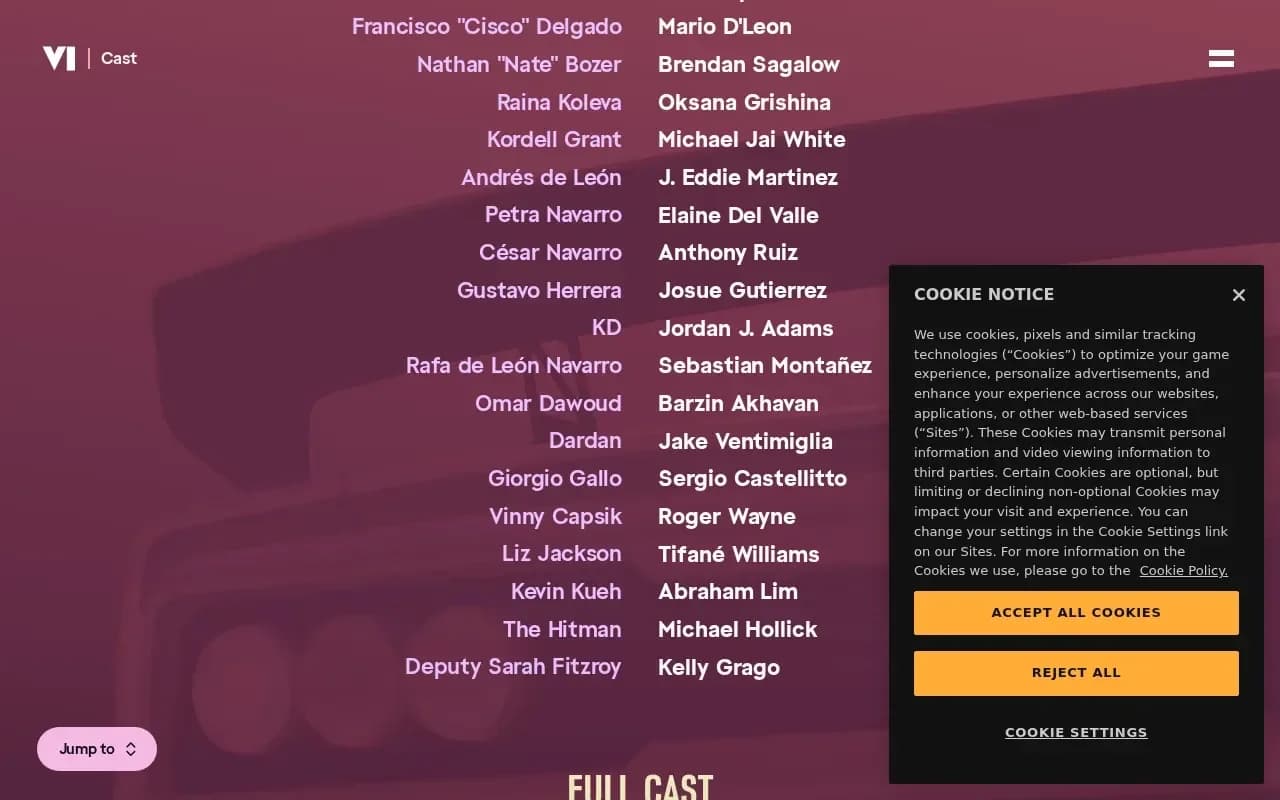
The official GTA 6 credits list Michael Hollick under the role "The Hitman." Rockstar's GTA IV manual credits separately identify him as Niko Bellic.
Those are two verifiable entries. Placing them side by side establishes continuity of the performer, but it does not turn the newer role label into a different name.
The actual Rockstar credits entry below labels Michael Hollick's role as The Hitman; the wording is the distinction being discussed in this section.
Why does Michael Hollick's return raise questions about Niko?
Michael Hollick's return raises questions about Niko because his earlier performance is closely associated with that character. Fans naturally look for continuity when a familiar voice appears in a new installment.
The interpretation is understandable, but familiarity is not a substitute for identification. A performer can portray a new character, return in an unnamed role or take part in material whose context only becomes clear when you reach it.
What would establish that the character is Niko Bellic?
A clear identification of Niko Bellic in GTA 6 would require evidence that connects the character, not just the actor, to that name. Relevant evidence could include explicit dialogue, an unambiguous in-game identification or a direct confirmation from Rockstar.
When reading a cameo claim, separate these three levels:
Official credit: the documented performer and role label.
Gameplay evidence: what a complete scene actually shows or says.
Fan interpretation: a conclusion drawn from voice, appearance or context.
A responsible account can discuss all three, provided it does not describe the last category as an official announcement.
Can you check the credits without spoiling GTA 6?
Checking the full GTA 6 credits can expose you to character names and roles you have not encountered yet. If you want to stay spoiler-free, stop at the specific credit discussed here rather than scrolling through the entire cast.
The same caution applies to cameo videos. A thumbnail or video title can reveal the scene's context before you choose to watch it. Searching for a performer instead of a character does not guarantee spoiler-free results.
What is the safest conclusion from the available credits?
The supported conclusion is that Michael Hollick is credited in GTA 6 as The Hitman and was credited as Niko Bellic in GTA IV. The identity claim beyond those entries should be evaluated against direct story evidence.
That preserves the interesting part of the discovery without giving a credit more authority than it has. It also leaves readers free to encounter the character in context instead of having a debated interpretation presented as settled fact.
Who is Niko Bellic, and why do GTA players remember him?
Niko Bellic is the central character of Grand Theft Auto IV, arriving in Liberty City with hopes of escaping his past. Rockstar's description contrasts that hope with his cousin Roman's promise of opportunity and wealth.
That older story explains the interest in a possible return. A familiar character can carry unresolved emotional weight for players even when a new game follows different protagonists. People are not only asking whether they recognize a voice; they are asking what another appearance might imply about the life they last saw.
That is also why a careless cameo headline can be unusually revealing. Confirming a role, naming a chapter or describing a confrontation may disclose both identity and context before someone has reached that part of the game.
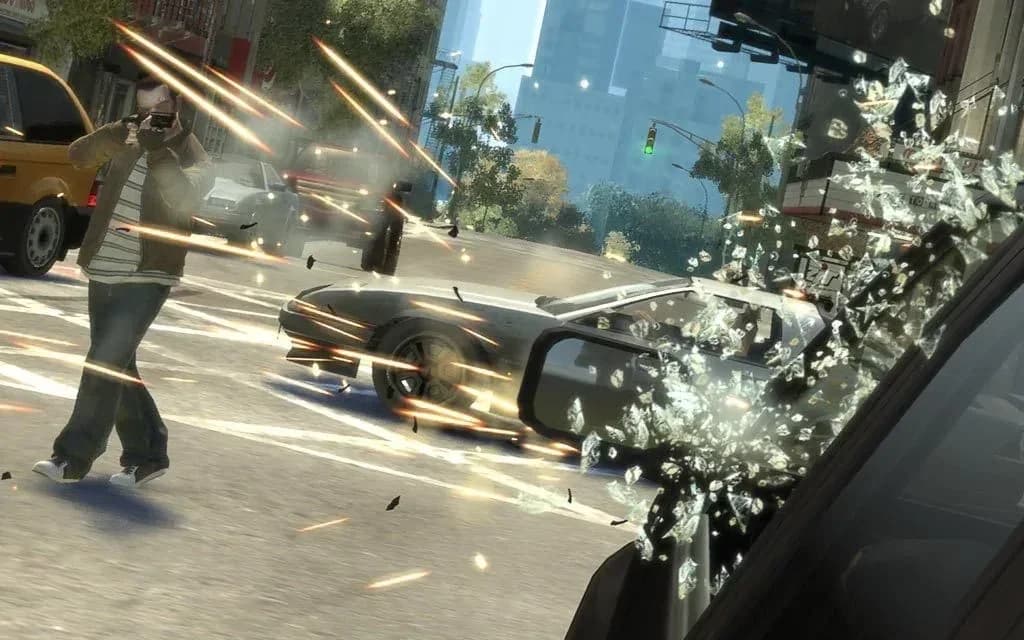
The official GTA IV image below illustrates the earlier game's Liberty City setting; it is not evidence of a GTA VI cameo.
What is the difference between a cameo, a reference and an Easter egg?
A cameo is an appearance, a reference is a mention, and an Easter egg is a deliberately placed detail that may acknowledge earlier material without carrying the same narrative weight. These terms should not be used as if they establish the same thing.
The distinction helps make sense of a returning-character claim:
Claim | What would support it | What it would not establish alone |
|---|---|---|
The actor returned | An official performance credit | The character's full identity |
The character is mentioned | Readable or audible in-game material | A physical appearance in the story |
The character appears | A complete identifiable scene | That the character is playable |
The character is playable | Actual player control in the released game | A future expansion or separate campaign |
A headline can compress these distinctions until an actor credit sounds like confirmation of a playable campaign. Keeping them separate makes it easier to understand what has actually been discovered.
Does The Hitman credit mean Niko is playable?
The Hitman performance credit does not establish that Niko Bellic is playable in GTA 6. A cast listing describes performance, not the amount of control a player has over the role.
The same applies to a hypothetical appearance in a cutscene: being present in the story would not automatically make a character selectable. Claims about playable characters, extra missions or downloadable expansions should each have their own evidence.
For a spoiler-light check, ask what the claim specifically promises. If the answer is only that an actor's name appears in the credits, there is no basis for adding a playable-character conclusion to it.
Can a GTA 6 cameo settle GTA IV's ending?
A GTA 6 cameo should only be used to interpret GTA IV's ending when the later scene explicitly establishes the relevant history. An actor's name in the credits cannot settle which earlier choices the story assumes.
Even a recognizable returning character may leave parts of the past unspecified. A new scene can continue someone's life without explaining every earlier event. The careful approach is to distinguish what the scene says from what you infer about the intervening years.
This matters for spoiler discussions: a theory about the old game can accidentally become an unsupported statement about the new one. If you want to compare continuities, keep a record of the exact dialogue rather than relying on a remembered summary.
How can you evaluate a claimed Niko scene?
You can evaluate a claimed Niko scene by checking its continuity, context and origin, rather than relying on a voice resemblance in a short clip.
Before treating a clip as proof, consider these practical questions:
Does it show an uninterrupted scene rather than unrelated cuts?
Is the footage from the released game rather than a mod or recreation?
Does any dialogue explicitly identify the person?
Is the character name supplied by the game or added by the uploader?
Does the conclusion match the limited evidence shown?
These checks are useful without requiring you to watch a spoiler compilation. If the clip itself would reveal more than you want to know, it is reasonable to postpone the answer until you encounter the scene naturally.
What should you take away from the Niko Bellic discussion?
The most useful distinction in the Niko Bellic discussion is between verified credits, observed story material and interpretation. Michael Hollick's documented role is an interesting discovery; it should be described accurately before broader claims are added.
If your priority is avoiding spoilers, the credits connection is enough to understand why the topic is trending. If you want the full story answer, look for direct scene evidence and accept that it may reveal late-game context. Either choice is more useful than having a confident headline make the decision for you.
Best of the week — in your inbox
No spam. Only top Gosta stories. Unsubscribe in one click.
Comments