
Gold Price vs What You Pay: Spot Quotes, Coins, Bars and Dealer Premiums
The gold price on a market chart is not necessarily the amount you will pay for a coin, a bar, or a piece of jewelry.


Contents8
- What does the spot gold price mean?
- Why the retail gold price includes a premium
- How to compare a gold price per gram
- Coins, bars, and jewelry: which gold price are you comparing?
- Why the selling gold price can be lower than the buying price
- Gold price exposure: physical gold or a financial product?
- A practical gold price shopping checklist
- FAQ
The gold price on a market chart is not necessarily the amount you will pay for a coin, a bar, or a piece of jewelry. The retail product includes its own size, purity, manufacturing, distribution, and selling costs. Understanding that difference makes a comparison much more useful than simply looking for the lowest advertised number.
If you are checking the gold price before buying, start by deciding which product you mean. Bullion, collectible coins, jewelry, and securities linked to gold can have different economics. A large discount on one category does not make it directly comparable with another.
What does the spot gold price mean?
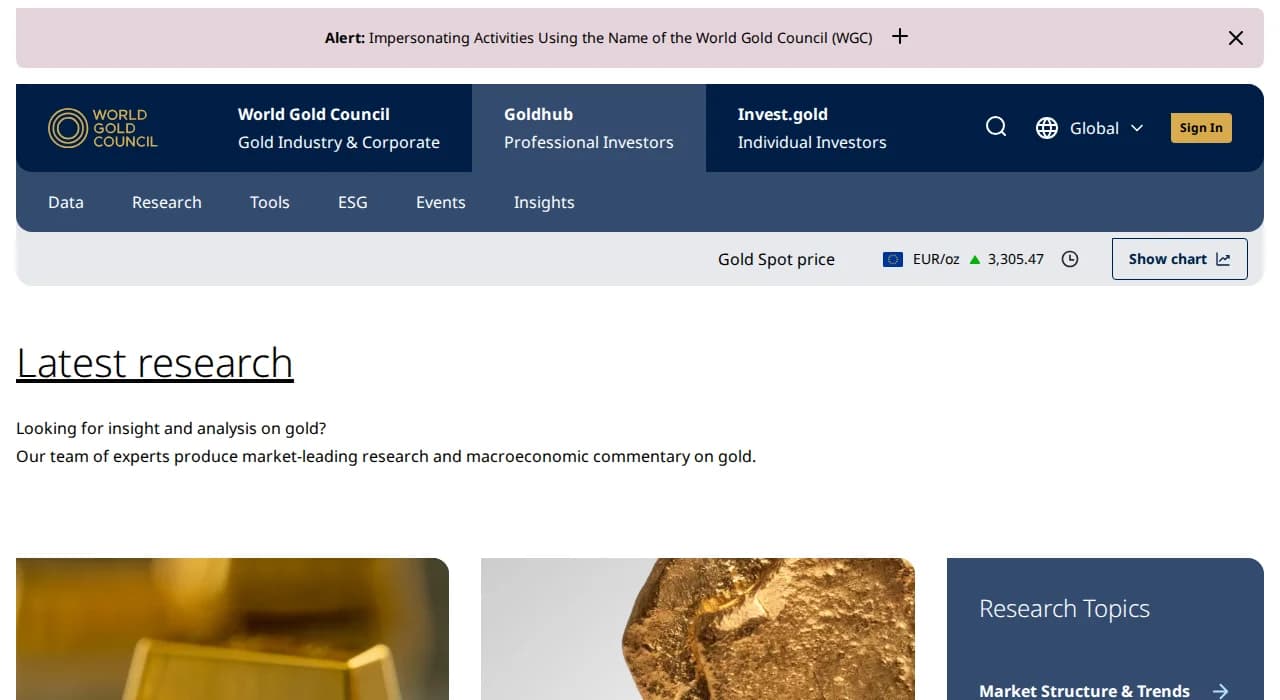
The spot gold price is a market reference generally expressed for a troy ounce of gold, with the currency and quote conditions specified by the provider. The World Gold Council's responsible-investing materials distinguish the underlying metal value from product premiums and related considerations.
When you compare a gold price quote, record the currency, time, and whether you are looking at a buying side, a selling side, or another reference. A delayed chart and a dealer's current retail offer do not necessarily describe the same transaction.
Be especially careful with gold price units. A troy ounce is not the ordinary ounce used in many kitchen contexts. If one offer is expressed per gram and another per troy ounce, convert them consistently before comparing the gold price.
Why the retail gold price includes a premium
The retail gold price usually includes a premium over the value of the fine gold in the item. The premium can reflect fabrication, distribution, dealer economics, product size, and demand for that particular form of bullion.
A premium is not automatically evidence of a bad deal. A small product can cost more to manufacture and distribute per unit of metal than a larger one. For a gold price comparison, the question is whether you understand what you are paying for and how the complete offer compares with similar products.
The Royal Canadian Mint's bullion guide is a useful primary explanation of buying considerations. Keep the focus on comparable size, metal content, condition, and terms rather than assuming every object described as gold should sell at the same premium.
How to compare a gold price per gram
Compare a gold price per gram by using the item's fine-gold content, not merely its total weight. A product's stated purity affects how much of that weight is gold. Read the specification and do not treat a plated item as equivalent to solid bullion.
For an illustrative gold price comparison, imagine two products containing the same amount of fine gold but carrying different retail prices. The difference is not explained by metal weight alone. You would then investigate the premium, condition, brand or mint, collectibility, and transaction terms.
Gold price comparison item | What to confirm |
|---|---|
Weight | Which unit is used and whether the figure is total or fine-metal weight |
Purity | The stated fineness or karat information |
Product type | Bullion, collectible, jewelry, or another form |
Total gold price and charges | Premium, delivery, payment fees, and applicable charges |
Resale gold price terms | What a dealer would pay to buy it back under current conditions |
Coins, bars, and jewelry: which gold price are you comparing?
The gold price for a coin, a bar, and jewelry can reflect different things. Bullion is often considered primarily for metal exposure, while collectible value or design and craftsmanship can contribute substantially to other products.
Do not assume that an attractive piece of jewelry is an efficient way to match a market gold price. It may be a perfectly good purchase for wearing or giving, but that is a different purpose from seeking a close relationship to bullion value.
Similarly, a collectible coin may carry a premium that depends on factors beyond its metal. If you do not understand those factors, avoid treating the difference as a guaranteed future profit. A gold price chart cannot explain the entire value of every collectible item.
Why the selling gold price can be lower than the buying price
The selling gold price offered to a customer and the amount a dealer will pay to buy a product back are usually different sides of a transaction. That gap matters if you expect to resell. Looking only at the purchase offer can hide a meaningful part of the economics.
Ask for a current, like-for-like buyback quote where available, and understand its conditions. A gold price estimate may change after an item is inspected or depending on condition, packaging, authentication, or other stated requirements.
Include delivery, storage, payment method, and any relevant taxes or fees in your own comparison. An advertised gold price is not a complete cash-flow calculation until the full cost of acquiring, holding, and disposing of the product is considered.
Gold price exposure: physical gold or a financial product?
Physical gold and a financial product linked to the gold price involve different arrangements. Physical ownership raises questions about authenticity, storage, insurance, and resale. A financial product has its own structure, fees, trading conditions, and method of obtaining exposure.
Do not assume that a gold price label makes every financial product equivalent to holding a particular bar. Read the product documentation and identify what you actually own, how costs are charged, and how the exposure is maintained.
The appropriate comparison depends on your purpose. A gift, a collectible purchase, a physical holding, and a portfolio allocation are different decisions. A product can suit one purpose while being an awkward fit for another.
A practical gold price shopping checklist
A practical gold price checklist starts with an exact specification and ends with a total cost. Save the details of the offer rather than relying on a screenshot of a headline chart.
Identify the product and fine-gold content.
Use the correct gold price unit and currency.
Check the gold price quote's timestamp.
Separate metal value from the premium.
Compare the complete delivered gold price.
Understand authenticity, storage, and resale arrangements.
A rapidly changing gold price can create pressure to act quickly, but it does not make unclear terms easier to understand. A careful comparison is still useful when you decide not to buy: it shows which part of the offer you have not yet been able to evaluate.
Gold price questions
Is the gold price on a chart the price of a necklace?
No. A necklace's gold price can include craftsmanship, design, retail costs, and a different purity. Its total value is not simply the spot quote multiplied by total weight.
Does a smaller bar always have the lowest gold price per gram?
No. The gold price for smaller products can include higher premiums per unit of fine gold. Compare equivalent specifications and total costs.
Is a low gold price enough to confirm a good offer?
No. A gold price comparison still needs checks on authenticity, seller reliability, product specification, charges, and resale conditions. A useful offer lets you identify the item, understand the charges and explain the seller's conditions before paying anything.
Best of the week — in your inbox
No spam. Only top Gosta stories. Unsubscribe in one click.
Comments