
How Much Iron Should I Take? When, With What, and What to Avoid
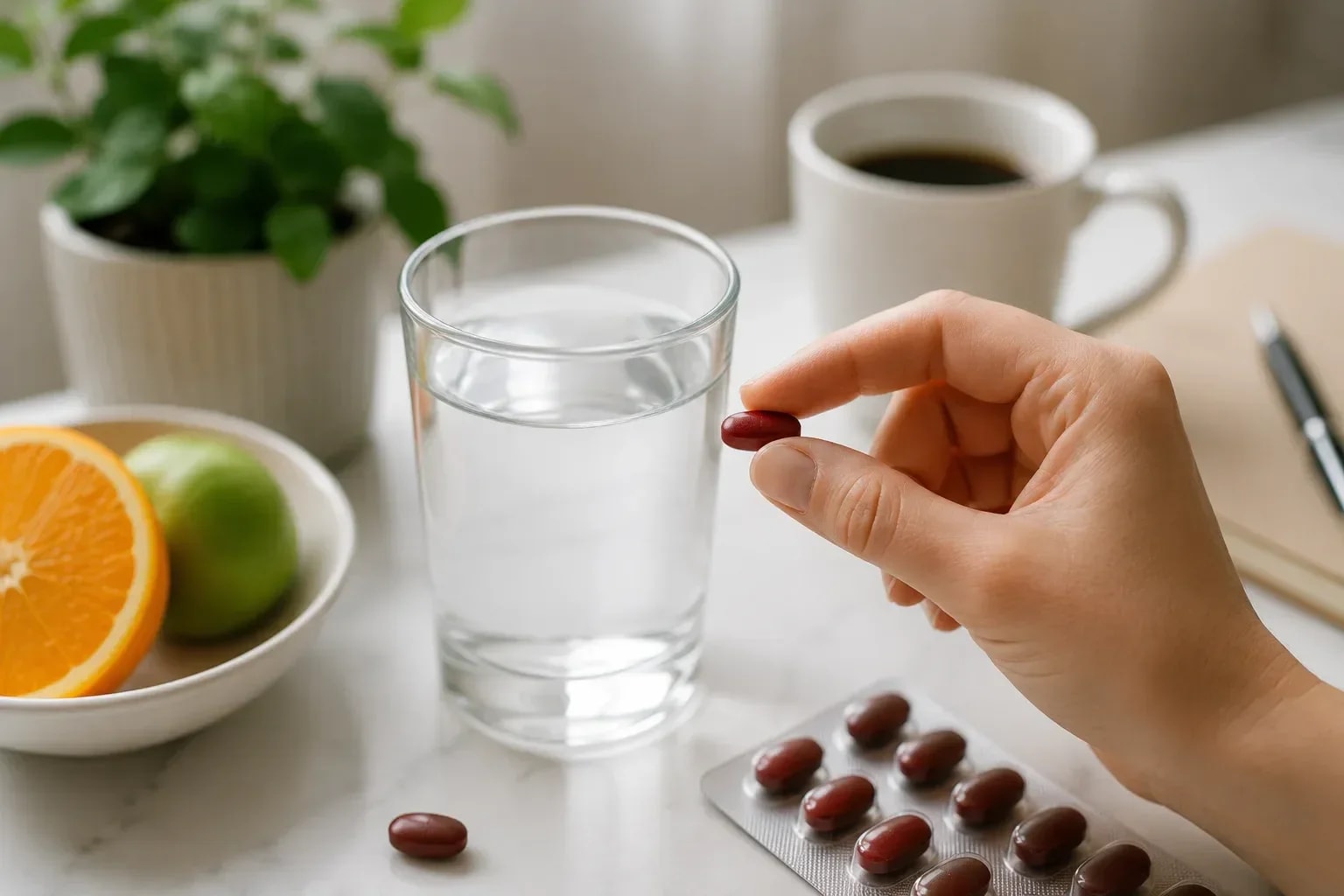
If you are asking how much iron should I take, the safest answer is: do not choose a treatment dose from a symptom list or a generic article. The right amount depends on whether iron deficiency is actually present, your blood results, age, pregnancy status, medical history, and the amount of elemental iron in the product. Iron is useful when it is needed, but too much can be harmful. For confirmed deficiency or anemia, use the dose and schedule recommended by a clinician or pharmacist and check

Contents14
- How Much Iron Should I Take? A Short Cheat Sheet
- When Is It Better to Take Iron — in the Morning or in the Evening
- What to Drink Iron With
- Do You Need to Take Iron With Vitamin C?
- Can You Drink Coffee After Iron?
- Is It Possible to Drink Tea After Iron?
- Iron and Dairy Products — What Interval Is Needed
- Iron and Calcium: Can They Be Taken Together or Not?
- What Can You Not Eat After Iron
- Is It Possible to Take Iron After a Meal?
- What Are the Side Effects of Iron
- Is Black Stool After Iron Normal?
- Is It Possible to Take Iron Together With Other Medicines
- Why You Should Not Start Iron Yourself
If you are asking how much iron should I take, the safest answer is: do not choose a treatment dose from a symptom list or a generic article. The right amount depends on whether iron deficiency is actually present, your blood results, age, pregnancy status, medical history, and the amount of elemental iron in the product. Iron is useful when it is needed, but too much can be harmful. For confirmed deficiency or anemia, use the dose and schedule recommended by a clinician or pharmacist and check whether follow-up blood tests are needed.
For healthy adults, nutrition recommendations are not the same thing as a therapeutic supplement dose. The U.S. National Institutes of Health lists a tolerable upper intake level of 45 mg iron per day for adults from food, drinks, and supplements combined, while noting that clinicians may prescribe more temporarily when medically necessary.
How Much Iron Should I Take? A Short Cheat Sheet
Do not start high-dose iron only because you feel tired.
Confirm the reason for supplementation when possible with appropriate blood tests.
Check the label for elemental iron, not only the total weight of the iron compound.
Follow the prescribed or pharmacist-recommended dose rather than combining several iron products.
Iron is often absorbed best away from food, but taking it with food may be appropriate if it causes stomach upset.
Tea, coffee, dairy, calcium, and some medicines can interfere with absorption or interact with iron.
Keep iron supplements securely out of children's reach.
If you have unexplained fatigue, shortness of breath, weakness, palpitations, unusually heavy bleeding, or recurrent low iron results, the next step is medical evaluation rather than simply increasing a supplement.
When Is It Better to Take Iron — in the Morning or in the Evening
There is no universal rule that morning is medically superior to evening. Consistency and separation from interfering food, drinks, or medications matter more.
Some people find morning easiest because they can take iron before breakfast. Others tolerate it better later in the day. If a clinician has given a specific schedule, use that schedule. If the supplement causes nausea on an empty stomach, ask whether taking it with a small amount of food or adjusting the timing is appropriate.
Do not take an extra dose merely because you think absorption was imperfect.
What to Drink Iron With
Plain water is the simplest choice. Some clinicians or pharmacists recommend taking iron with a source of vitamin C because vitamin C can improve absorption of nonheme iron.
Avoid swallowing the tablet with coffee, tea, or milk. If you use liquid iron, follow the product instructions carefully because some preparations can stain teeth; a pharmacist can explain how to take that specific formulation.
Do You Need to Take Iron With Vitamin C?
Not everyone needs a separate vitamin C supplement. Vitamin C can increase iron absorption, and some guidance suggests orange juice or vitamin C with iron, but that does not mean more vitamin C is always better.
If your iron product already contains vitamin C, adding another supplement may be unnecessary. People with certain medical conditions may also have reasons to avoid high-dose vitamin C. Ask a clinician or pharmacist if you are unsure.
Can You Drink Coffee After Iron?
Coffee can reduce iron absorption. A practical approach is to leave about a two-hour gap between iron and coffee, consistent with NHS guidance for ferrous sulfate.
This includes strong coffee drinks even if they contain milk. If morning coffee is non-negotiable, move the iron to another part of the day rather than taking both together.
Is It Possible to Drink Tea After Iron?
Tea can also reduce iron absorption. Leave roughly two hours between tea and an iron dose unless your clinician has given different instructions.
Black and green tea are the main concern because compounds in tea bind iron. The effect is especially relevant when you are trying to correct deficiency, not just maintain a generally balanced diet.
Iron and Dairy Products — What Interval Is Needed
Milk, yogurt, cheese, and other dairy foods contain calcium, which can interfere with iron absorption. NHS guidance for ferrous sulfate recommends leaving a two-hour gap before having dairy, tea, coffee, or eggs.
You do not need to eliminate dairy from your diet. The goal is simply not to take it at the same time as the iron supplement.
Iron and Calcium: Can They Be Taken Together or Not?
It is usually better to separate iron and calcium supplements because calcium can interfere with iron absorption. If both are medically indicated, take them at different times according to the schedule suggested by a pharmacist or clinician.
Check multivitamin labels as well. A product may already contain both iron and calcium, and adding separate supplements can make the total intake harder to track.
What Can You Not Eat After Iron
You do not need a long forbidden-food list. The most relevant things to separate from iron are:
tea;
coffee;
milk and dairy products;
calcium supplements;
some high-fiber or bran-heavy foods at the same moment;
eggs, according to some ferrous-sulfate guidance.
The exact interval may depend on the product. Two hours is a common practical separation for food and drinks that reduce absorption.
Is It Possible to Take Iron After a Meal?
Yes, especially if taking it on an empty stomach causes nausea or abdominal discomfort. Iron is often absorbed better on an empty stomach, but a dose you can tolerate consistently may be more useful than one that repeatedly makes you feel sick.
NHS guidance notes that ferrous sulfate can be taken with or after food if it upsets the stomach. Follow the instructions for your specific preparation because formulations differ.
What Are the Side Effects of Iron
Common oral-iron side effects include nausea, stomach discomfort, constipation, diarrhea, and dark stools. These effects can vary by formulation and dose.
Do not assume severe symptoms are something you simply have to tolerate. If side effects are significant, contact a clinician or pharmacist. They may recommend a different formulation, timing, or schedule rather than abandoning treatment or increasing the dose on your own.
Is Black Stool After Iron Normal?
Dark or black stool is a common effect of oral iron. However, black stool can also have other medical causes, including bleeding in the digestive tract.
If the change began after starting iron and you otherwise feel well, it may be expected. If stool is tar-like, you feel unwell, have abdominal pain, dizziness, weakness, or any concern about bleeding, seek medical advice promptly rather than assuming iron is the explanation.
Is It Possible to Take Iron Together With Other Medicines
Sometimes, but iron interacts with several medicines and minerals. It can reduce absorption or effectiveness of drugs such as levothyroxine and certain antibiotics, and it can interact with antacids and supplements containing calcium, magnesium, or zinc.
Do not invent a universal "two-hour rule" for every medication. The safe interval depends on the drug. Show a pharmacist or clinician your complete medication and supplement list and ask how to separate them.
Why You Should Not Start Iron Yourself
Low iron is not the only cause of fatigue, hair shedding, dizziness, headaches, reduced exercise tolerance, or poor concentration. Taking iron without confirming the problem can delay the real diagnosis.
There is another issue: iron accumulates in some medical conditions, and excessive intake can be harmful. A proper evaluation may include a complete blood count and ferritin, with additional tests depending on the situation. The goal is to find why iron is low, not only to raise a number temporarily.
Is It Possible to Raise Iron Only With Foods
Diet can help prevent or improve mild iron deficiency, but food alone may not correct clinically significant iron-deficiency anemia quickly enough. The answer depends on the cause and severity.
Iron-rich foods include meat, legumes, fortified cereals, leafy greens, nuts, seeds, and dried fruit. Combining plant sources with vitamin-C-rich foods can improve absorption. If blood loss, pregnancy, gastrointestinal disease, or another medical issue is driving deficiency, diet alone may not solve it.
How Long Should You Take Iron?
Treatment often continues for months, and clinicians may recommend continuing after blood counts improve so iron stores can recover. NHS guidance for ferrous sulfate notes that treatment for iron-deficiency anemia may continue for 3–6 months after improvement in some cases.
That is not a universal prescription. Follow-up depends on the cause, starting ferritin and hemoglobin, response, and ongoing iron losses. Do not stop or continue indefinitely based only on how energetic you feel.
What to Do If You Forgot to Take Iron
Follow the instructions for your product. In general, do not double the next dose to "catch up." NHS guidance for ferrous sulfate advises taking the missed dose when remembered unless it is almost time for the next one, in which case the missed dose is skipped.
If you miss doses often, choose a routine that avoids coffee, tea, dairy, and interacting medicines but still fits your day.
Why Iron Preparations Should Be Hidden From Children
Iron overdose can be extremely dangerous, especially for children. Store tablets, gummies, drops, and prenatal vitamins in their original child-resistant packaging and out of sight and reach.
Do not describe iron tablets as candy. If a child may have swallowed an unknown amount, seek urgent poison-control or emergency medical advice rather than waiting for symptoms.
How to Take Iron Correctly: 7 Main Rules
Confirm the need. Do not use high-dose iron as a guess for tiredness.
Know the product. Check how much elemental iron it contains and follow the recommended dose.
Use water and consistent timing. Choose a schedule you can follow.
Separate tea, coffee, dairy, and calcium. A two-hour gap is commonly recommended for ferrous sulfate.
Check medicine interactions. Ask a pharmacist about levothyroxine, antibiotics, antacids, and other prescriptions.
Manage side effects safely. Taking iron with food may improve tolerance, but do not change treatment repeatedly without advice.
Store it securely and follow up. Keep iron away from children and use repeat blood tests when your clinician recommends them.
These rules matter more than chasing the "perfect" minute of the day.
One more point that prevents dosing mistakes is the difference between the name of the iron salt and the amount of elemental iron. A tablet may say ferrous sulfate, ferrous fumarate, or another compound on the front, while the nutrition or medicine panel tells you how much actual iron the dose provides. Two tablets with the same total tablet weight can therefore deliver very different amounts of elemental iron. This is one reason supplement comparisons should be made with a pharmacist rather than by counting tablets.
You should also not use another person's prescription schedule as a template. Alternate-day dosing, once-daily dosing, and other regimens may be chosen for different clinical reasons, and newer evidence has changed how some clinicians balance absorption and side effects. The appropriate plan depends on the diagnosis and product. If treatment is not improving blood results as expected, the answer is not automatically "take more"; clinicians may need to check adherence, ongoing blood loss, absorption problems, or whether the original diagnosis was correct.
If a label, prescription, and online chart seem to disagree, pause and ask a pharmacist which number refers to elemental iron. That single clarification prevents many avoidable dosing errors.
FAQ
How Do You Take Iron Correctly?
Use the dose recommended for your actual diagnosis, take it consistently, and separate it from known absorption inhibitors and interacting medicines.
When Is It Better to Take Iron — Morning or Evening?
Either can work. Choose a time that fits the required food and medication gaps and that you tolerate well.
What Should You Drink Iron With?
Water is the simplest choice. A clinician may suggest a vitamin-C-containing drink or supplement in some situations.
Can You Take Iron on an Empty Stomach?
Often yes, and absorption may be better, but taking it with food can be appropriate if it causes stomach upset.
How Long After Iron Can You Drink Coffee or Tea?
About two hours is a common practical gap for ferrous sulfate.
Can You Drink Iron With Milk?
It is better not to. Calcium in dairy can reduce iron absorption, so separate them.
Is It Possible to Take Iron and Calcium at the Same Time?
Usually separate them. Ask a pharmacist for the right interval for your products.
Can You Eat After an Iron Pill?
Yes, but absorption may be best away from food. If the medicine upsets your stomach, taking it with or after food may be recommended.
Is It Necessary to Take Iron With Vitamin C?
Not always. Vitamin C can help absorption, but a separate supplement is not automatically necessary for everyone.
Why Does Iron Make Me Feel Sick or Change Stool Color?
Nausea, stomach upset, constipation, diarrhea, and dark stools are common oral-iron effects. Significant or concerning symptoms should be discussed with a clinician.
Best of the week — in your inbox
No spam. Only top Gosta stories. Unsubscribe in one click.
Comments