
Google's Pixel Tag Can Find Your Keys Through a Billion Android Phones: Why Google Built Its Own AirTag
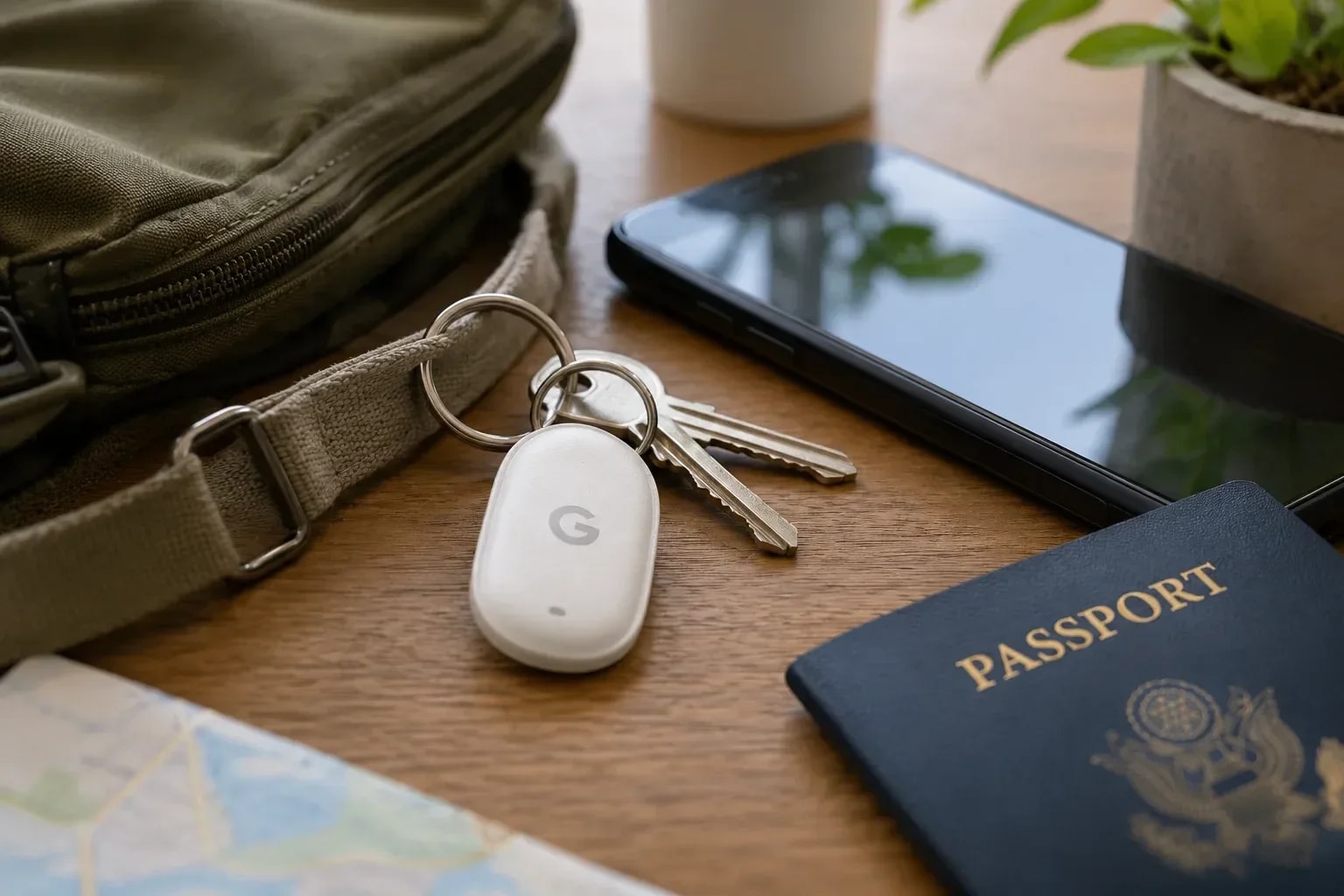
The google pixel tag is Google's first own-brand item tracker, designed to help locate keys, bags, wallets, and luggage through the Find Hub network. Google announced it in August 2026 at $29 for one or $99 for a four-pack, with sales scheduled to begin on November 11. The big idea is familiar from Apple's AirTag: when your tag is far from your phone, nearby devices in a large crowdsourced network can help update its location securely.

Contents14
- What is a Pixel Tag and why is it needed?
- Why Google only released the Pixel Tag now
- How Pixel Tag works through Find Hub
- What is Pixel Tag UWB Precision Search?
- Pixel Tag can even find a lost phone
- Why is Gemini here?
- Does Pixel Tag only work with Pixel smartphones?
- How many people can use one Pixel Tag
- What a Pixel Tag looks like
- Is Pixel Tag afraid of water
- What is the battery in the Pixel Tag and how long does it last
- Pixel Tag vs. AirTag 2: Key Differences
- How Pixel Tag is better than AirTag
- What AirTag 2 still has an advantage in
The google pixel tag is Google's first own-brand item tracker, designed to help locate keys, bags, wallets, and luggage through the Find Hub network. Google announced it in August 2026 at $29 for one or $99 for a four-pack, with sales scheduled to begin on November 11. The big idea is familiar from Apple's AirTag: when your tag is far from your phone, nearby devices in a large crowdsourced network can help update its location securely.
Google says Find Hub uses a network of more than one billion Android devices. That does not mean every Android phone is constantly broadcasting your location to strangers. The system is designed around encrypted, privacy-protected location reporting and anti-stalking safeguards. Pixel Tag adds Google's own hardware to a network that already supported third-party tracker tags.
What is a Pixel Tag and why is it needed?
Pixel Tag is a small Bluetooth and ultra-wideband tracker for everyday objects. Attach it to keys, place it in luggage, or keep it with another item you frequently misplace. In the Find Hub app, you can see the last known or network-reported location, make the tag play a sound when nearby, and use compatible phones for more precise directional guidance.
Google did not invent this category. Apple AirTag made item trackers mainstream, while Android users have had third-party options for years. What Pixel Tag changes is the presence of a first-party Google tracker that is designed from the start around Pixel hardware, Find Hub, Gemini features, and Google's own accessory ecosystem.
The practical appeal is straightforward: users no longer have to choose an Android tracker from another manufacturer simply because Google lacked its own product.
Why Google only released the Pixel Tag now
The timing makes more sense when you look at Find Hub rather than the tag itself. A crowdsourced tracker becomes far more useful when the surrounding device network is large, reliable, and privacy-protected. Google spent years building Android's device-finding infrastructure, expanding support for tracker tags, and developing cross-platform unwanted-tracker alerts with Apple.
By 2026, Find Hub had become a broader location platform rather than only a way to find a lost phone. Google also added ultra-wideband support, more device-sharing features, and deeper Gemini integration.
So Pixel Tag arrives after the software and network are mature enough to make Google's own hardware worthwhile.
How Pixel Tag works through Find Hub
There are two main situations.
When the tag is close to you, your phone can connect directly over Bluetooth. You can make the tag ring and, on compatible hardware, use precision finding for directional guidance.
When the tag is far away, Find Hub can use nearby participating Android devices to detect it and securely relay an updated location. Google describes the network as more than one billion Android devices worldwide.
The owner sees the location in Find Hub. Nearby people do not get access to the owner's account or a visible message saying who owns the item.
What is Pixel Tag UWB Precision Search?
UWB stands for ultra-wideband, a short-range radio technology that can measure relative position more precisely than ordinary Bluetooth signal strength alone.
With a compatible Android phone, Pixel Tag can provide visual distance and directional cues when you are physically near the lost item. Instead of only knowing that the keys are "somewhere in the room," the phone can guide you toward them more directly.
Compatibility matters. Both the phone and the tracker need the necessary hardware and software support. A user can still use standard Bluetooth finding without UWB, but the most accurate nearby guidance depends on supported devices.
Pixel Tag can even find a lost phone
The relationship works in both directions. Pixel Tag includes a button that can be used to make a paired phone ring when the phone itself is the item you cannot find.
That is useful when the tag is on your keys but the phone is under a cushion, in another room, or hidden in a bag. It turns the tracker into a simple physical shortcut for finding the phone.
This does not replace Find Hub's broader lost-phone tools, but it is faster for ordinary at-home situations.
Why is Gemini here?
Google is connecting Gemini to Find Hub so some finding tasks can be initiated through natural-language commands. The idea is that you can ask Gemini to help locate or ring an item rather than manually navigating every Find Hub screen.
Pixel Tag is also launching at a time when Google is using Gemini to help remember the location of items even when they do not have a tracker. For example, a user can tell Gemini where an object was placed and later ask for that remembered location.
The two approaches complement each other: Pixel Tag provides physical location hardware, while Gemini can make the software easier to use.
Does Pixel Tag only work with Pixel smartphones?
No. Google positions Pixel Tag as an Android tracker rather than a Pixel-phone-only accessory. It uses Android Find Hub and is designed for Android 9 or later, although individual features can require newer Android versions or specific hardware.
The most important example is UWB precision finding. A compatible UWB-equipped phone is required for full directional guidance. A phone without UWB may still pair with the tag and use ordinary Find Hub functions.
That means "works with Android" and "supports every Pixel Tag feature" are not the same statement.
How many people can use one Pixel Tag
Google says a Pixel Tag can be shared with up to 10 people. That is useful for shared household items, luggage used by a family, or keys that several trusted people legitimately use.
Sharing should be intentional. A tracker is not a tool for secretly monitoring another person's movements. Google and Apple both support unwanted-tracker warnings to alert users when an unknown compatible tracker appears to be traveling with them.
For family use, share the item through the supported account controls rather than simply handing people account passwords.
What a Pixel Tag looks like
Pixel Tag is thinner and more elongated than Apple's round AirTag. Google uses a compact pill-like form with a metal face, a speaker opening, and a replaceable battery compartment on the back.
The product is designed to fit into small spaces such as luggage pockets or accessory holders. Google also offers an attachment accessory for keys and similar items.
The tracker itself does not rely on a large display. Most interaction happens through Find Hub on a phone or watch.
Is Pixel Tag afraid of water
Pixel Tag has an IP67 water- and dust-resistance rating. In standardized conditions, that level generally indicates strong dust protection and resistance to temporary immersion in fresh water up to the specified test conditions.
That does not make it a diving accessory or guarantee permanent waterproofing. Water resistance can decline with wear, impact, or damage.
For normal everyday use—rain, splashes, or a damp bag—the rating provides useful protection.
What is the battery in the Pixel Tag and how long does it last
Google rates Pixel Tag for up to about one year of battery life. The battery is user-replaceable rather than permanently sealed into the tracker.
A replaceable coin-cell design is convenient because it avoids discarding the whole tag when the battery runs down. Actual life will vary with ringing, precision-finding use, network activity, temperature, and other factors.
The Find Hub app should warn the owner when the battery is getting low.
Pixel Tag vs. AirTag 2: Key Differences
Both products solve the same basic problem, but they live inside different ecosystems.
Main network | Google Find Hub | Apple Find My |
|---|---|---|
Main phone ecosystem | Android | iPhone/iPad |
Nearby locating | Bluetooth + UWB on compatible devices | Bluetooth + second-generation Apple UWB |
Battery | User-replaceable, up to about one year | User-replaceable CR2032 |
Water/dust rating | IP67 | IP67 |
Network scale | More than 1 billion Android devices | Apple's Find My device network |
Price at launch | $29; $99 four-pack | Depends on market, same general category |
Release year | 2026 | 2026 for AirTag 2 |
The most important difference is not one specification. It is which phone ecosystem you use every day.
How Pixel Tag is better than AirTag
For an Android user, the biggest advantage is native integration. Pixel Tag appears inside Find Hub instead of requiring participation in Apple's Find My ecosystem.
Google also supports item sharing with up to 10 people and gives the tag a physical button that can ring a lost phone. Integration with Gemini and Pixel Watch can reduce the number of steps needed to locate an item.
The Find Hub network's scale is another strength. Google says it includes more than a billion Android devices, which gives the tag a large potential crowdsourced finding network.
None of these points automatically makes it better for an iPhone owner.
What AirTag 2 still has an advantage in
AirTag has years of brand recognition and an established Find My workflow familiar to iPhone users. Apple's ecosystem integration is especially straightforward for people already using iPhone, iPad, Apple Watch, and other Apple devices.
AirTag 2 also uses Apple's second-generation UWB hardware and expanded Precision Finding support. The exact real-world advantage will depend on phone compatibility, network conditions, and location.
For most buyers, ecosystem fit matters more than comparing isolated radio specifications.
Is Pixel Tag 'AirTag for Android'?
That description is useful as shorthand. Both are small trackers that combine nearby Bluetooth/UWB finding with a large crowdsourced device network.
But Pixel Tag is not a clone of the AirTag design. It has its own shape, Google software integration, Find Hub sharing model, Gemini connection, and phone-ringing button.
A better description is "Google's first-party Find Hub tracker."
Will Pixel Tag work with iPhone?
Not as a normal Find Hub tracker for an iPhone owner. Pixel Tag is designed around Android and Google's Find Hub ecosystem.
However, iPhones participate in the cross-platform unwanted-tracker safety system. If an unknown compatible tracker appears to be moving with an iPhone user, the phone can provide an alert even though the person is not using Pixel Tag as their own tracker.
That safety interoperability should not be confused with full product compatibility.
Can I put the Pixel Tag in a suitcase?
Yes. Google explicitly presents luggage as one of the intended item-tracking uses.
A tag can help locate baggage around home, at an airport, or after it has moved beyond your phone's direct Bluetooth range. It does not replace the airline's baggage-tracking system, and a location update does not mean you should enter restricted areas or try to recover baggage yourself.
If luggage is lost in transit, share useful location information with the carrier while following its recovery process.
Can Pixel Tag be used to track a person
It is designed for items, not secret tracking of people. Do not use a tracker to monitor someone without their knowledge or permission.
Google's Find Hub ecosystem includes unwanted-tracker protections, and Apple and Google have worked on cross-platform alerts so phones can warn users about unknown trackers traveling with them.
Those safeguards are a core part of modern tracker design because item-finding hardware can otherwise be misused.
Should I buy Pixel Tag instead of a third-party Android tracker?
Pixel Tag is most attractive if you want a first-party Google product with direct Find Hub integration, UWB precision finding on supported phones, a replaceable battery, Google account sharing, and Gemini/Pixel ecosystem features.
A third-party tracker can still make sense if it is cheaper, has a different physical shape, includes an attachment loop, uses a rechargeable battery, or offers a form factor better suited to a wallet or bicycle.
The network matters as much as the brand. Check whether the tracker uses Google's Find Hub network and whether your phone supports the features you care about.
When will the Pixel Tag go on sale and how much will it cost?
Google announced Pixel Tag on August 12, 2026. The company says it will be available starting November 11, 2026.
US pricing is $29 for one tag and $99 for a four-pack. Availability, taxes, and local pricing can vary by country.
Because the product has been announced but is not yet generally on sale as of September 8, 2026, buyers should distinguish official specifications from hands-on claims based on pre-release hardware.
The $29 Pixel Tag: Who Really Needs It?
Pixel Tag is useful for people who regularly misplace small valuable items or travel with luggage they want to keep track of. It is also a logical choice for Android households that previously wanted an AirTag-style experience without moving to Apple's ecosystem.
It is less compelling if you rarely lose items, already own Find Hub-compatible trackers, or use an iPhone as your main device.
The best use cases are ordinary, consent-based item tracking: keys, bags, luggage, shared household objects, and similar belongings.
A useful way to judge the product is to separate three layers that are often mixed together. The tag itself provides the radio, speaker, button, battery, and identifier. A nearby Android phone provides the connection to the wider Find Hub system. Google's network then helps return an approximate location when the owner's phone is no longer nearby. That architecture is why the size and privacy rules of the network matter as much as the small piece of hardware attached to the keys.
For everyday use, precision finding is most valuable at the final stage of a search. A network location can get you to the right building, room, parking area, or luggage zone, while UWB on compatible hardware can help narrow the search at close range. If the phone does not support UWB, the tag still retains its broader Bluetooth and Find Hub functions; the experience is simply less directional nearby.
The November launch date also matters for buying decisions. Pixel Tag was announced in August 2026 but was not an immediately available product at announcement. Anyone shopping before November 11 should therefore distinguish announced specifications from hands-on retail availability. Google has stated the US pricing and planned release date, but regional availability, taxes, and retailer timing can differ.
Privacy is the other part of the comparison that should not be reduced to network size. Modern item-tracking systems include alerts intended to warn people about an unknown compatible tracker moving with them. Those protections do not make covert tracking acceptable; the product is meant for belongings and consent-based sharing, not for monitoring another person.
Google Pixel Tag: specifications at a glance
Announced | August 12, 2026 |
|---|---|
Planned availability | November 11, 2026 |
US price | $29 one-pack; $99 four-pack |
Network | Google Find Hub |
Crowdsourced network size | More than 1 billion Android devices |
Nearby connection | Bluetooth |
Precision finding | UWB on compatible devices |
Water/dust resistance | IP67 |
Battery | User-replaceable; up to about one year |
Speaker | Built in |
Reverse finding | Button can ring a paired phone |
Sharing | Up to 10 people |
Main intended items | Keys, wallets, bags, luggage and similar belongings |
Will the Pixel Tag become a real competitor to the AirTag
Yes, because it closes a major first-party hardware gap for Android. Google already had the network; Pixel Tag gives that network an official Google-branded tracker designed around the latest Find Hub capabilities.
The market will still be split largely by phone ecosystem. iPhone users have little reason to abandon AirTag simply because Google now offers a similar product, while Pixel and Android users finally get a directly integrated alternative from Google itself.
The bigger effect may be competitive pressure on third-party Android trackers. They now have to compete not only with each other but with a $29 product carrying the Pixel brand.
FAQ
What is Google Pixel Tag?
It is Google's first own-brand item tracker for the Android Find Hub network. It is designed to help locate keys, luggage, bags, wallets, and other belongings.
When will Pixel Tag be released?
Google says sales will begin on November 11, 2026.
How much does a Pixel Tag cost?
The announced US price is $29 for one or $99 for a four-pack.
How does Pixel Tag find lost items?
Nearby, it uses Bluetooth and compatible UWB precision finding. Farther away, Google's Find Hub network can use participating Android devices to report the tag's location securely.
Does Pixel Tag work with Samsung?
Pixel Tag is designed for Android rather than only Pixel phones. Core compatibility and advanced UWB features depend on Android version and the specific Samsung model's hardware.
Does Pixel Tag work with iPhone?
Not as a normal personal Find Hub tracker. iPhones can still detect unknown compatible trackers as part of cross-platform anti-stalking protections.
Which is better - Pixel Tag or AirTag?
For most people, the better choice follows their phone ecosystem: Pixel Tag for Android/Find Hub users and AirTag for Apple's Find My ecosystem.
Does the Pixel Tag have GPS?
The tag does not need its own standalone GPS connection to provide network finding. It relies on nearby Bluetooth/UWB and the Find Hub crowdsourced network for location updates.
How long does the Pixel Tag battery last?
Google rates it for up to about one year, depending on use and conditions.
Can the Pixel Tag battery be replaced?
Yes. The battery is designed to be user-replaceable.
Can Pixel Tag find my phone?
Yes. Its button can be used to ring a paired phone in supported situations.
Can I put the Pixel Tag in my suitcase?
Yes. Luggage is one of Google's stated intended use cases. Use it as a location aid while still following the carrier's official lost-baggage procedure.
Best of the week — in your inbox
No spam. Only top Gosta stories. Unsubscribe in one click.
Comments