
Porcini Season: When These Mushrooms Grow and Where to Find Them
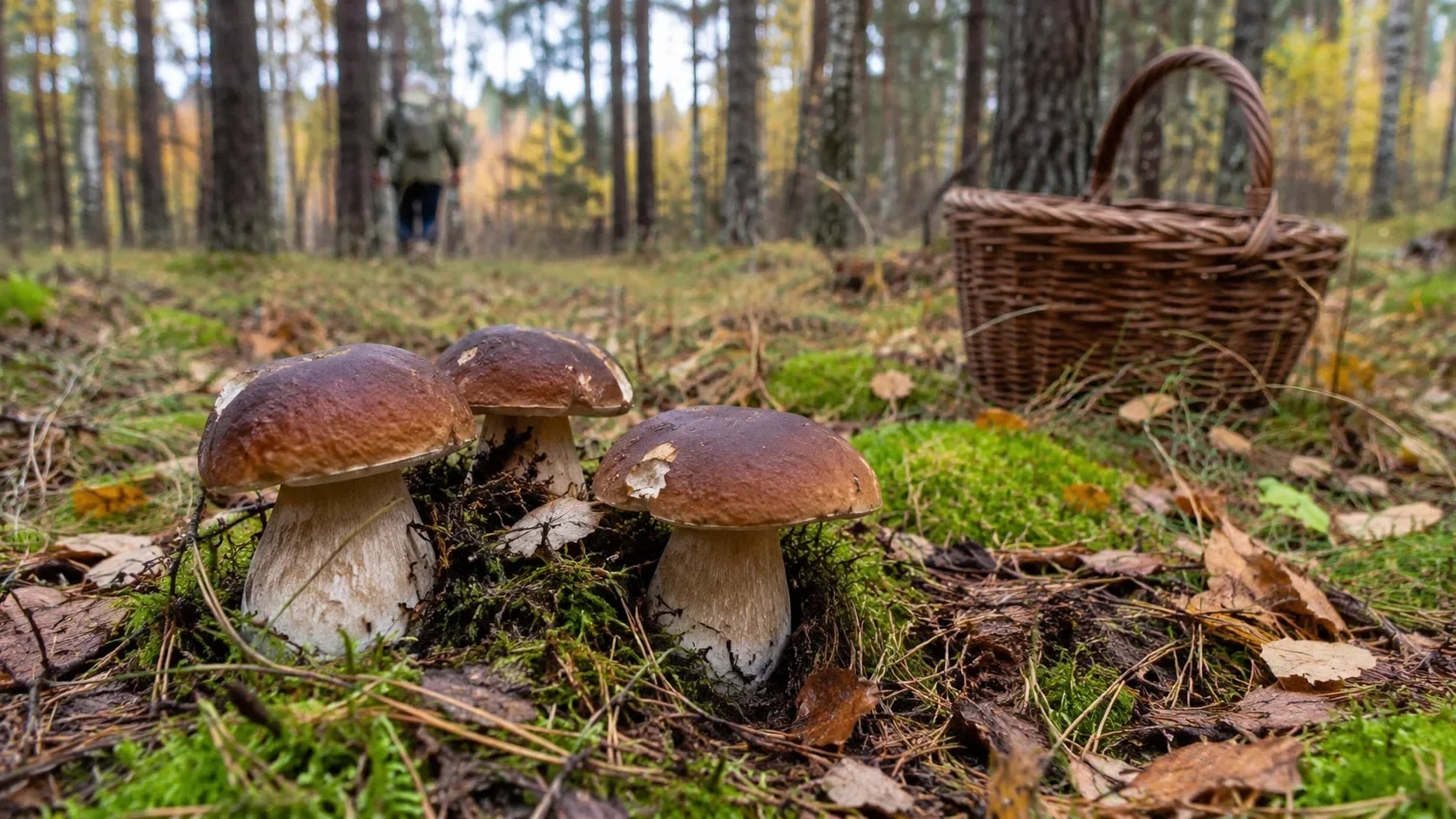
Porcini season in Ukraine is not a single fixed month. Depending on altitude, rainfall, soil moisture, and temperature, porcini-type boletes can appear from late spring or early summer through autumn, with the strongest periods often occurring after warm rains followed by several humid days. Mountain forests in the Carpathians, mixed forests of Polissia, and suitable woodland in central Ukraine can all produce seasonal flushes.

Contents14
- When do porcini mushrooms grow in Ukraine
- When does porcini season begin
- Why porcini mushrooms grow in waves
- After how many days after the rain, porcini mushrooms appear
- What is the best weather for porcini mushrooms
- Where do porcini mushrooms grow
- Under which trees to look for porcini mushrooms
- Which forest has the most porcini mushrooms
- Where to look for porcini mushrooms in the Carpathians
- Where to look for porcini mushrooms in Polissia
- Do porcini mushrooms grow in central Ukraine
- Where to look for porcini mushrooms after the rain
- Where to look for porcini mushrooms during dry weather
- Why should you look nearby if you found one porcini mushroom?
Porcini season in Ukraine is not a single fixed month. Depending on altitude, rainfall, soil moisture, and temperature, porcini-type boletes can appear from late spring or early summer through autumn, with the strongest periods often occurring after warm rains followed by several humid days. Mountain forests in the Carpathians, mixed forests of Polissia, and suitable woodland in central Ukraine can all produce seasonal flushes.
Wild mushrooms can be dangerous when misidentified or collected from contaminated areas. This guide explains seasonality and habitat at a general level, but it should not be used as a stand-alone identification or eating guide. Never consume a wild mushroom unless an experienced local expert has identified it in person and confirmed that the collection site is safe.
When do porcini mushrooms grow in Ukraine
In Ukraine, porcini and closely related edible boletes are most often associated with the warmer part of the year, especially summer and early autumn. The exact timing changes by region.
At lower elevations, the first flushes may appear after periods of warm rain in late spring or early summer. In the Carpathians, cooler high-elevation conditions can shift productive periods later. Autumn can remain favorable until repeated cold nights and frost reduce fungal activity.
A calendar alone is not enough. A dry July can produce fewer mushrooms than a rainy September, while a warm wet period can trigger a short, intense flush outside the "usual" week.
When does porcini season begin
The first meaningful flush generally requires both warmth and available moisture. Soil that remains cold and saturated is not ideal, but neither is prolonged dryness.
In many regions, people begin reporting porcini from late spring into early summer, though the larger and more dependable porcini mushroom season is usually later. In mountain areas, elevation creates its own schedule: valleys warm earlier, while higher forests may become productive weeks later.
Because year-to-year weather varies, local forestry or mycological information is more useful than a rigid national date.
Why porcini mushrooms grow in waves
Porcini form symbiotic relationships with living trees. Most of the organism exists as mycelium in the soil and around tree roots. The visible mushroom is only the fruiting body.
Fruiting often occurs in waves because temperature and moisture conditions become favorable for a limited period, then change. A rain event may restore soil moisture, but fruiting still depends on how warm the soil is, how much moisture was already present, and the health of the tree-fungus relationship.
This is why one forest can appear empty, become productive several days later, then quiet again.
After how many days after the rain, porcini mushrooms appear
There is no dependable "X days after rain" rule. Fruit bodies do not begin from zero after every shower. The mycelium may already be primed, soil moisture may be sufficient, or the rain may be too light to matter.
In favorable warm conditions, new mushrooms can become noticeable within several days after meaningful rainfall. In cooler weather, development may take longer. A thunderstorm after weeks of drought is not a guarantee because deeper soil may remain dry.
Treat rainfall as one signal, not a timer.
What is the best weather for porcini mushrooms
General conditions associated with better fruiting include:
moderate warmth rather than extreme heat;
moist but not waterlogged soil;
periodic rain;
humid air and reduced drying winds;
relatively stable temperatures for several days.
Long hot dry periods suppress fruiting. Cold snaps can slow it abruptly. Heavy flooding can also reduce quality and accelerate decay.
Where do porcini mushrooms grow
Porcini-type boletes are associated with forests because they depend on relationships with trees. They are not ordinary lawn mushrooms and do not typically behave like saprophytic species that fruit from compost or rotting wood alone.
Suitable habitat can include coniferous, deciduous, and mixed forests. The exact fungal species and tree partner vary by region. Forest age, soil, moisture, canopy cover, and disturbance all influence whether fruiting occurs.
For safety, do not use habitat as proof of identity. Many different mushrooms can grow in the same place.
Under which trees to look for porcini mushrooms
Porcini and related boletes can be associated with spruce, pine, beech, oak, birch, and other trees, depending on species and region. In the Carpathians, spruce and beech forests are particularly important habitats; in Polissia, pine, birch, and mixed woodland are common.
The presence of a suitable tree does not mean an edible porcini will be present. It only explains the ecology that makes certain forests more likely to support these fungi.
Never use "it grew under a pine" or any other single habitat clue as an identification method.
Which forest has the most porcini mushrooms
There is no universally best forest type. A healthy mature mixed or coniferous forest with established tree roots, appropriate soil, and stable moisture can be productive, but production varies from year to year.
Older local knowledge often focuses on particular forest edges, clearings, slopes, or stands, but those patterns are not reliable enough to replace expert identification and legal access rules.
From an ecological perspective, a productive site combines suitable host trees with a functioning soil fungal community and the right weather.
Where to look for porcini mushrooms in the Carpathians
The Ukrainian Carpathians are well known for forest mushroom traditions. General porcini habitat includes spruce, beech, and mixed mountain forests, with timing changing by elevation and exposure.
For anyone visiting the region, the safest approach is to use an experienced local guide or adult mushroom expert rather than choosing a forest solely from online descriptions. Mountain terrain, sudden weather changes, poor mobile coverage, and protected-area restrictions are separate risks from mushroom identification itself.
Check whether collection is permitted in the specific forest or protected area before entering.
Where to look for porcini mushrooms in Polissia
Polissia contains large areas of pine, birch, and mixed forest that can support many mushroom species. Seasonal fruiting often follows periods of adequate summer or autumn moisture.
Polissia also includes areas with environmental contamination concerns. Wild mushrooms can accumulate radionuclides and heavy metals. Never collect from zones where official authorities restrict forest products, and do not assume a mushroom is safe because it looks healthy.
Use current local safety information rather than old maps or social media posts.
Do porcini mushrooms grow in central Ukraine
Yes, suitable woodland in central Ukraine can support porcini-type boletes. Production is generally more localized than in major mountain or northern forest regions because forest cover, soil, and moisture patterns differ.
Mixed and deciduous woodland can become productive after favorable rain, but drought in central regions may shorten the season considerably.
Again, ecological suitability does not identify the mushroom itself.
Where to look for porcini mushrooms after the rain
After rain, the relevant factor is not a specific micro-spot but whether the forest floor has retained moisture without becoming flooded. Shaded woodland with stable tree cover generally dries more slowly than exposed open ground.
For safety, do not search unfamiliar woodland alone. Go only with an experienced adult or local expert, use marked paths where possible, and follow forest access rules.
Avoid slopes, boggy ground, damaged trees, and other hazards simply to reach a suspected mushroom patch.
Where to look for porcini mushrooms during dry weather
Dry weather greatly reduces fruiting. Moisture may persist longer in shaded, lower, or more sheltered forest areas, but prolonged drought can suppress mushrooms across an entire region.
Do not treat dry-weather searching as a reason to leave marked routes or enter dangerous terrain. If conditions are unfavorable, the safer and more productive choice is often to wait for a change in weather.
Why should you look nearby if you found one porcini mushroom?
Fungi can fruit in clusters or repeated patches because several fruiting bodies may arise from the same broader underground mycelial system or from multiple nearby mycorrhizal associations.
That means one mushroom can indicate that local conditions are favorable. It does not mean every nearby mushroom is the same species or equally safe.
Each individual wild mushroom would still require confident in-person identification by someone qualified to do it.
How to properly look for porcini mushrooms in the forest
For a young or inexperienced person, wild mushroom hunting should only be done with a knowledgeable adult or qualified local guide. The important principles are safety rather than speed or "secret techniques":
stay on legal, familiar routes;
tell someone where you are going;
check weather and daylight hours;
carry a charged phone and basic navigation backup;
wear suitable footwear and clothing;
do not taste unknown mushrooms;
do not rely on apps, photos, or online comments for edibility.
If the main goal is learning, a guided mycology walk is safer than trying to identify edible mushrooms independently.
How to collect porcini mushrooms so as not to damage the mycelium
Collection technique is less important than correct identification and legal, safe access. The underground mycelium is much larger than the visible mushroom, and casual arguments over "cut versus twist" are often overstated.
If an experienced adult expert has confirmed an edible specimen and local rules allow collection, avoid unnecessary digging or raking of the forest floor. Do not disturb large areas of moss, leaf litter, or soil in search of hidden mushrooms.
Leave old, decaying, or uncertain specimens in place rather than treating every mushroom as harvestable.
Identification difficulty increases because mushrooms change as they age. Rain can wash out colors, insects can damage surfaces, and young specimens can look different from mature ones. A phone camera may shift white balance or hide texture. Even a set of several photos does not provide all of the information an expert can examine in person.
For educational purposes, record the habitat, nearby tree species, date, weather, and several photographs without eating the specimen. A local mycological club, guided walk, or knowledgeable adult can then explain which features matter and which popular folk rules are unreliable. Learning this way builds real identification skill without turning uncertainty into a food-safety gamble.
Do not use myths such as "animals eat it, so it is safe," "silver changes color," or "poisonous mushrooms always smell bad." Those rules are not reliable safety tests. Cooking, drying, or freezing also does not automatically make an unknown mushroom safe.
How to distinguish porcini mushrooms and whether it is possible to be guided only by the photo
No. A photograph is not enough to establish that a wild mushroom is safe to eat. Color changes with age, weather, lighting, camera processing, and damage. Important diagnostic features may be hidden or absent from a photo.
There are edible, inedible, and potentially harmful boletes, and there are other mushrooms that inexperienced collectors can confuse in the field. Do not use a checklist from the internet as permission to eat a specimen.
For any mushroom intended for food, identification should be made in person by an experienced local mycologist, qualified guide, or another trusted adult with genuine expertise. If there is doubt, leave it.
Where you can not collect porcini mushrooms
Do not collect wild mushrooms:
in areas where collection is legally prohibited;
in protected zones that restrict harvesting;
near busy roads, industrial sites, waste areas, or polluted ground;
in forests subject to radiological or other contamination warnings;
from private property without permission;
anywhere you cannot confidently establish the safety of the site.
Wild mushrooms can accumulate contaminants from the environment, so "edible species" does not automatically mean "safe food from any location."
How to safely go for porcini mushrooms
If you are under 18 or inexperienced, go only with a responsible adult who knows the area and local mushrooms. Plan for the forest itself, not just the harvest.
Check the forecast, start early enough to return before dark, stay within mobile or navigation capability, and avoid storms, fire warnings, hunting restrictions, and damaged forest areas. Wear long trousers and closed footwear and check for ticks afterward.
If anyone develops concerning symptoms after eating a wild mushroom, seek urgent medical help and provide any remaining specimen or meal information to clinicians if it can be done safely.
What to do with porcini mushrooms after harvesting
Because safe preparation starts with safe identification, do not cook or taste a wild mushroom that has not been confidently identified in person by a knowledgeable adult expert.
Once identity and collection-site safety are confirmed, keep wild mushrooms cool and use normal food-hygiene practices. Discard specimens that are rotten, heavily damaged, or contaminated. Do not mix uncertain mushrooms into a basket of known ones because pieces can become difficult to separate later.
For anyone learning mycology, it is safer to photograph and study uncertain mushrooms than to eat them.
Seasonal forecasts posted online should be treated as observations, not guarantees. A report that mushrooms are abundant in one district can become outdated within days as humidity, heat, wind, or visitor pressure changes. It also says nothing about whether a specific collection site is legally accessible or environmentally safe.
The safest way to enjoy the season without identification risk is to buy cultivated or commercially inspected mushrooms from a legitimate food seller, or to join an educational walk where specimens are studied rather than eaten. For families interested in forest ecology, photographing fungi can be just as rewarding as collecting them and leaves the fruiting bodies in the habitat for insects and spore dispersal.
If a wild mushroom has already been eaten and the person becomes unwell, do not wait for symptoms to "pass." Contact emergency medical services or a poison-information service promptly. Keep any remaining mushrooms or photographs available for clinicians, but do not induce vomiting or try home detox remedies unless a medical professional specifically instructs you to do so.
When porcini mushrooms grow: briefly about the main thing
In Ukraine, porcini season can begin in late spring or early summer and continue in waves through autumn, with timing strongly controlled by rainfall, temperature, elevation, and forest type. Warm rain followed by humid, moderate weather often favors fruiting, but there is no exact "rain plus three days" formula.
Porcini-type boletes form relationships with trees, so suitable spruce, pine, beech, oak, birch, and mixed forests can be habitat. The Carpathians and Polissia are major mushroom regions, while central Ukraine can also produce seasonal flushes.
Habitat and photos are not identification tools. Never eat a wild mushroom unless a qualified or genuinely experienced local expert has identified it in person and the site itself is known to be safe.
For educational identification, keep wild mushrooms out of the food basket until an experienced adult expert has checked them in person. A specimen that is only "probably porcini" should be treated as unknown. This matters especially when several people collect together, because one uncertain mushroom can become mixed with the rest. Children and inexperienced collectors should not make edibility decisions. The safest family approach is to observe, photograph, and learn with an expert, then use commercially sourced mushrooms for cooking.
If the purpose of a forest trip is education, treat every mushroom as a specimen to observe rather than food to collect. That removes the pressure to make an identification decision in the field and lets an experienced adult or mycologist explain the ecology safely afterward.
Observation is safer than turning an uncertain specimen into food.
When uncertain, leave the mushroom where it is.
FAQ
When do porcini mushrooms start to grow?
Depending on region and weather, the first flushes can appear from late spring or early summer, with stronger periods usually later in summer and autumn.
In which month are the most porcini mushrooms?
There is no guaranteed month. August and September are often productive in many regions, but a wet warm June or mild October can also produce good conditions.
How long after the rain do porcini mushrooms grow?
There is no fixed interval. In warm favorable conditions, fruiting can become noticeable within several days, but soil moisture and temperature matter as much as the rain event itself.
Where do porcini mushrooms grow most often?
They are associated with forests and living tree roots, including coniferous, deciduous, and mixed woodland.
Under what trees do porcini mushrooms grow?
Depending on species and region, associations can include spruce, pine, beech, oak, birch, and other trees.
Do porcini mushrooms grow in September?
Yes. September is often part of the main season in Ukraine when moisture and temperatures are favorable.
Do porcini mushrooms grow in October?
They can, especially during mild autumn weather before repeated hard frost.
Do porcini mushrooms grow in the same place every year?
They may reappear in the same general habitat because the underground fungal relationship persists, but annual fruiting is never guaranteed.
Can you find porcini mushrooms in a pine forest?
Yes, some porcini-type boletes associate with pine, but habitat alone cannot confirm identification or edibility.
Is it possible to collect a mushroom if you are not sure that it is white?
No mushroom intended for food should be collected for eating if its identity is uncertain. Leave it in place or study it only with an experienced adult expert or mycologist.
Best of the week — in your inbox
No spam. Only top Gosta stories. Unsubscribe in one click.
Comments