
High Wind Watch vs Warning: What to Check Before You Travel
A high wind watch means strong, sustained winds are possible and you should prepare for conditions that could affect travel and outdoor plans. It is differ


Contents8
- What does a high wind watch mean?
- How does a high wind watch differ from a warning?
- What should you check before driving under a high wind watch?
- How should a high wind watch change a flight plan?
- What can you prepare at home during a high wind watch?
- What if a high wind watch changes while you are away?
- What should you avoid during a high wind watch?
- FAQ
A high wind watch means strong, sustained winds are possible and you should prepare for conditions that could affect travel and outdoor plans. It is different from a high wind warning, which calls for action as hazardous strong winds occur under the issuing office's criteria. Start with the local bulletin, its location and its valid time.
This high wind watch guide helps you turn an alert into a practical decision: what to check before driving, what to secure at home and where to find the information that applies to your route. It does not claim that every US location is under an active alert today.
What does a high wind watch mean?
A high wind watch signals the possibility of sustained strong winds, giving you time to adjust plans before the event. The National Weather Service wind-alert guide explains that local offices use local criteria. Do not assume one nationwide numerical threshold explains every bulletin.
Read the high wind watch as a prompt to prepare and keep checking. It is not a promise that the strongest conditions will arrive at your house, nor is it a reason to ignore a forecast because the worst outcome is not certain yet.
For a high wind watch, the useful details are the affected area, expected timing, possible impacts and recommended precautions. The name of a large city in a high wind watch headline is less precise than the counties, terrain or coastline described by the actual notice.
How does a high wind watch differ from a warning?
A high wind watch concerns possible hazardous winds; a high wind warning indicates a more immediate strong-wind situation requiring action. A wind advisory is another product and can still describe conditions that disrupt travel or move unsecured outdoor objects.
Product | Practical response |
|---|---|
High wind watch | Prepare, review timing and adjust plans |
High wind warning | Follow the local warning and take protective action |
Wind advisory | Use caution and secure items; disruption is still possible |
Do not confuse a high wind watch with a severe thunderstorm watch. They are different products, even when strong winds feature in both. Read the complete message rather than applying instructions from another alert with a similar name.
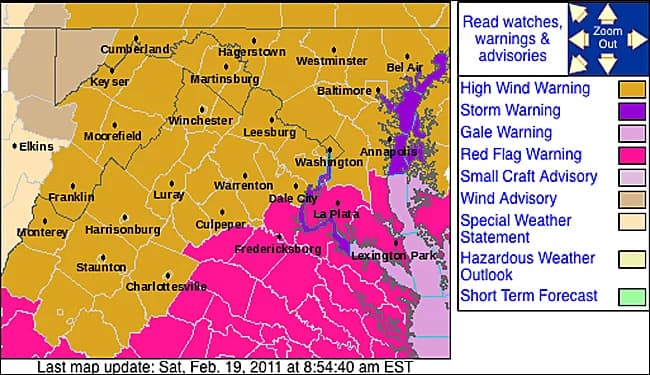
What should you check before driving under a high wind watch?
Before driving during a high wind watch, check the local forecast along the whole route and the relevant state transport department's road information. Your destination can be calm while an exposed bridge, mountain pass or open stretch of road has a different problem.
A high wind watch matters particularly when the route offers little shelter or an easy alternative. Think about where you could stop safely, whether a different departure time is realistic and whether the trip can wait if warnings or closures develop.
Do not let a high wind watch become a distraction while you are driving. Check updates before departure or while safely parked. Follow posted restrictions and closures rather than treating a navigation app's suggested shortcut as permission to use a closed road.
How should a high wind watch change a flight plan?
A high wind watch should prompt you to check the airline's flight status and airport information, not assume your flight is automatically canceled. Aviation operations depend on the actual conditions, airport procedures and the flight's wider aircraft and crew schedule.
If a high wind watch overlaps with your travel window, keep airline notifications enabled and review the whole itinerary. A connection can be affected by conditions elsewhere, even when your departure airport looks clear from the terminal window.
Our O'Hare flight-status guide explains the difference between an airport-wide notice and an individual booking. The same distinction is useful when a high wind watch appears in the weather discussion around a trip.
What can you prepare at home during a high wind watch?
During a high wind watch, secure loose outdoor belongings before conditions become dangerous and review the household items you would need during a power interruption. The sensible preparation is modest and specific to your home, not a shopping list built around fear.
Walk through the high wind watch plan with anyone sharing the home: which outdoor items need attention, where charged lights are kept and how you will receive local alerts. Do that while it is safe, rather than trying to retrieve loose objects once strong winds arrive.
For a high wind watch, keep essential medicines, contact details and a charged phone accessible. If someone depends on powered medical equipment, use their established backup and care plan and contact the relevant provider about their individual needs.
What if a high wind watch changes while you are away?
If a high wind watch is upgraded or its timing changes, reassess the next part of your plan using the latest official instructions. A screenshot from breakfast is not enough to establish conditions for a late-afternoon drive.
Write down the high wind watch update time and the period it covers. A high wind watch bulletin can be current while discussing a future window; a recently shared article can also be quoting a notice that has expired. Both dates matter.
When a high wind watch overlaps with coastal travel, check separate flood and marine products as well. Our coastal flooding guide explains why predicted tide times and weather-driven warnings answer different questions.
What should you avoid during a high wind watch?
Avoid treating a high wind watch as either a guarantee of disaster or a meaningless notification. Use the preparation time to make a practical plan, then respond to the conditions and instructions that actually develop.
Do not approach exposed viewpoints just to photograph dramatic conditions.
Do not drive around barriers or ignore vehicle restrictions.
Do not wait until strong winds begin to secure loose items.
Do not rely on an old screenshot as your only forecast.
Do not infer your flight status from a weather headline.
The high wind watch decision is easier when you identify a realistic alternative in advance: a later departure, an indoor activity or a different route that remains open. Flexibility is more useful than trying to predict the exact strongest gust yourself. Agree on a safe place to pause the journey before conditions become difficult.
High wind watch FAQ
Does a high wind watch mean my flight is canceled?
No. A high wind watch is a weather product. Your airline confirms the status and options for your flight.
Is every high wind watch based on one national speed?
No. High wind watch and warning criteria are applied by local NWS offices. Read the local product.
Can I use yesterday's high wind watch screenshot?
A high wind watch screenshot can provide context, but check the current bulletin and its valid time before acting.
Best of the week — in your inbox
No spam. Only top Gosta stories. Unsubscribe in one click.
Comments