
Apple Took 7 Years to Make the iPhone Duo – Is It Worth $1,999?
iPhone Duo is Apple's first foldable iPhone. See the full specs, price, displays, cameras, battery and comparisons with Galaxy Fold8, Pixel 11 Pro Fold and HONOR Magic V6.

Contents14
- iPhone Duo Specs – Everything Important in One Table
- Why Did Apple Take So Long to Release a Foldable iPhone?
- What Displays Does the iPhone Duo Have?
- How Thin and Heavy Is the iPhone Duo?
- iPhone Duo Body and Hinge – What Apple Did for Durability
- iPhone Duo Uses Touch ID Instead of Face ID
- A20 Pro Makes iPhone Duo a True Flagship
- How Multitasking Works on iPhone Duo
- Does iPhone Duo Support Apple Pencil?
- iPhone Duo Cameras – Why Is There No Telephoto Lens on a $1,999 Phone?
- Why Does iPhone Duo Have Two Front Cameras?
- Duo Preview Turns the Second Screen Into a Viewfinder
- What Battery Does the iPhone Duo Have?
- How Fast Does iPhone Duo Charge?
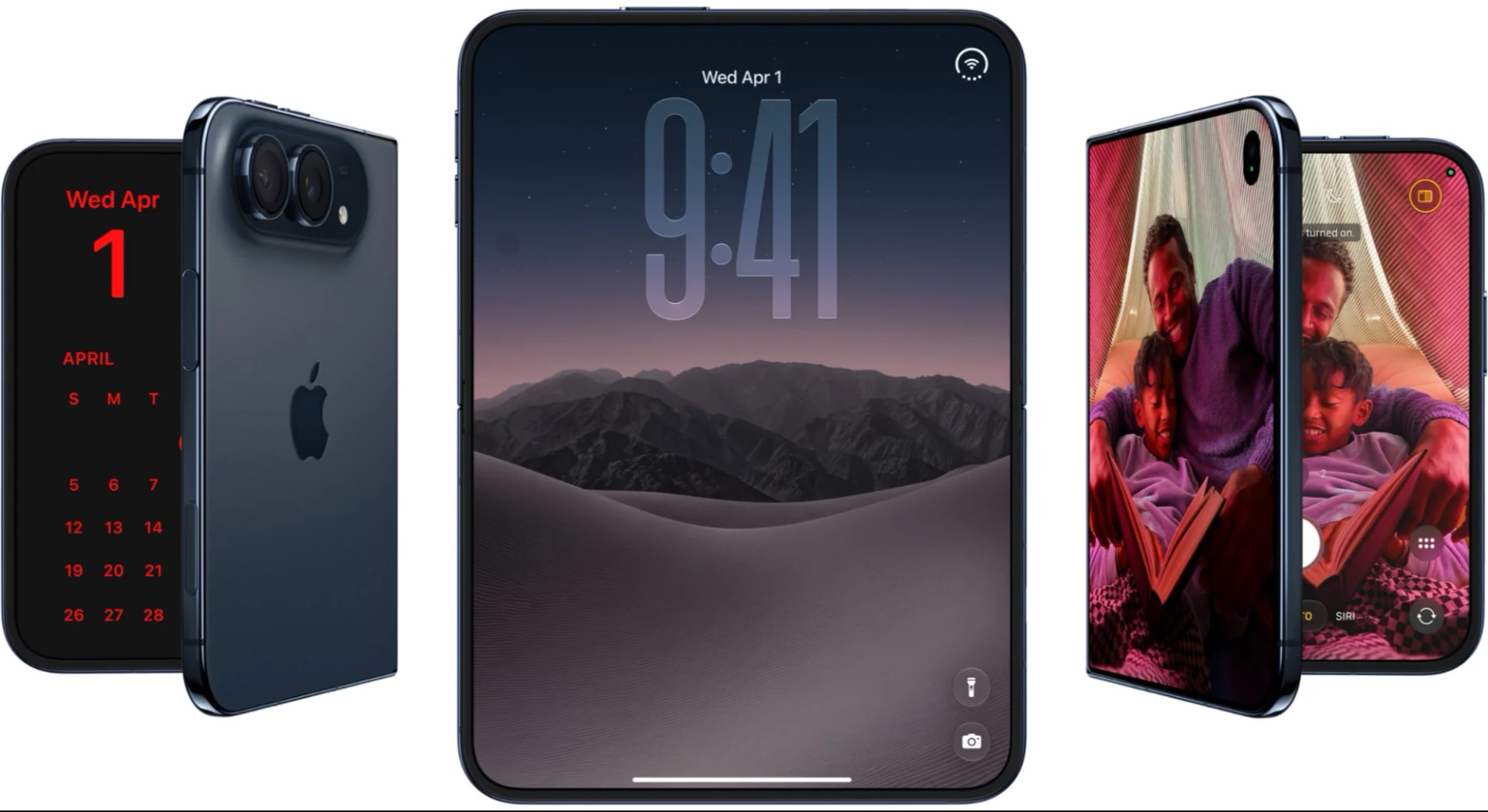
The iPhone Duo is the first foldable iPhone in Apple's history and one of the biggest changes to the basic shape of the iPhone in years. Closed, it is a compact phone with a roughly 5.4-inch cover display. Open it, and the device turns into a 7.6-inch OLED smartphone with the largest display Apple has ever put on an iPhone.
The iPhone Duo starts at $1,999 with 256GB of storage in the United States. Preorders open October 16, with retail availability beginning October 23, 2026.
That price is only half the story. Apple is entering a category where Samsung has already gone through multiple generations of Fold hardware, Google sells the Pixel 11 Pro Fold with a triple-camera system, and HONOR has built a Magic V6 that measures just 0.34 inch (8.75 mm) thick when folded while packing a 6,660mAh battery.
The iPhone Duo therefore has to prove much more than the fact that it can fold.
iPhone Duo Specs – Everything Important in One Table
The iPhone Duo combines the flagship A20 Pro chip, two 120Hz OLED displays, two 48MP rear cameras, a dual-battery design, IP68 protection and up to 2TB of storage. Apple also made several unusual trade-offs: there is no Face ID, no dedicated telephoto camera and no physical SIM tray.
Before looking at each feature in detail, here are the main iPhone Duo specifications in one place.
Specification | iPhone Duo |
|---|---|
Form factor | Book-style foldable smartphone |
Cover display | 5.4-inch Super Retina XDR OLED |
Internal display | 7.6-inch foldable Super Retina XDR OLED |
Refresh rate | ProMotion up to 120Hz on both displays |
Peak outdoor brightness | Up to 3,000 nits |
Internal display resolution | 1878 × 2670, 430 ppi |
Cover display resolution | 1398 × 2034, 460 ppi |
Processor | A20 Pro |
CPU | 6-core |
GPU | 7-core |
Neural Engine | Two 16-core blocks |
Main camera | 48MP Fusion Main, ƒ/1.6 |
Ultra Wide | 48MP, ƒ/2.2, 120° |
Zoom | 2x optical-quality zoom |
Maximum digital zoom | Up to 10x for photos |
Cover selfie camera | 12MP Center Stage |
Internal camera | Under-display FaceTime camera |
Video | Up to 4K Dolby Vision at 120 fps with main camera |
Biometrics | Touch ID in side button |
Face ID | No |
Storage | 256GB, 512GB, 1TB, 2TB |
Material | Grade 5 titanium |
Water and dust resistance | IP68 |
Weight | 8.96 oz (254 g) |
Thickness when open | 0.20 inch (5.2 mm) |
Thickness when folded | 0.44 inch (11.3 mm) |
Rated battery life | Up to 24 hours of typical use |
Video on cover display | Up to 44 hours |
Video on internal display | Up to 31 hours |
Wired charging | About 50% in 20 minutes |
MagSafe / Qi2 | Up to 25W |
SIM | eSIM only |
Wi-Fi | Wi-Fi 7 |
Bluetooth | Bluetooth 6 |
Apple Pencil | USB-C Apple Pencil support coming later in 2026 |
Operating system | iOS 27 |
US starting price | $1,999 |
On paper, the iPhone Duo looks like a genuine flagship rather than an experimental side project. It uses the same A20 Pro platform as the iPhone 18 Pro, and storage tops out at 2TB.
The biggest compromises are not performance-related. They are found in weight, camera flexibility and the realities of a first-generation foldable design.
Why Did Apple Take So Long to Release a Foldable iPhone?
Apple entered the foldable market more than seven years after the first wave of Galaxy Fold devices. The company has not given one simple reason for waiting that long, but the iPhone Duo's engineering reveals many of the problems Apple had to solve before launch: the hinge, display crease, durability, battery life, iOS adaptation and app behavior across two very different screen sizes.
Those challenges explain why simply making an iPhone bend in half was never enough. By 2026, folding hardware itself was no longer new. The challenge was making the format feel like a normal Apple product rather than an expensive prototype.
Apple Did More Than Put a Hinge on a Regular iPhone
The iPhone Duo hinge contains more than 100 components. It supports the center section of the display when the phone is open, while an integrated magnetic system helps secure the device when closed.
The internal display also uses multiple protective layers. Apple combines high-strength glass above and below the flexible OLED panel, specialized adhesives that allow different layers to move slightly as the phone folds, and a titanium support plate underneath.
That matters because a conventional smartphone display stays fixed. A foldable may go through dozens or even hundreds of mechanical opening and closing cycles every day.
For a first-generation foldable iPhone, long-term durability is not a minor detail. It is one of the defining questions surrounding the product.
Apple Did Not Completely Eliminate the Display Crease
Apple does not claim that the center crease has disappeared entirely. Instead, the company describes a nanotexture top layer designed to reduce reflections and make the fold line less noticeable.
That distinction matters.
Early hands-on impressions may describe the crease as subtle, but no launch-day demo can show what the display will look like after six months or a year of daily folding.
One of the biggest real-world tests for the iPhone Duo therefore starts after October 23, not before it.
Apple Was Also Waiting for the Software
The second major challenge with a foldable is software. A large display provides little value if an app simply stretches awkwardly when the phone opens.
iOS 27 therefore includes layouts and behaviors built specifically for iPhone Duo. The interface can respond to the position of the device, run apps side by side, adapt to different hinge angles, use the cover display as a camera preview and support hands-free modes.
That software layer may prove just as important as the hinge itself. The value of a foldable comes from what the larger screen allows users to do, not just from its diagonal measurement.
What Displays Does the iPhone Duo Have?
The iPhone Duo has two Super Retina XDR OLED displays: 5.4 inches on the outside and 7.6 inches on the inside. Both support ProMotion up to 120Hz, Always-On functionality, HDR, True Tone and up to 3,000 nits of outdoor peak brightness.
The cover display has a resolution of 1398 × 2034 at 460 ppi. The internal screen runs at 1878 × 2670 with a density of 430 ppi.
The Cover Display Is Smaller Than Most Foldable Rivals
The iPhone Duo's 5.4-inch cover display is relatively compact. Apple says it provides more than 90% of the screen area of an iPhone 18 Pro, but the diagonal is noticeably smaller than the 6.5-inch Pixel 11 Pro Fold cover screen and the 6.52-inch display on the HONOR Magic V6.
That is not automatically a disadvantage.
When closed, the Duo is designed to feel compact and manageable with one hand. Several Android foldables instead try to behave almost exactly like a conventional large smartphone before they are unfolded.
The trade-off is straightforward: Duo's smaller cover display may be easier for quick one-handed tasks, while larger rival cover screens let users do more without opening the phone.
The Internal Display Is the Largest Ever Used in an iPhone
Open the Duo and you get a 7.6-inch display. Apple says its usable area is about 50% larger than the screen on the iPhone 18 Pro Max.
This is where Duo stops behaving like merely an expensive iPhone.
The additional space is useful for documents, long web pages, video, photo editing, gaming and multitasking.
It is not the largest foldable display on the market, though. The Pixel 11 Pro Fold has an 8-inch internal display, Galaxy Fold8 Ultra also reaches 8 inches, and HONOR Magic V6 measures about 7.95 inches.
How Thin and Heavy Is the iPhone Duo?
The iPhone Duo measures 0.20 inch (5.2 mm) thick when open and 0.44 inch (11.3 mm) when folded. It weighs 8.96 oz (254 g).
This is one area where the iPhone Duo looks less revolutionary next to current Android foldables.
Galaxy Fold8 weighs about 7.09 oz (201 g) and is 0.38 inch (9.7 mm) thick when folded. HONOR Magic V6 weighs about 7.72 oz (219 g) and measures only 0.34 inch (8.75 mm) folded. Pixel 11 Pro Fold weighs roughly 8.4 oz (238 g).
The iPhone Duo is 1.87 oz (53 g) heavier than Galaxy Fold8.
In smartphone terms, that is not a trivial difference. It is enough to be noticeable in a pocket and during long periods of one-handed use.
Why Apple Can Still Call Duo Its Thinnest iPhone
Each half of the iPhone Duo measures only 0.20 inch (5.2 mm) when the phone is open, so it is legitimately the thinnest iPhone Apple has made.
That does not mean it is the thinnest foldable phone on the market.
HONOR Magic V6 measures just 0.16 inch (4.0 mm) when open, while Galaxy Fold8 is about 0.18 inch (4.5 mm).
Apple's wording is therefore accurate, but it needs to be read literally: thinnest iPhone, not thinnest foldable smartphone.
iPhone Duo Body and Hinge – What Apple Did for Durability
The iPhone Duo uses Grade 5 titanium, with Ceramic Shield protecting the rear and Ceramic Shield 2 over the cover display. Apple says Ceramic Shield 2 offers three times better scratch resistance than the previous generation of the material.
The phone also has an IP68 rating, with laboratory-rated water resistance at a maximum depth of about 19.7 feet (6 meters) for up to 30 minutes.
That is a strong rating for a foldable.
Galaxy Fold8 carries an IP48 rating, while Pixel 11 Pro Fold is also rated IP68. HONOR Magic V6 goes further on paper with IP68 and IP69.
Apple therefore entered the foldable category with one of the stronger dust- and water-resistance ratings. Still, no IP rating means the flexible internal display can be treated exactly like conventional cover glass.
iPhone Duo Uses Touch ID Instead of Face ID
There is no Face ID on the iPhone Duo. Touch ID is built into the side button so the same authentication method works whether the phone is open or closed.
The Duo can also be unlocked using an Apple Watch.
Some buyers may actually prefer the return of fingerprint authentication. But on a $1,999 device, the absence of Face ID is still a compromise, especially for users coming from years of Pro-model iPhones.
A20 Pro Makes iPhone Duo a True Flagship
The iPhone Duo runs on A20 Pro, so Apple did not give the foldable model a slower processor. The chip includes a 6-core CPU, 7-core GPU with Neural Accelerators, two 16-core Neural Engine blocks and hardware-accelerated ray tracing.
Apple claims up to 20% faster CPU performance than A19 Pro and 50% greater memory bandwidth.
Those improvements may matter even more on a foldable than on a conventional phone. The Duo is designed for simultaneous apps, a large display, gaming and AI workloads, making sustained performance just as important as peak benchmark scores.
There Is a Dedicated Vapor Chamber Inside
A20 Pro uses a specially designed vapor chamber to move heat away from the processor and maintain performance during demanding workloads.
Thermal management can be particularly challenging in very thin foldables. Their large displays encourage multitasking and gaming, while the chassis provides less room for cooling hardware.
The real question is how well Duo maintains performance during long gaming or editing sessions. That will become clearer once independent retail-unit testing begins.
How Multitasking Works on iPhone Duo
iOS 27 allows users to run two apps side by side, open separate windows and adapt the interface depending on the position of the device.
That is one of the strongest arguments for the iPhone Duo. A large foldable display without software designed for it quickly becomes an expensive way to make the same content bigger.
A browser can run on one side while Messages or Notes stays open on the other. The larger display is also suited to video calls, documents and working across two pieces of content simultaneously.
The phone can be folded partway and placed on a flat surface. In that position, it can hold its own viewing angle for FaceTime, video or hands-free photography without a tripod.
Has Apple Caught Up With Samsung in Multitasking?
Not completely.
Samsung has spent years developing the Fold's multiwindow experience and already offers a mature Android implementation built around large-screen multitasking.
Apple's potential advantage is different. It controls the hardware, iOS and its core system apps, which may allow the transition between cover and internal displays to feel consistent from the first generation.
The biggest question is third-party apps.
Not every developer will optimize an interface for the new format immediately. The first several months will show how quickly the wider iOS ecosystem adapts to Duo.
For a look at how Samsung approaches conventional flagship hardware outside its Fold lineup, Gosta also has a detailed Samsung Galaxy S25 review.
Does iPhone Duo Support Apple Pencil?
Yes. The iPhone Duo will gain support for Apple Pencil USB-C later in 2026, and the stylus will work on both the internal and external displays.
This is the first iPhone to officially support an Apple Pencil.
For note-taking, PDF markup, document signatures and sketches, the large 7.6-inch display makes the feature far more practical than it would be on a conventional iPhone.
An interesting contrast is that the current Galaxy Fold8 does not support S Pen, despite Samsung's history of stylus support on older Fold generations.
That gives Duo an unexpected advantage over its closest Samsung rival for users who specifically want pen input.
iPhone Duo Cameras – Why Is There No Telephoto Lens on a $1,999 Phone?
The iPhone Duo has two 48MP rear cameras, not the triple-camera Pro setup.
The 48MP Fusion Main has a 26mm-equivalent focal length and ƒ/1.6 aperture. The 48MP Ultra Wide is equivalent to 13mm, uses an ƒ/2.2 aperture and covers a 120-degree field of view.
The 48MP main sensor also provides 2x optical-quality zoom by cropping into the central portion of the sensor. Maximum digital zoom for still photos is 10x.
There is no dedicated telephoto camera.
That is one of the biggest compromises on a $1,999 smartphone.
The iPhone 18 Pro and Pro Max include a dedicated 48MP telephoto camera and up to 8x optical-quality zoom, so the more expensive Duo is not automatically Apple's best camera phone.
If photography and long-range zoom matter more than the folding display, that difference can completely change the buying decision.
Why Does iPhone Duo Have Two Front Cameras?
The cover display includes a 12MP Center Stage camera, while the internal screen uses a separate under-display FaceTime camera.
The internal camera supports 1080p video, while the exterior front camera can record up to 4K Dolby Vision at 60 fps.
Putting the internal camera beneath the panel keeps Apple's largest iPhone display free of a visible cutout or hole.
For video calls, that internal camera is sufficient. For maximum selfie quality, however, the foldable design offers an even more useful option: using the rear cameras while the cover screen acts as a viewfinder.
Duo Preview Turns the Second Screen Into a Viewfinder
Duo Preview lets the person in front of the camera see the composition on the cover display while the photographer controls the shot from the internal screen.
Apple also includes Smart Take for automated capture and Kid Cue, which can display animations to help attract a child's attention toward the camera.
These features exist specifically because Duo has two displays. They are not simply conventional iPhone camera tools carried over to a larger device.
The phone can also be folded partway and used as its own stand for group photos or video.
What Battery Does the iPhone Duo Have?
Apple does not publish the iPhone Duo's battery capacity in mAh in its official technical specifications.
What the company does confirm is that the smartphone contains two built-in lithium-ion batteries, one in each half of the device, managed as a single power system.
That means unofficial capacity figures from databases or teardown estimates should not be presented as Apple's official specification.
Apple's rated battery figures are:
Up to 24 hours of typical use.
Up to 44 hours of video playback on the cover display.
Up to 31 hours of video playback on the internal display.
Up to 37 hours of streamed video on the cover display.
Up to 26 hours of streamed video on the internal display.
The gap between the two displays is substantial, so real-world battery life will depend heavily on usage.
A person who spends hours on the large internal screen for multitasking, streaming and games should expect a different result from someone who primarily uses the smaller cover display.
How Fast Does iPhone Duo Charge?
Wired charging can bring the iPhone Duo to about 50% in 20 minutes with a compatible 60W-or-higher adapter. MagSafe or Qi2 can reach roughly 50% in 30 minutes with compatible hardware.
MagSafe and Qi2 support up to 25W.
By Apple's standards, those are solid numbers. Compared with some Android foldables, however, Duo is not a charging-speed leader.
HONOR Magic V6 supports 80W wired charging and 66W wireless charging.
So while iPhone Duo charges quickly enough for most users, buyers looking for the fastest charging technology in the foldable category can find stronger numbers elsewhere.
iPhone Duo Is eSIM-Only
Every iPhone Duo is eSIM-only. The phone can store eight or more eSIM profiles and use two active eSIMs simultaneously.
There is no physical SIM tray.
For many U.S. iPhone users, this is already familiar because Apple has sold eSIM-only iPhones in the United States for several generations.
Still, buyers using smaller prepaid carriers or planning international travel should confirm eSIM support before purchase. You cannot fall back to a physical SIM card with Duo.
Apple says removing the tray frees internal space that can be used for components such as the battery.
What Wi-Fi and Bluetooth Does iPhone Duo Support?
Apple uses its own N1 wireless chip with support for Wi-Fi 7, Bluetooth 6 and Thread. Cellular connectivity is handled by C2, the latest generation of Apple's modem technology.
The USB-C port supports USB 3 transfer speeds of up to 10Gbps as well as DisplayPort.
That positions Duo as more than a device for consuming content. It is also designed for moving large files, connecting to external displays and handling productivity workflows.
How Much Storage Does the iPhone Duo Have?
Apple offers four storage configurations: 256GB, 512GB, 1TB and 2TB.
The $1,999 base model includes 256GB.
Apple does not publish the amount of RAM in the iPhone Duo as part of its official technical specifications, so a specific memory figure should not be treated as an official Apple specification unless the company confirms it.
What Colors Does the iPhone Duo Come In?
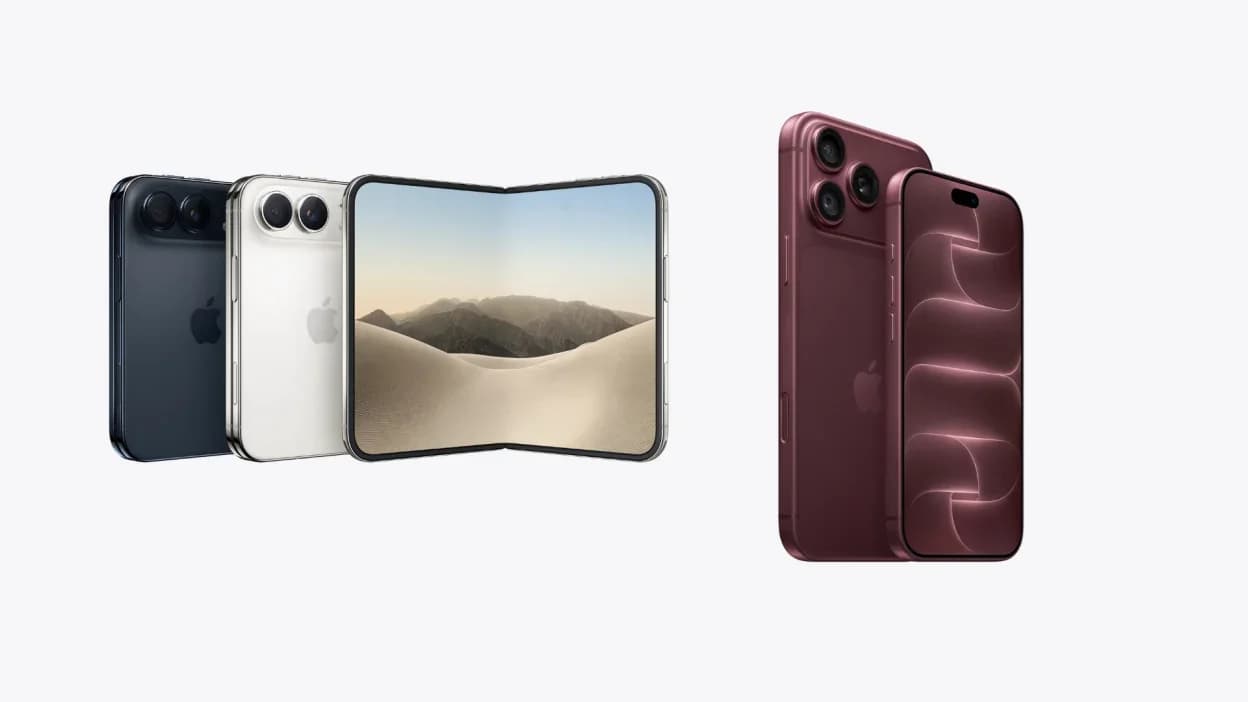
The iPhone Duo launches in only two colors: Star White and Night Sky.
The body uses polished Grade 5 titanium, while the hinge cover is 3D-printed from titanium.
The limited color lineup reinforces the Duo's positioning as a separate branch of the iPhone family rather than simply a foldable copy of the standard iPhone color palette.
iPhone Duo vs. iPhone 18 Pro Max – Is the $700 Premium Worth It?
The iPhone Duo costs $700 more than the base iPhone 18 Pro Max, yet both use the A20 Pro platform.
That means the buyer is not paying extra for a faster processor. The premium primarily buys the foldable screen and the new ways that larger display can be used.
In cameras, the situation is almost reversed – the less expensive Pro Max is more versatile.
Feature | iPhone Duo | iPhone 18 Pro Max |
|---|---|---|
US starting price | $1,999 | $1,299 |
Form factor | Foldable | Conventional smartphone |
Largest display | 7.6 inches | 6.9 inches |
Processor | A20 Pro | A20 Pro |
Main camera | 48MP | 48MP with variable aperture |
Ultra Wide | 48MP | 48MP |
Telephoto | No | 48MP |
Maximum optical-quality zoom | 2x | Up to 8x |
Face ID | No | Yes |
Touch ID | Yes | No |
Apple Pencil | Coming later in 2026 | No |
Split View | Yes | No equivalent foldable mode |
Maximum storage | 2TB | 2TB |
The iPhone Duo is not an iPhone 18 Pro Max, only better. It is a different branch of the lineup designed for a different buyer.
Duo makes sense for reading, documents, larger-format video, Apple Pencil, multitasking and users who want one device to cover some of the territory between an iPhone and an iPad mini.
The Pro Max is the better fit for someone who wants a traditional flagship with Apple's most versatile camera system, Face ID and a mechanically simpler design.
The $700 premium therefore buys the form factor, not superior specifications in every category.
iPhone Duo vs. Samsung Galaxy Fold8 – The Biggest Foldable Battle of 2026
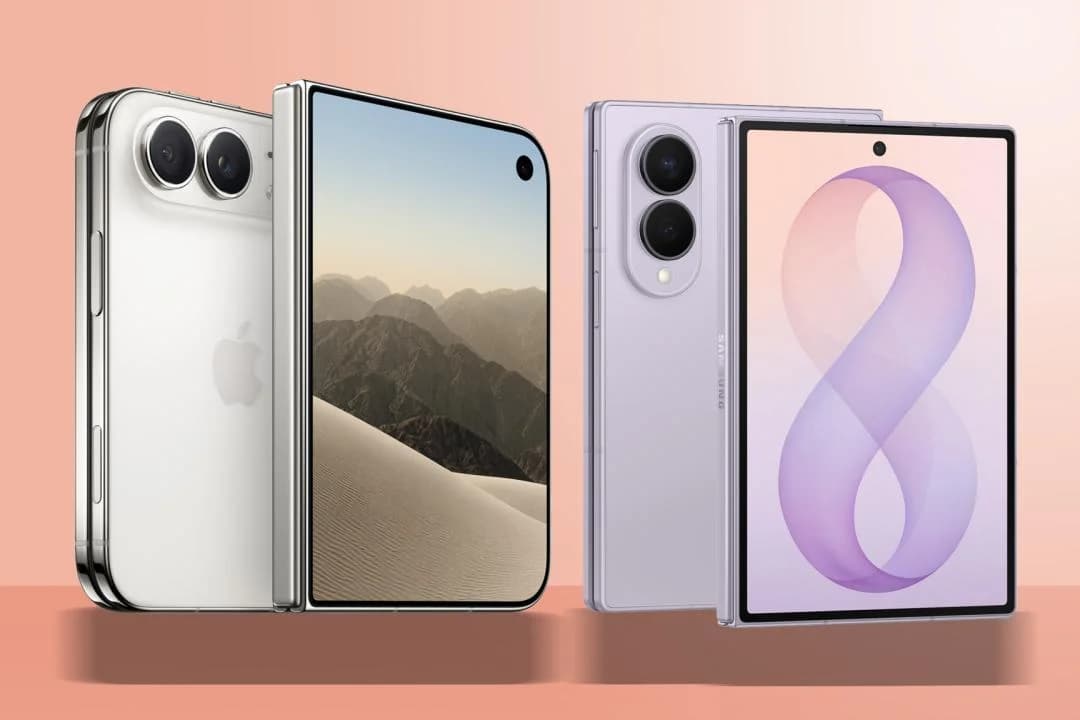
Galaxy Fold8 is the iPhone Duo's closest direct competitor.
Both smartphones have 7.6-inch internal displays, book-style designs, two primary rear cameras and flagship processors, but Samsung is noticeably lighter, thinner and less expensive.
Feature | iPhone Duo | Samsung Galaxy Fold8 |
|---|---|---|
US starting price | $1,999 | $1,899.99 |
Internal display | 7.6 inches | 7.6 inches |
Cover display | 5.4 inches | 5.5 inches |
Refresh rate | Up to 120Hz | Up to 120Hz |
Weight | 8.96 oz (254 g) | 7.09 oz (201 g) |
Thickness when open | 0.20 in (5.2 mm) | 0.18 in (4.5 mm) |
Thickness when folded | 0.44 in (11.3 mm) | 0.38 in (9.7 mm) |
Processor | A20 Pro | Snapdragon 8 Elite Gen 5 for Galaxy |
Main camera | 48MP | 50MP |
Ultra Wide | 48MP | 50MP |
Telephoto | No | No |
Rated video playback | Up to 31 hours on internal display | Up to 26 hours |
Water/dust resistance | IP68 | IP48 |
Stylus | Apple Pencil USB-C support coming later | S Pen not supported |
OS | iOS 27 | Android / One UI 9 |
Biometrics | Touch ID | Fingerprint sensor |
Where iPhone Duo Has the Edge Over Galaxy Fold8
The clearest hardware advantage is IP68 versus IP48 on Galaxy Fold8. Apple also plans to support Apple Pencil, while Samsung does not offer S Pen support on Fold8.
Duo has a higher official maximum for internal-screen video playback as well: up to 31 hours compared with up to 26 hours on Fold8.
Battery tests published by different manufacturers are not directly interchangeable, so those figures should be treated carefully, but the official gap is still notable.
Another potential advantage is ecosystem continuity. A Mac, AirPods, Apple Watch and other Apple devices continue working within the same platform without requiring the user to move to Android.
Where Samsung Galaxy Fold8 Has the Edge
7.09 oz versus 8.96 oz is a major difference. Galaxy Fold8 is 1.87 oz (53 g) lighter, about 0.06 inch (1.6 mm) thinner when folded and costs $100 less at launch.
Samsung also has years of experience tuning One UI specifically for Fold devices. Galaxy offers deeper multiwindow controls and a more mature large-screen multitasking environment, while iPhone Duo is just beginning that journey.
Buyers who want Samsung's stronger camera hardware can look at Galaxy Fold8 Ultra instead. It adds a 200MP main camera, 50MP Ultra Wide and a dedicated 10MP telephoto camera with 3x optical zoom, but the U.S. starting price rises to $2,099.99.
iPhone Duo vs. Google Pixel 11 Pro Fold – Google Has the Stronger Zoom Camera
Pixel 11 Pro Fold carries a $1,899 U.S. MSRP before promotions and offers larger displays, a triple-camera setup and a dedicated 5x telephoto camera.
From a pure camera-hardware perspective, it has a significant advantage over the Duo in long-range photography.
Feature | iPhone Duo | Pixel 11 Pro Fold |
|---|---|---|
US starting price | $1,999 | $1,899 MSRP |
Cover display | 5.4 inches | 6.5 inches |
Internal display | 7.6 inches | 8 inches |
Refresh rate | Up to 120Hz | 1–120Hz |
Peak brightness | 3,000 nits | 3,600 nits |
Weight | 8.96 oz (254 g) | About 8.4 oz (238 g) |
Folded thickness | 0.44 in (11.3 mm) | About 0.40 in (10.2 mm) |
Processor | A20 Pro | Tensor G6 |
Main camera | 48MP | 48MP |
Ultra Wide | 48MP | 10.5MP |
Telephoto | No | 10.8MP, 5x optical |
Maximum zoom | 10x digital | Up to 30x Super Res Zoom |
Battery capacity | Apple does not publish mAh | 4,806mAh |
Rated battery life | Up to 24 hours typical use | More than 24 hours |
Water/dust resistance | IP68 | IP68 |
Storage | Up to 2TB | Up to 1TB |
OS | iOS 27 | Android 17 |
Guaranteed OS support | Apple does not publish a fixed number of years | 7 years |
Why Pixel 11 Pro Fold May Be More Practical for Some Buyers
Pixel has a larger cover display, a larger internal screen, lower weight and a dedicated 5x telephoto camera.
For someone who wants a foldable primarily as an all-purpose Android flagship, those are meaningful advantages.
Google also explicitly guarantees seven years of operating system updates, security updates and Pixel Drops.
The iPhone Duo counters with A20 Pro, a much higher-resolution 48MP Ultra Wide camera, Apple Pencil support, up to 2TB of storage and deep integration with the wider Apple ecosystem.
The choice therefore comes down to far more than one line in a specification table: iOS and the Apple ecosystem versus Android, Gemini and the Pixel ecosystem.
iPhone Duo vs. HONOR Magic V6 – Apple Falls Behind in Thinness and Battery Hardware
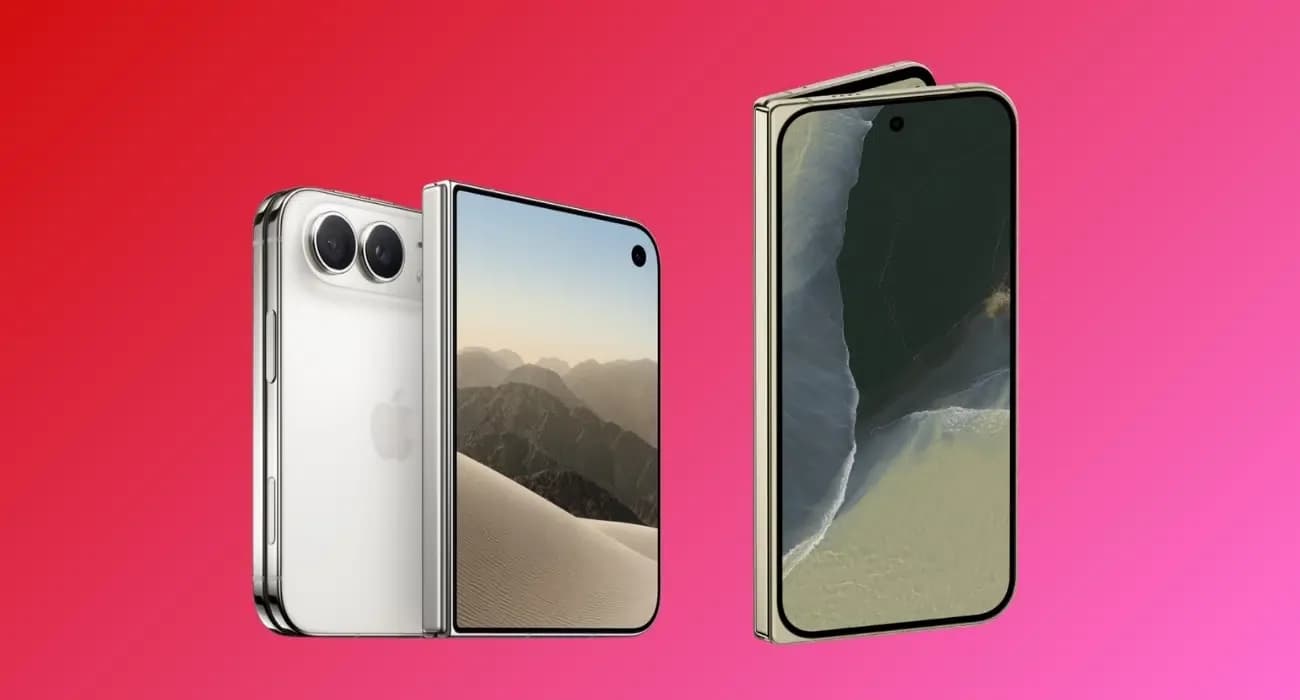
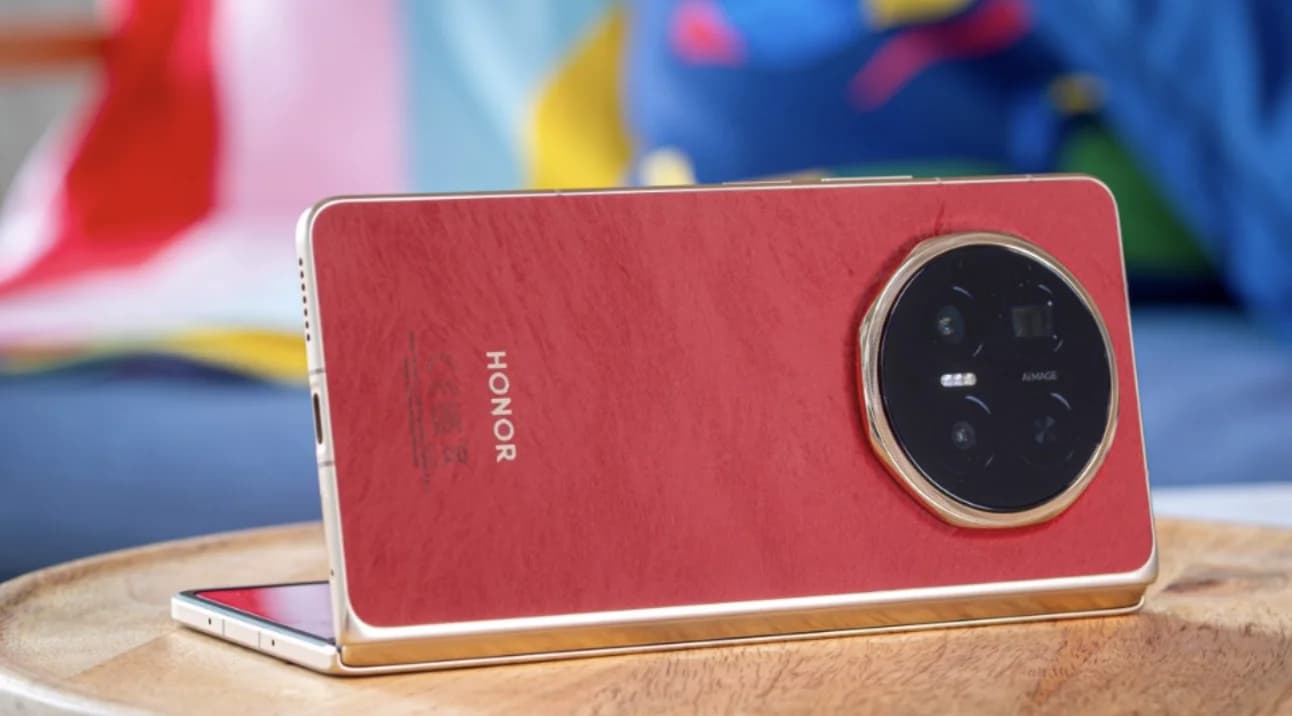
HONOR Magic V6 shows just how far Chinese foldable manufacturers had pushed the category before Apple's first model arrived.
When folded, the V6 measures only 0.34 inch (8.75 mm) thick, weighs about 7.72 oz (219 g) and still fits a 6,660mAh battery.
Feature | iPhone Duo | HONOR Magic V6 |
|---|---|---|
Cover display | 5.4 inches | About 6.52 inches |
Internal display | 7.6 inches | About 7.95 inches |
Refresh rate | Up to 120Hz | 1–120Hz |
Weight | 8.96 oz (254 g) | About 7.72 oz (219 g) |
Folded thickness | 0.44 in (11.3 mm) | 0.34 in (8.75 mm) |
Open thickness | 0.20 in (5.2 mm) | 0.16 in (4.0 mm) |
Processor | A20 Pro | Snapdragon 8 Elite Gen 5 |
Main camera | 48MP | 50MP |
Ultra Wide | 48MP | 50MP |
Telephoto | No | 64MP periscope |
Battery | Dual battery, capacity not officially listed | 6,660mAh |
Wired charging | About 50% in 20 minutes | 80W |
Wireless charging | Up to 25W | 66W |
Protection | IP68 | IP68 + IP69 |
HONOR Shows the Biggest Raw Hardware Contrast
Magic V6 is about 1.23 oz (35 g) lighter and roughly 0.10 inch (2.55 mm) thinner when folded than the iPhone Duo.
It also offers a much larger published battery capacity, substantially faster charging and a dedicated 64MP periscope telephoto camera.
On paper, that is a major hardware advantage.
This comparison is also a reminder of why iPhone Duo should not be called revolutionary based on specifications alone. Apple is entering a category where competitors already know how to build extremely thin foldables with large silicon-carbon batteries and sophisticated camera systems.
Duo's strongest argument is not that it wins every specification, but that it brings the foldable form factor into the iPhone ecosystem.
iPhone Duo vs. Its Biggest Rivals – Who Wins on Specs?
No current foldable wins every category.
iPhone Duo is strong in water and dust resistance, Apple Pencil support, A20 Pro performance and ecosystem integration, but several competitors beat it in weight, thinness or camera hardware.
Specification | iPhone Duo | Galaxy Fold8 | Pixel 11 Pro Fold | HONOR Magic V6 |
|---|---|---|---|---|
Internal display | 7.6" | 7.6" | 8.0" | 7.95" |
Cover display | 5.4" | 5.5" | 6.5" | 6.52" |
Weight | 8.96 oz (254 g) | 7.09 oz (201 g) | ≈8.4 oz (238 g) | ≈7.72 oz (219 g) |
Folded thickness | 0.44" (11.3 mm) | 0.38" (9.7 mm) | ≈0.40" (10.2 mm) | 0.34" (8.75 mm) |
Main camera | 48MP | 50MP | 48MP | 50MP |
Telephoto | No | No | 5x | 64MP periscope |
Protection | IP68 | IP48 | IP68 | IP68/IP69 |
Stylus | Apple Pencil | No S Pen | – | – |
Maximum storage | 2TB | 1TB | 1TB | Varies by market |
US starting price | $1,999 | $1,899.99 | $1,899 MSRP | Varies by market |
Galaxy Fold8 is the lightest of the four. Pixel 11 Pro Fold and HONOR Magic V6 offer the largest displays. HONOR is the most aggressive in battery capacity and charging, while iPhone Duo stands out with Apple Pencil support, up to 2TB of storage and full iOS integration.
So there is no universal winner on specifications.
Each device makes more sense for a different type of buyer.
Where iPhone Duo Is Actually Better Than Its Rivals
The iPhone Duo's biggest strength is not one record-breaking specification. It is the combination of a new form factor with an ecosystem that millions of users already rely on.
For someone with a Mac, AirPods, Apple Watch, iCloud, Photos, Messages and other Apple services, buying Duo does not require moving to an entirely different platform.
There are also several concrete hardware advantages:
Full A20 Pro performance. Duo receives the same flagship-class processor platform as the Pro lineup.
IP68 protection. That is a stronger rating than Galaxy Fold8's IP48.
Apple Pencil support. Pen input on both screens creates workflows the current Fold8 does not offer.
Up to 2TB of storage. Pixel 11 Pro Fold and Galaxy Fold8 top out at 1TB.
Two displays with the same aspect ratio. That can help content move more smoothly between open and closed states.
Apple controls the hardware, processor and iOS. That level of integration may be particularly valuable on a first-generation foldable.
Those strengths have real practical value, but they do not erase Duo's weaknesses.
At $1,999, buyers are still getting a heavier phone and a less capable zoom system than some competing foldables.
What Could Disappoint Buyers About the iPhone Duo?
The biggest iPhone Duo weaknesses are already visible before retail units reach customers. Several are the direct cost of choosing a new form factor.
The main concerns are:
8.96 oz (254 g) weight. It is heavier than Galaxy Fold8, Pixel 11 Pro Fold and HONOR Magic V6.
0.44-inch (11.3 mm) folded thickness. Current Android foldables are already approaching 0.35 inch or going below it.
No telephoto camera. That is one of the most obvious compromises on a $1,999 smartphone.
No Face ID. Touch ID replaces it.
eSIM only. There is no physical SIM option.
The display crease is not guaranteed to disappear. Apple says only that the design makes it less noticeable.
$1,999 starting price. Sales tax can push the final U.S. checkout price above $2,000 even before storage upgrades, AppleCare or accessories.
First-generation hardware. Real hinge and flexible-display durability will become clearer only after extended everyday use.
That is why buying the Duo simply because it is the most expensive iPhone makes little sense.
The foldable display has to solve a real problem for the person paying for it.
Who Should Buy the iPhone Duo?
The iPhone Duo makes the most sense for someone already invested in Apple's ecosystem who wants a much larger working area without carrying a separate iPad.
It is particularly well suited to documents, reading, video, note-taking, two-app workflows and Apple Pencil.
Duo makes sense if:
A larger screen would genuinely be useful every day.
You regularly need two apps visible at once.
You want to stay on iOS.
You already use a Mac, AirPods, Apple Watch or iCloud.
Long-range camera zoom is not a top priority.
The premium price of first-generation hardware is acceptable.
eSIM fits your carrier and travel needs.
In those situations, the iPhone Duo could replace both a large iPhone and some of the tasks normally handled by a compact tablet.
Who Should Stick With the iPhone 18 Pro Max?
If a foldable display would not be useful every day, the $1,299 iPhone 18 Pro Max is the more rational purchase for many buyers.
It costs $700 less, uses the same A20 Pro platform, retains Face ID and has a stronger triple-camera system.
The Pro Max also avoids a moving hinge and flexible internal display, which means fewer mechanical components and fewer unknowns associated with first-generation foldable hardware.
Duo is therefore not an automatic replacement for Pro Max.
It is a separate category for a different user.
When Does iPhone Duo Go on Sale in the US?
Apple confirmed that iPhone Duo preorders open October 16, 2026, with retail availability beginning October 23 in the first wave of markets, including the United States.
The official U.S. price begins at $1,999 before applicable sales tax.
Actual checkout cost will depend on the buyer's state and locality, storage configuration, accessories and optional AppleCare coverage.
Is the iPhone Duo Worth $1,999?
The iPhone Duo is worth $1,999 only if the foldable display meaningfully changes how the phone is used.
Apple did not win every conventional specification battle. Samsung's Fold8 is lighter, Pixel has a dedicated 5x telephoto camera, and HONOR Magic V6 is much thinner and carries a larger published battery. But Duo is not trying to win only through a specification table.
Apple's real product here is a familiar iPhone that can turn into a nearly tablet-sized device in seconds without forcing the user to leave iOS and the wider Apple ecosystem.
That could ultimately make iPhone Duo more important to the market than an isolated record for thinness, battery capacity or megapixels. Samsung and other manufacturers have spent years proving that foldable phones can work.
Apple now has to prove something different: that a foldable phone belongs in the hands of a much broader audience. For a first-generation device, that may be the most important test of all.
iPhone Duo FAQ
What Is the iPhone Duo?
The iPhone Duo is Apple's first foldable smartphone. It has a 5.4-inch cover display and a 7.6-inch foldable internal screen.
How Much Does the iPhone Duo Cost?
The official U.S. starting price is $1,999 with 256GB of storage. Apple also offers 512GB, 1TB and 2TB versions.
When Does the iPhone Duo Come Out?
Preorders open October 16, 2026, with sales beginning October 23.
How Much Will the iPhone Duo Cost After Sales Tax?
Apple's advertised U.S. starting price is $1,999 before applicable sales tax. The final amount varies by state and locality and increases with larger storage configurations, accessories or AppleCare.
What Size Is the iPhone Duo Display?
The cover Super Retina XDR display measures about 5.4 inches, while the internal foldable display measures approximately 7.6 inches. Both support ProMotion up to 120Hz and outdoor brightness of up to 3,000 nits.
Can You See the Crease on the iPhone Duo Display?
Apple does not claim that the crease is completely invisible. The internal display uses a nanotexture surface designed to reduce reflections and make the fold line less noticeable.
Does the iPhone Duo Have Face ID?
No. The iPhone Duo uses Touch ID built into the side button.
Does the iPhone Duo Have a Telephoto Camera?
No. The iPhone Duo has a 48MP main camera and a 48MP Ultra Wide. The main sensor provides 2x optical-quality zoom.
Does the iPhone Duo Support Apple Pencil?
Yes. Support for Apple Pencil USB-C is scheduled to arrive later in 2026 and will work on both displays.
Does the iPhone Duo Have a SIM Card Slot?
No. The iPhone Duo is eSIM-only worldwide and has no physical SIM tray.
iPhone Duo vs. Galaxy Fold8 – Which Is Better?
Galaxy Fold8 is lighter, thinner and less expensive. iPhone Duo has an IP68 rating instead of IP48, is expected to support Apple Pencil, offers up to 2TB of storage and fits naturally into the Apple ecosystem. The better choice depends heavily on platform preference and how the foldable screen will be used.
iPhone Duo vs. Pixel 11 Pro Fold – Which Is Better?
Pixel 11 Pro Fold has larger displays, a dedicated 5x telephoto camera and a lower U.S. MSRP. iPhone Duo counters with A20 Pro, a 48MP Ultra Wide camera, Apple Pencil support, up to 2TB of storage and deeper integration with Apple devices and services.
How Long Does the iPhone Duo Battery Last?
Apple rates the Duo for up to 24 hours of typical use, up to 31 hours of video playback on the internal display and up to 44 hours on the cover display.
How Much Does the iPhone Duo Weigh?
The iPhone Duo weighs 8.96 oz. That is heavier than Galaxy Fold8 at about 7.09 oz, Pixel 11 Pro Fold at roughly 8.4 oz, and HONOR Magic V6 at around 7.72 oz.
Best of the week — in your inbox
No spam. Only top Gosta stories. Unsubscribe in one click.
Comments