
How Many Minutes to Boil Corn So It's Soft and Juicy Every Time
If you are wondering how many minutes to boil corn, start with the age of the ears. Very fresh, young sweet corn usually needs only 3–7 minutes after the water returns to a boil. More mature corn can need 10–20 minutes, while genuinely old field-type ears may stay firm much longer and never become as tender as young sweet corn. The goal is not to boil every cob for the same fixed time, but to stop when the kernels are hot, bright, juicy, and easy to bite.

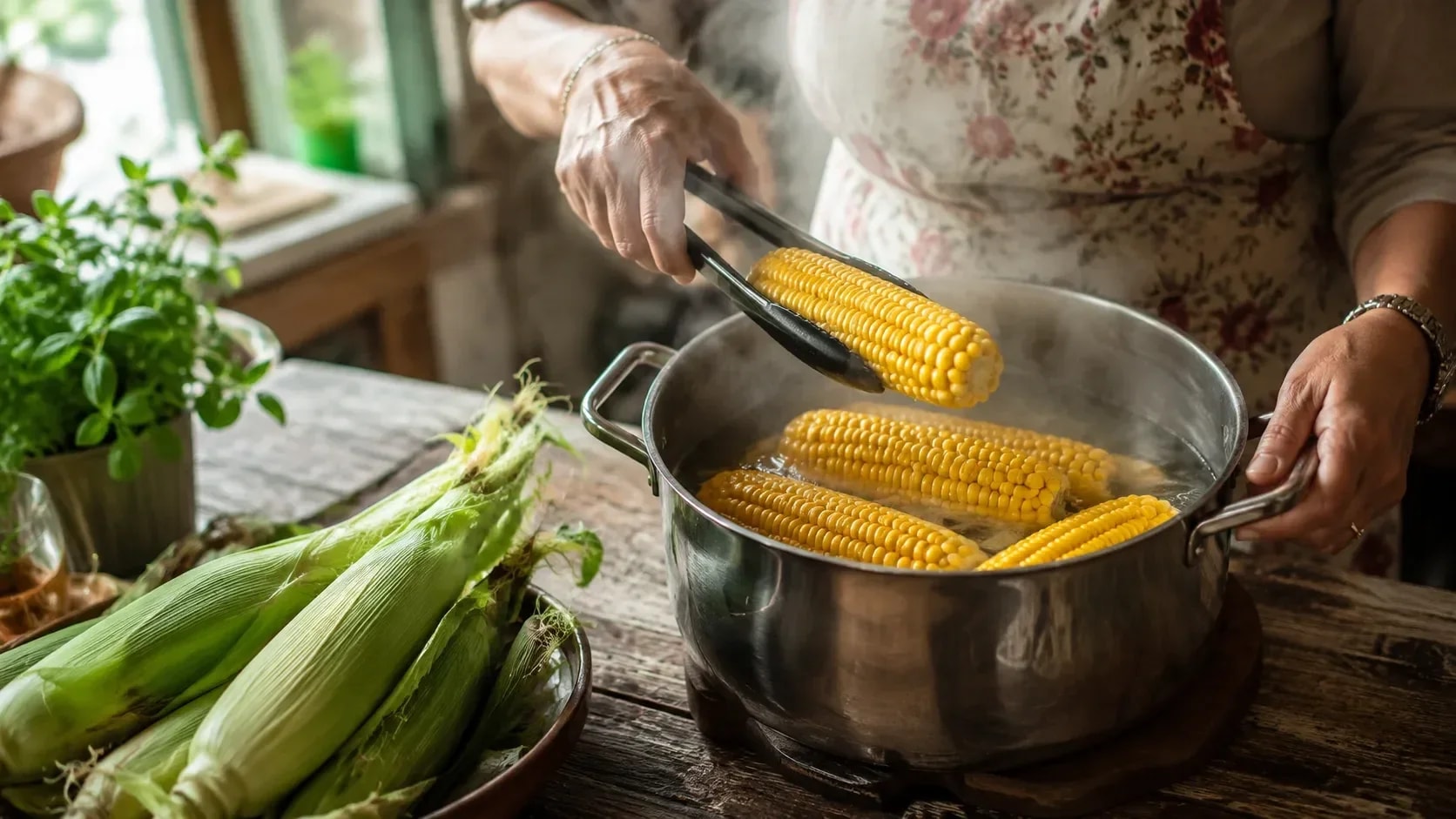
If you are wondering how many minutes to boil corn, start with the age of the ears. Very fresh, young sweet corn usually needs only 3–7 minutes after the water returns to a boil. More mature corn can need 10–20 minutes, while genuinely old field-type ears may stay firm much longer and never become as tender as young sweet corn.
The goal is not to boil every cob for the same fixed time, but to stop when the kernels are hot, bright, juicy, and easy to bite. This guide is for fresh corn on the cob, not canned or frozen corn.
For sweet corn, boiling water is the easiest method because timing is predictable. Salt after cooking, and start checking young ears at 3 minutes.
Boiled corn on the cob
Husked sweet corn dropped into boiling water. Young ears are ready in 3–7 minutes after the pot returns to a boil; mature ears may need 10–20 minutes. Season after cooking.
Ingredients
Instructions
- Remove husks and silk, then rinse the ears.
- Bring a large pot of water to a full boil. Do not overcrowd the pot.
- Lower in the corn carefully. Cover if you want the water to return to a boil faster.
- Once it boils again, start checking young corn after 3 minutes. Most fresh sweet corn is ready in 5–7 minutes. Slightly mature ears may need 8–12 minutes; firmer mature corn 15–20 minutes or more.
- Pierce or taste one kernel. It should be tender but still juicy. Remove with tongs and season immediately: butter first if you use it, then salt so the crystals stick.
Cold water, salt, sugar, and husks
Starting in cold water can still work, but then the clock is less useful because the corn is warming as the pot heats. Judge doneness by the kernels rather than the timer. For the simplest result, salt after cooking. A small spoonful of sugar in the water can help bland older ears, but it cannot restore the texture of freshly picked corn. You do not need milk in the water; milk-and-butter boiling is a separate flavor method.
You can boil corn in the husks, but it is less convenient in a pot: husks trap silk, take up space, and make doneness harder to check. For straightforward boiled corn, husk first. Husk-on methods are better suited to grilling, microwaving, or steaming.
How to tell when corn is done
Kernels should be hot through, plump, and easy to pierce. Color often becomes brighter. The best test is to cut or bite one kernel after cooling it for a few seconds. Raw centers taste starchy and hard. Overcooked young corn can become less crisp. If corn is still hard after 20 minutes, continue in 5-minute intervals. If kernels remain dense and starchy, the ear may be too mature — cut it from the cob and use it in soup, fritters, or salad instead of boiling indefinitely.
Season while hot: butter and flaky salt; smoked paprika; olive oil, lemon, and pepper; garlic and dill; grated hard cheese and chili; sour cream and herbs; or lime, chili, and a little cheese. Leftover kernels go into salads, quesadillas, grain bowls, soups, omelets, salsa, or pasta.
FAQ
How do you boil corn on the cob correctly?
Put husked corn into boiling water, let the water return to a boil, then cook only until the kernels are tender and juicy.
How long do you boil young corn?
Usually 3–7 minutes after the water returns to a boil.
How long do you boil older corn?
Start around 10–15 minutes and check. Firmer ears can need 20 minutes or more.
Do you put corn in cold or hot water?
Hot water gives more predictable timing and is the easiest method for fresh sweet corn.
When should you salt corn?
Salting after cooking is simple and gives you full control over seasoning.
Should you add sugar while boiling corn?
It is optional and usually unnecessary for fresh sweet corn. A little sugar can help bland older ears taste sweeter.
Can you overcook young corn?
Yes. Very long boiling can make fresh sweet corn less crisp and less pleasant, so start checking early.
Best of the week — in your inbox
No spam. Only top Gosta stories. Unsubscribe in one click.
Comments