
Meringue Recipe Without Cream of Tartar: A Crisp Dessert You Can Make at Home
This meringue recipe without cream of tartar uses only egg whites, fine sugar, and a little acid such as lemon juice if you want extra stability. The basic formula is easy to remember: use about twice as much sugar as egg white by weight. For example, 100 g of egg whites pairs with about 200 g of sugar. The technique matters more than a long ingredient list: a grease-free bowl, gradual sugar addition, firm glossy peaks, and low oven heat are what create a dry, crisp shell instead of a sticky or

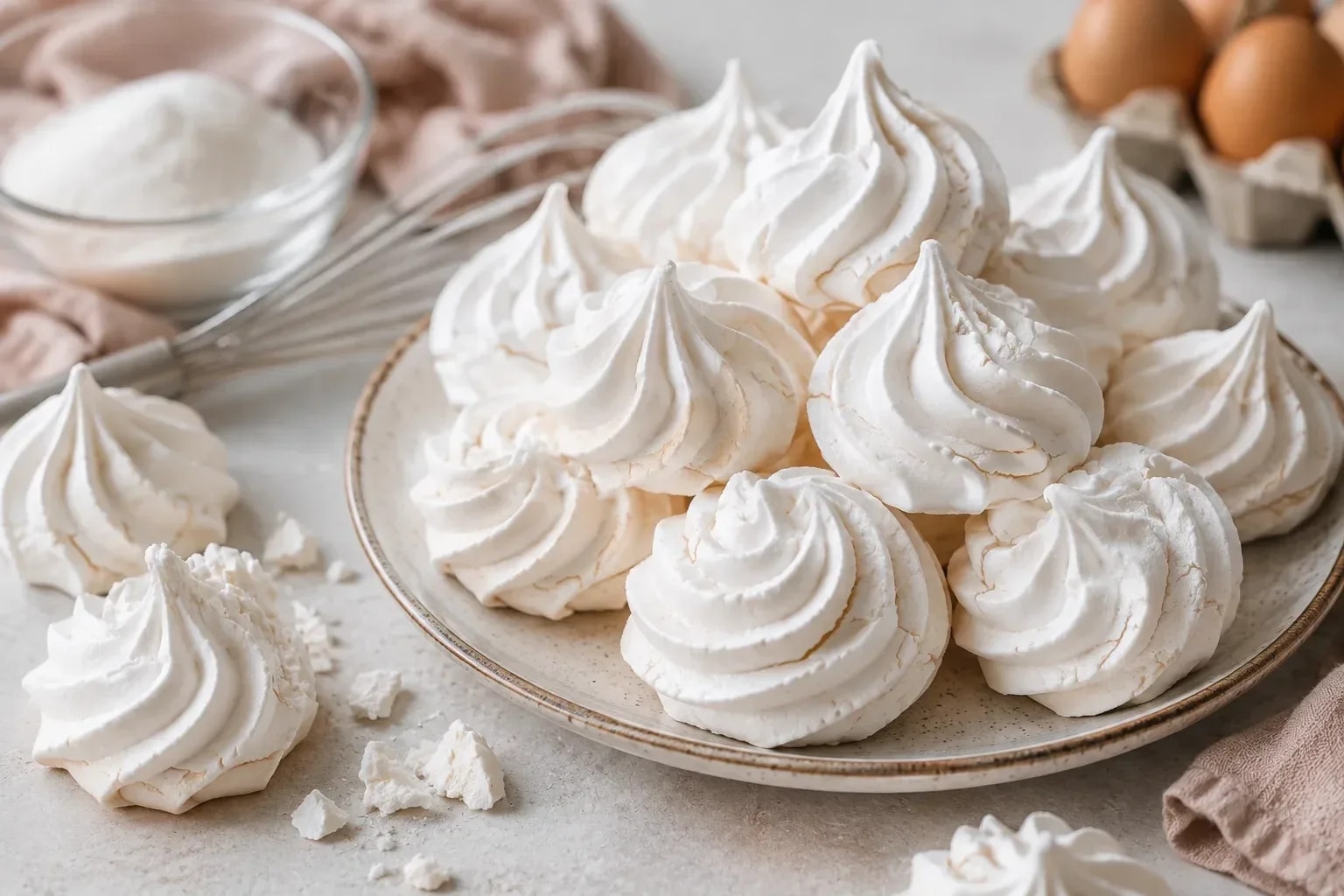
This meringue recipe without cream of tartar uses only egg whites, fine sugar, and a little acid such as lemon juice if you want extra stability. The basic formula is easy to remember: use about twice as much sugar as egg white by weight. For example, 100 g of egg whites pairs with about 200 g of sugar.
The technique matters more than a long ingredient list: a grease-free bowl, gradual sugar addition, firm glossy peaks, and low oven heat are what create a dry, crisp shell instead of a sticky or collapsed meringue. Cream of tartar is useful in many recipes, but it is not mandatory.
The recipe below makes about 25–35 small meringues. Weigh the whites if you can: leftover whites vary in size, and the 1:2 ratio scales cleanly.
How to know the foam is ready
Lift the whisk: the peak should stand upright or bend only slightly. The mixture should look glossy, dense, and smooth. It should stay in the bowl if you tilt it. If it is stiff but gritty, beat briefly to dissolve sugar. If it turns dull, clumpy, and dry, you may have overbeaten before enough sugar went in. Dumping all the sugar in at once is one of the easiest ways to produce a grainy, unstable foam.
Oven temperature: electric and gas
For small crisp meringues, 90–100°C is a reliable starting range. Higher heat colors the sugar. Use conventional top-and-bottom heat if possible and place the tray in the middle or slightly lower. Gas ovens often have stronger bottom heat: use the lowest stable setting, buffer with an empty tray on a lower rack, and check color early.
You do not always need to leave the door open. If moisture is trapped and meringues stay sticky, a small gap at the end can help — only if it is safe for your oven. Another option is to turn the oven off and cool the batch inside.
Why meringue fails
Sticking usually means the underside is not fully dry or humidity has softened the sugar. Dry 15–30 minutes longer. Large cracks come from heat that is too high or sudden cooling; small cracks are normal. Yellow or brown meringue means the oven is too hot or the tray is too close to the element; vanilla can also tint it. Syrup beads appear when sugar was not fully incorporated, the oven is too hot, or humidity is high. Collapse before baking points to fat or yolk in the bowl, sugar added too fast, excess liquid flavoring, or sitting too long before piping.
French meringue is the easiest for crisp cookies. Swiss meringue warms whites and sugar over a water bath before whipping. Italian meringue pours hot syrup (around 118°C / 244°F) into whipping whites and is very stable but needs more precision. For this recipe, fine granulated or caster sugar is more predictable than powdered sugar, which often contains starch.
Flavor, color, and storage
Add flavor after the foam is stable: vanilla, citrus zest, a little cocoa, espresso powder, freeze-dried berry powder, or a chocolate swirl. Too much liquid weakens the foam. Use gel or powdered color, not a large amount of liquid color. You can shape meringues with two spoons or a snipped food-safe bag if you have no piping tip.
Store completely cooled meringues airtight at room temperature, with parchment between layers. Keep them away from steam and the refrigerator. Assemble with cream or fruit only at serving time. Humidity is one of the biggest variables: sugar attracts water from the air.
FAQ
What is the correct proportion of sugar and egg whites for meringue?
About 2 parts sugar to 1 part egg white by weight: for example, 200 g sugar for 100 g whites.
How many degrees do you need for meringue?
For small crisp meringues, start around 90–100°C (195–210°F) and adjust for your oven.
How long to dry meringue in the oven?
Small pieces commonly need about 1.5–2 hours, but size, oven accuracy, and humidity can change the timing.
Why does the meringue stick?
It is usually underdried or has absorbed moisture. Dry it longer at low heat and cool before peeling from the parchment.
Is it possible to make meringue without powdered sugar?
Yes. Fine granulated or caster sugar is the standard choice for many classic French meringue recipes.
Which meringue is best for plain crisp meringues?
French meringue is the simplest and most practical for crisp home-baked meringue cookies. Cream of tartar is optional; lemon juice and careful technique are enough.
Best of the week — in your inbox
No spam. Only top Gosta stories. Unsubscribe in one click.
Comments