
How to Cook Buckwheat So It Comes Out Light and Fluffy
If you want to know how to cook buckwheat so the groats stay separate instead of turning watery, use a simple starting ratio: 1 cup toasted buckwheat groats to about 2 cups water. Bring them to a boil, cover, reduce the heat, and cook gently until the liquid is absorbed—usually around 12–15 minutes. Then turn off the heat and let the pot stand covered for another 5–10 minutes before fluffing with a fork.

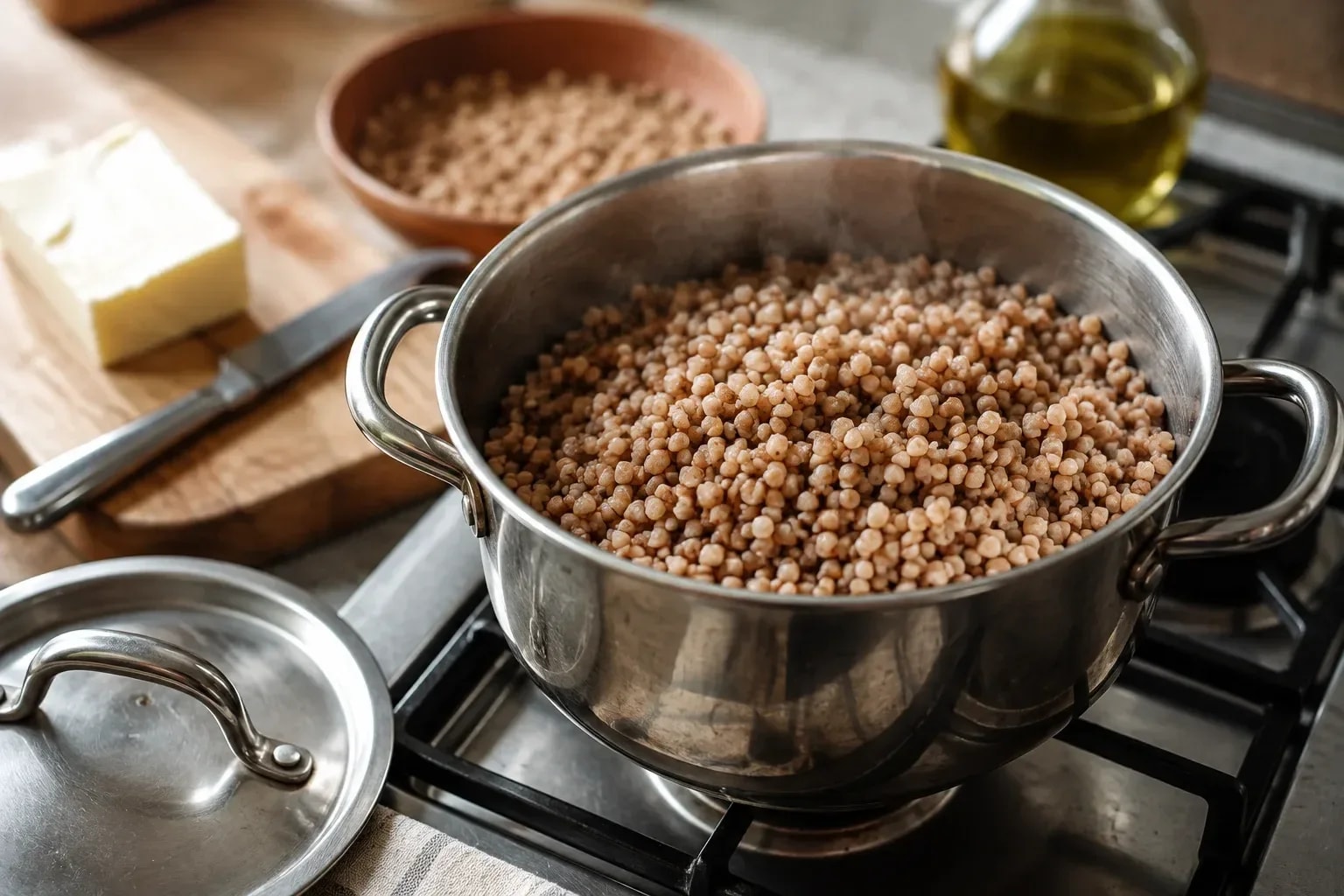
If you want to know how to cook buckwheat so the groats stay separate instead of turning watery, use a simple starting ratio: 1 cup toasted buckwheat groats to about 2 cups water. Bring them to a boil, cover, reduce the heat, and cook gently until the liquid is absorbed — usually around 12–15 minutes. Then turn off the heat and let the pot stand covered for another 5–10 minutes before fluffing with a fork.
This guide is for whole toasted buckwheat groats, often sold as kasha, not buckwheat flour or soba noodles. Remember 1 : 2 : 15 : 10 — one part buckwheat, two parts water, about 15 minutes gentle cooking, about 10 minutes covered rest.
A quick rinse removes dust. Do not soak toasted groats unless a specific recipe requires it. Salt the cooking water, and do not stir while it simmers.
Fluffy boiled buckwheat
Toasted whole groats simmered in a 1:2 ratio until the water is absorbed, then rested under a lid. The grains stay separate instead of turning to porridge.
Ingredients
Instructions
- Rinse the groats briefly in a fine sieve and drain well.
- Bring the water to a boil in a medium saucepan. Add salt and buckwheat. Return to a gentle boil.
- Cover with a tight-fitting lid and reduce heat to low. Cook about 12–15 minutes without stirring.
- When the water is absorbed, turn off the heat. Leave covered for 5–10 minutes.
- Add butter if desired and fluff gently with a fork. For 4–6 side-dish servings, use 2 cups buckwheat and about 4 cups water in a larger pot.
Water, salt, and stirring
Some brands and very dry groats absorb slightly different amounts, so use the package directions when they differ. For firmer grains, reduce water a little; for softer porridge-style buckwheat, add more. Adding groats to boiling water makes timing easy and helps preserve a firmer texture. If you start in cold water, begin counting only once the pot reaches a simmer.
Salt the water before or when you add the groats. Frequent stirring breaks the grains and releases starch. If you worry about sticking, use low heat and a heavy-bottomed pot. Pale green untoasted groats can be dry-toasted in a pan first for a nuttier flavor.
If the pot goes wrong
Watery buckwheat usually means too much water, too short a cook, weak heat, or lifting the lid repeatedly. If the grains are tender but a little water remains, uncover and cook on very low heat for a minute or two. If the groats are still hard and the water has run out, add 2–4 tablespoons of boiling water at a time, cover, and cook another 3–5 minutes.
You can also steam: pour boiling water over rinsed groats in a 1:2 ratio, cover tightly, and stand 30–60 minutes or longer. Texture is less predictable than a short simmer. As a side dish, about 1/4 to 1/3 cup dry groats per person is a reasonable start; closer to 1/2 cup as a main bowl. Serve with mushrooms and onions, roast chicken, meatballs, a fried egg, roasted vegetables, cottage cheese, or milk, fruit, and honey for breakfast.
FAQ
How do you properly cook buckwheat?
Use about twice as much water as groats, simmer covered on low heat until absorbed, then rest before fluffing.
How much water is needed for 1 cup of buckwheat?
About 2 cups for standard toasted whole groats.
How much to cook buckwheat after boiling?
Usually 12–15 minutes on low heat.
Do you need to wash buckwheat?
A quick rinse is recommended to remove dust and loose particles.
Do you need to stir the buckwheat?
No. Minimal stirring helps keep the grains separate.
What to do if the buckwheat is hard?
Add a few tablespoons of boiling water, cover, and cook a few minutes longer.
Can you just pour boiling water over buckwheat?
Yes. Covered steeping works, although it usually takes longer and can be less predictable than simmering.
Best of the week — in your inbox
No spam. Only top Gosta stories. Unsubscribe in one click.
Comments