
Pierogi Dough Recipe: 4 Tested Methods on Water, Kefir, and Scalded Dough
If you searched for a pierogi dough recipe sour cream version, you may be surprised that classic Ukrainian varenyky dough does not require sour cream at all. Sour cream is more often served with finished varenyky or used in some family dough variations. The four reliable methods below use water with egg, eggless water, hot-water scalded dough, and kefir. All work for Ukrainian-style dumplings known internationally as pierogi or varenyky.

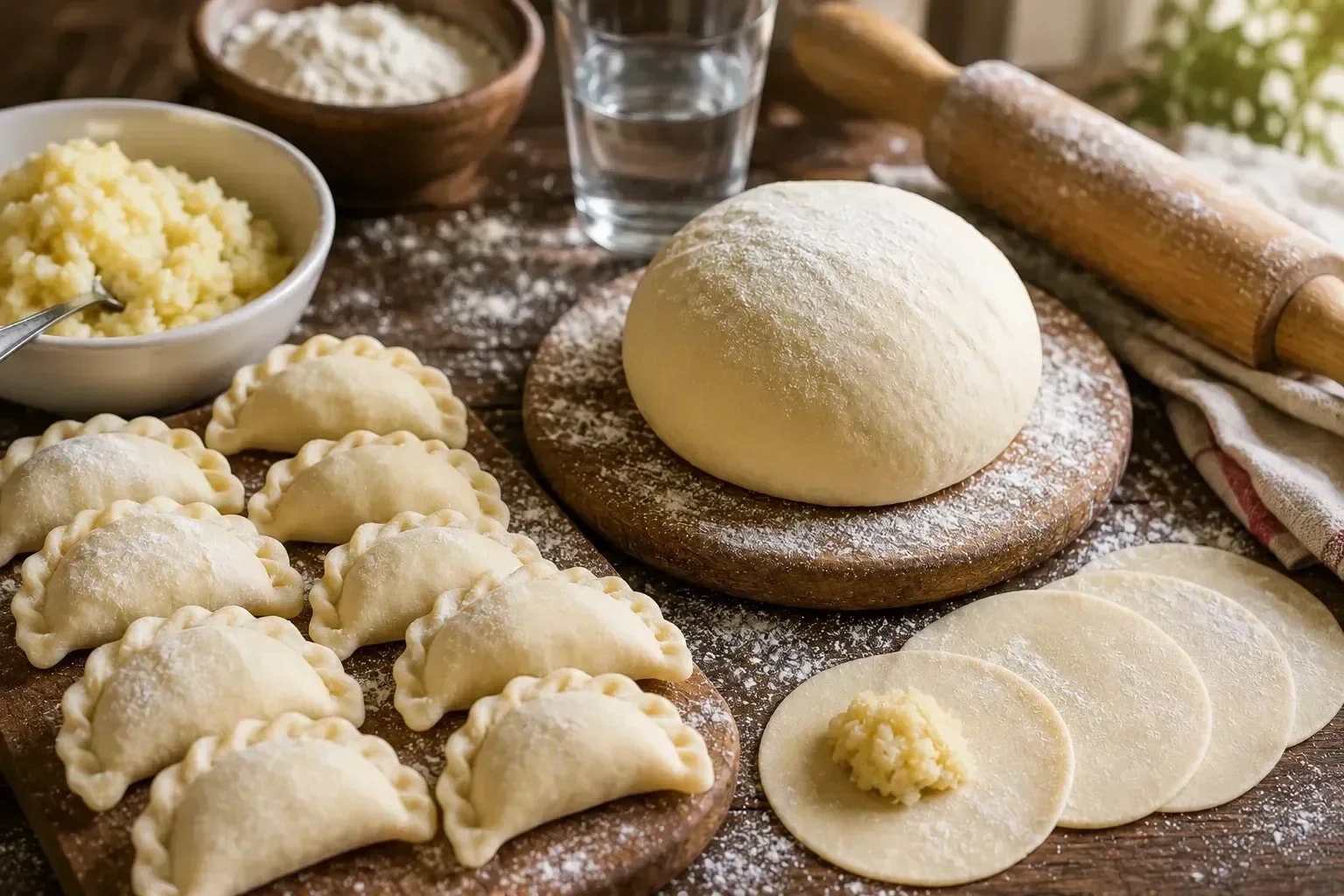
If you searched for a pierogi dough recipe with sour cream, you may be surprised that classic Ukrainian varenyky dough does not require sour cream at all. Sour cream is more often served with the finished dumplings or used in some family variations. The four methods below use water with egg, eggless water, hot-water scalded dough, and kefir. All work for Ukrainian-style dumplings known internationally as pierogi or varenyky.
The best dough is soft, elastic, easy to roll thinly, and strong enough to hold potatoes, cottage cheese, cabbage, cherries, or other fillings without opening in boiling water. A basic water-and-egg dough is universal. Eggless water dough suits lean fillings. Scalded dough is exceptionally flexible. Kefir dough is softer and slightly thicker, especially good for steaming. If this is your first batch, start with scalded dough or the basic water dough.
Dough | Flour | Liquid | Egg | Best for |
|---|---|---|---|---|
Basic water | 400 g | 200 ml lukewarm water | 1 | universal fillings |
Eggless water | 400 g | 220 ml warm water | No | lean savory varenyky |
Scalded | 400 g | 220 ml boiling water | No | thin, flexible wrappers |
Kefir | 450 g | 250 ml kefir | No | soft or steamed varenyky |
Each batch makes about 35–45 medium dumplings. Keep 30–50 g flour aside and add it only if the dough is truly sticky. Resting 20–30 minutes is not proofing — there is no yeast — but it lets gluten relax so the dough rolls without springing back.
Basic pierogi dough on water with egg
A sturdy three-ingredient dough plus optional oil. Do not force all of the flour in if the dough already feels firm; absorption varies. Rest covered so a dry skin does not form on the surface.
Ingredients
Instructions
- Dissolve the salt in the water. Beat in the egg and optional oil.
- Put about 350 g flour in a bowl and make a well. Pour in the liquid and mix from the center outward.
- Add remaining flour gradually until the dough is soft and no longer very sticky. Knead 7–10 minutes until smooth.
- Cover and rest 30 minutes. Roll to about 2 mm thick and cut circles 7–8 cm wide. Fill, pinch firmly, and boil in batches at a gentle simmer until they float, then 2–4 minutes more.
Eggless pierogi dough on water
Economical, flexible dough for savory lean fillings. Oil is not mandatory, but it makes the dough more supple and reduces surface drying.
Ingredients
Instructions
- Dissolve salt in warm water and add the oil. Pour into about 350 g flour.
- Mix, then add more flour as needed. Knead 8–10 minutes until smooth and elastic.
- Cover and rest 30 minutes. Roll thinly, fill as usual, and cook in gently boiling water in batches.
Scalded hot-water pierogi dough
Boiling water partially gelatinizes the starch, so the dough becomes smooth, flexible, and easy to roll with little extra flour. Excellent for juicy cherry filling because the edges seal well. Do not put your hands in immediately after adding the water — the center stays hot.
Ingredients
Instructions
- Mix flour and salt in a heatproof bowl. Add the oil.
- Pour in the boiling water while stirring with a sturdy spoon. Mix until shaggy and let it cool for several minutes.
- When safe to handle, knead 5–7 minutes. Cover and rest 20–30 minutes. Roll thinly and fill. This dough usually needs the least bench flour of the four methods.
Pierogi dough on kefir
Soft, slightly puffy dough, traditional for some Ukrainian varenyky, especially steamed ones. You can also boil it if you roll it a little thinner and seal the edges well. Do not add too much flour or steamed dumplings become heavy. Baking soda belongs in this method, not in a plain water dough.
Ingredients
Instructions
- Let the kefir come close to room temperature. Stir in salt, baking soda, and optional sugar.
- Add flour gradually and mix into a very soft dough. Knead gently for only 3–5 minutes.
- Rest covered 20–30 minutes. Roll slightly thicker than water dough, about 3 mm. Steam, or boil in batches at a gentle simmer — not a violent rolling boil. Use this dough sooner rather than after an overnight rest.
How to roll, seal, and cook varenyky
Correct dough is smooth and elastic: it springs back slowly when pressed and stretches without splitting. If it is hard, you added too much flour or kneaded after it was already firm — rest it 30–45 minutes, or knead in a teaspoon of water. Slight tackiness after mixing is normal; add flour one tablespoon at a time if it smears. If the dough tightens while rolling, cover it for 10–15 minutes instead of pressing harder.
Aim for about 2 mm for water or scalded dough, 2.5–3 mm for kefir. Cut 7–8 cm circles. Keep filling cool and away from the sealing edge; pinch out air. Do not put oil in the cooking water — enough water, small batches, and one gentle stir matter more. Cook frozen dumplings from frozen. Shape and freeze on a tray rather than freezing a raw dough ball if you can. Filling should be cold, not hot. Sour cream belongs on the plate more often than inside the dough.
FAQ
What ingredients do you need for pierogi dough?
At minimum, flour, water, and salt. Egg and oil are optional depending on the method; kefir dough uses kefir and a small amount of baking soda. Sour cream is not required in the dough.
How do you knead pierogi dough with water?
Combine salted water with flour gradually, knead 7–10 minutes until smooth, then cover and rest about 30 minutes before rolling.
How do you make eggless pierogi dough?
Use about 400 g flour, 220 ml warm water, 1 teaspoon salt, and 2 tablespoons oil. Knead until elastic and rest covered.
How do you make scalded hot-water pierogi dough?
Pour about 220 ml boiling water into 400 g flour mixed with salt and oil, stir with a spoon, cool briefly, then knead until smooth.
How do you knead pierogi dough with kefir?
Mix kefir with salt and baking soda, then add flour gradually. Knead gently, keep the dough soft, and rest before rolling.
Which dough is best for pierogi?
Scalded dough is the easiest all-round option for thin, flexible wrappers. Basic water dough is slightly firmer and also very reliable.
Can you freeze pierogi dough?
Yes, but freezing shaped dumplings is usually more convenient. Cook frozen dumplings without thawing.
Do you need sour cream in the dough?
No. Classic Ukrainian varenyky dough is made with water, hot water, or kefir. Sour cream is the traditional accompaniment at the table.
Best of the week — in your inbox
No spam. Only top Gosta stories. Unsubscribe in one click.
Comments