
Pruning Roses in Fall: Do You Need To, and If So, When
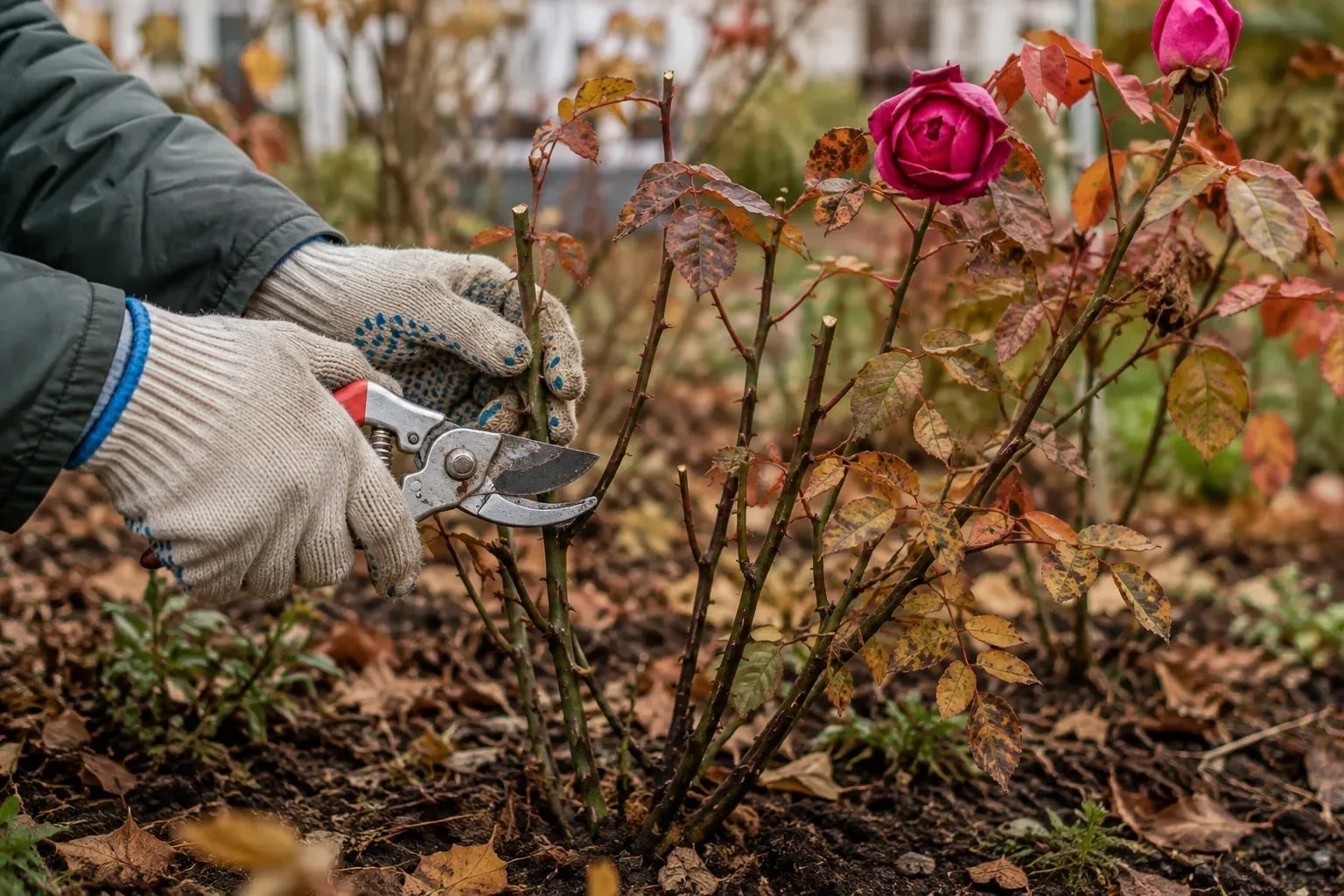
Pruning roses in fall is usually lighter than the main structural pruning done in late winter or early spring. In a cold climate such as much of Ukraine, the autumn job is mostly sanitary and protective: remove dead or diseased material, shorten very long shoots that could whip in strong wind, and prepare the plant for winter without stimulating a flush of tender new growth.

Contents14
- Do you need to prune roses in autumn?
- When to prune roses in autumn in Ukraine
- At what temperature can roses be pruned in autumn
- Why you shouldn't prune roses too early
- What to prune roses in autumn
- How to properly prune roses in autumn
- How to make a cut on a rose correctly
- How to cut roses
- How to prune hybrid tea roses in autumn
- How to prune floribunda roses in autumn
- How to prune climbing roses in autumn
- How to prune bush roses in autumn
- How to prune ground cover roses in autumn
- Do you need to cut all the rose buds in autumn?
Pruning roses in fall is usually lighter than the main structural pruning done in late winter or early spring. In a cold climate such as much of Ukraine, the autumn job is mostly sanitary and protective: remove dead or diseased material, shorten very long shoots that could whip in strong wind, and prepare the plant for winter without stimulating a flush of tender new growth.
The exact approach depends on the rose. Hybrid tea, floribunda, shrub, climbing, and ground-cover roses are not pruned in exactly the same way. If you are unsure what type you have, avoid hard autumn pruning and save major reshaping for the normal pruning season for that class.
Do you need to prune roses in autumn?
Not every rose needs a major cut in autumn. The safest general approach is to remove what clearly should not remain: dead wood, broken stems, obviously diseased material, and long flexible shoots at risk of wind damage.
Hard pruning can reduce the plant's protective top growth and may encourage new shoots during a warm spell. That tender growth is vulnerable when temperatures drop again. For most bush roses, the main pruning is better done when winter is ending and growth is about to restart.
Autumn pruning is therefore best thought of as pre-winter cleanup, not the final shaping of the bush.
When to prune roses in autumn in Ukraine
Wait until active growth has slowed and nights are consistently cool. In many parts of Ukraine this means late October into November, but local weather matters more than a fixed date.
Do not rush immediately after the last summer flowers. A warm September can still encourage growth. In colder northern and inland areas, winter arrives earlier; in the south, roses may stay active longer.
If your goal is only to shorten wind-whipped shoots, do it once strong autumn winds become a concern. Save heavy structural pruning for the season appropriate to the rose type.
At what temperature can roses be pruned in autumn
There is no single temperature at which all roses must be pruned. Use the plant's growth stage and the forecast. Once repeated cool nights have slowed growth and the plant is moving toward dormancy, light cleanup is reasonable.
Avoid major pruning during a warm period followed by several mild weeks because the plant may respond with soft new growth. Also avoid cutting frozen, brittle stems in severe cold; wait for a milder day when tools can make clean cuts.
Why you shouldn't prune roses too early
Early pruning can remove leaves and stems while the plant is still photosynthesizing and storing energy. It can also stimulate buds below the cuts, especially during a warm autumn.
That new growth may not harden before frost. The result can be more winter injury rather than less.
Another reason to wait is diagnostic. By later autumn, it is easier to see which stems are damaged, diseased, or excessively long and which can remain untouched until spring.
What to prune roses in autumn
Use clean, sharp bypass secateurs for most stems. For thick old canes, use loppers or a pruning saw sized for the job. Wear sturdy gloves and eye protection when handling thorny plants.
Before moving between plants, clean tools if disease is present. A dull blade crushes tissue and leaves ragged cuts that heal poorly.
You do not need complicated equipment. A good pair of secateurs, gloves, and a container for diseased debris are enough for most garden roses.
Before the first cut, inspect the whole plant from the base upward. Dead wood is often dry, gray-brown, and lifeless, while healthy canes remain firm. If you are unsure whether a cane is alive, postpone the decision until late winter rather than cutting aggressively in autumn. Winter itself may clarify which tissue survives.
Sanitation matters most when leaves show black spot, rust, or severe spotting. Gather affected fallen leaves from around the crown so they do not remain as a dense infected mat. Do not strip clean foliage from an actively growing plant just because the calendar says autumn. The objective is to reduce obvious disease pressure while allowing normal seasonal shutdown.
Wind rock is another reason for light autumn shortening. Very tall top growth can act like a lever, moving the crown in wet soil and creating gaps around roots. On exposed sites, shortening only the longest canes or securing them to a support can reduce this movement. In sheltered gardens, even that step may be unnecessary.
Always consider the graft union on grafted roses. In cold areas the graft can be more vulnerable than the upper canes, so winter protection around the base may matter more than how neatly the top has been trimmed.
How to properly prune roses in autumn
Use a conservative sequence:
Remove dead and broken wood first.
Cut out obviously diseased sections, taking the cut back into healthy tissue.
Remove weak shoots that are already damaged or rubbing badly.
Shorten very long, flexible stems that could be rocked by wind.
Tie climbing shoots securely rather than shortening everything.
Leave major shaping and height reduction until the recommended pruning season for that rose.
Clear fallen diseased leaves from around the base.
Step back between cuts. Autumn is not the time to chase a perfectly symmetrical silhouette.
How to make a cut on a rose correctly
Use a clean, decisive cut rather than sawing back and forth with secateurs. For routine pruning, cut slightly above a healthy bud and angle the cut so water does not sit directly on the bud.
Do not leave a long dead stub, but also do not cut flush into the bud itself. On large old stems, follow the natural branch structure and use the correct tool rather than forcing small secateurs through thick wood.
If a stem is dark and dead to the base, remove it completely. If only the tip is damaged, cut back gradually until the tissue is healthy.
How to cut roses
For a general bush rose, autumn cutting should be modest. Reduce only the growth that creates a practical winter problem and remove unhealthy material.
If a bush is extremely tall and exposed, shortening the longest stems by roughly a third can reduce wind rock, but avoid cutting every stem to the same low height simply because winter is coming.
In spring, once winter damage is visible, you can make the more precise cuts that determine the season's framework.
How to prune hybrid tea roses in autumn
Hybrid tea roses normally receive their main pruning in late winter or early spring. In autumn, remove dead, damaged, or diseased growth and shorten only excessive height if wind is a problem.
Do not perform the full spring reduction before winter. Leaving more framework gives you room to cut back any frost-damaged tips later.
After winter, the main pruning can be done to strong outward-facing buds according to the vigor and age of the plant.
How to prune floribunda roses in autumn
Floribundas also respond best to their main structural pruning near the end of winter. In autumn, use the same conservative principle: sanitation, removal of broken growth, and reduction of long stems if necessary.
Because floribundas carry clusters of flowers, many gardeners are tempted to cut the whole bush hard after flowering. Resist that unless your climate and local rose guidance specifically call for it.
How to prune climbing roses in autumn
Climbing roses need a different approach. The long main canes form the structure of the plant and should not be cut hard merely to make the rose smaller.
In autumn:
tie long flexible shoots securely to supports;
shorten only whippy ends that cannot be tied in safely;
remove dead or badly damaged wood;
keep strong main canes where possible;
avoid confusing a climbing rose with a rambling rose, which can have different pruning timing.
The Royal Horticultural Society notes that long whippy climbing-rose shoots can be shortened or tied in during autumn to prevent wind damage, while routine pruning is generally done in winter.
How to prune bush roses in autumn
Shrub roses vary enormously. Some flower once on older wood; others repeat-flower. Heavy autumn pruning can therefore remove next year's flowering wood in some types.
Unless you know the cultivar and its habit, limit autumn work to dead, diseased, broken, crossing, or dangerously long shoots. Do the main thinning and renewal at the recommended time for that shrub rose.
Older shrub roses often look less "tidy" than hybrid teas, and that natural framework is not necessarily a problem.
How to prune ground cover roses in autumn
Ground-cover roses generally need only light pruning. Remove dead and damaged stems and trim growth that is invading paths or areas where it cannot remain.
Do not shear the entire planting close to the ground in autumn. Main pruning is usually better after flowering or in late winter, depending on the type.
If leaves are diseased, sanitation around a dense ground-cover planting is often more valuable than cutting healthy stems.
Do you need to cut all the rose buds in autumn?
No. You do not need to remove every bud or flower at a specific calendar date. Late in the season, many gardeners stop deadheading so the plant can naturally slow down rather than being encouraged to produce more flowers.
Remove flowers or hips only when there is a practical reason, such as disease or cleanup. Do not repeatedly cut healthy stems just to remove every last spent bloom.
Do you need to remove leaves from roses in autumn?
Healthy leaves can remain until they naturally fall. However, leaves affected by black spot, rust, or other significant disease should be collected from the plant and soil surface where practical.
Do not compost heavily diseased rose material unless your composting system reliably reaches conditions that destroy the pathogen. Municipal green-waste rules may be a safer disposal route.
Stripping every healthy leaf early can stress a plant that is still active.
Do you need to process rose sections after pruning?
Small clean pruning cuts generally do not need wound paint or sealant. The plant is adapted to close normal cuts on its own.
For unusually large wounds or a rose with a specific disease problem, local horticultural advice may differ. More important than coating cuts is making them cleanly with sanitized, sharp tools and avoiding unnecessary damage.
Late-season feeding should support dormancy rather than new leafy growth. Stop high-nitrogen fertilizer well before hard frost. If your soil test or local rose program calls for an autumn amendment, use the recommended product and timing rather than adding fertilizer simply because you have pruned.
Water management is equally important. Roses should not enter winter severely drought-stressed, but saturated soil around the roots is also damaging. During a dry autumn, occasional deep watering before the ground freezes can be useful. Once regular rain is providing moisture, additional watering is unnecessary.
Mulch can moderate soil-temperature swings, but keep ordinary organic mulch from forming a wet collar tightly against the stems. In very cold climates, specific winter protection for tender grafted roses may involve a separate mound of soil or compost after the ground cools. Apply it according to local conditions, not on the first chilly September night.
Check ties on climbers after leaves fall. A tie that was loose in summer can cut into a cane as wind moves it, while a weak tie can snap and allow the cane to whip against a wall or support. Use broad, flexible plant ties and leave room for the stem rather than using thin wire directly around it.
What to do with roses after autumn pruning
After light autumn pruning:
remove diseased leaves and debris;
secure climbers and tall stems;
stop high-nitrogen feeding late in the season;
water if autumn is abnormally dry and the soil has not frozen;
protect the root zone according to your local winter severity and rose hardiness;
check supports, ties, and stakes before winter storms.
Do not pile wet organic material directly against the crown in a way that traps rot.
Do you need to cover roses after pruning?
Winter protection depends on the rose's hardiness, graft position, local minimum temperatures, wind exposure, and snow cover. Some hardy shrub roses need little protection; tender hybrid teas may benefit from more.
In cold climates, gardeners often mound soil or compost around the base after the ground has cooled and add breathable protective material when severe cold becomes established. The goal is temperature buffering, not keeping the plant warm like a heated room.
Avoid wrapping too early in warm weather, which can trap moisture and encourage disease.
Pruning roses in autumn or spring: when is better
For many common bush roses, late winter to early spring is the main pruning season because you can see winter damage and shape the plant just before strong growth begins. Autumn is better for sanitation and preventing wind damage.
Climbing and shrub roses have their own timing, so identify the group before applying one rule to the entire garden.
If you can only remember one distinction, use this: autumn = light cleanup; late winter/spring = structural pruning for many bush roses.
The main mistakes when pruning roses in autumn
Avoid:
cutting hard while the weather is still warm;
reducing every rose to the same height regardless of type;
removing healthy climbing canes because they look long;
using dirty or dull tools;
leaving diseased debris around the base;
applying strong nitrogen fertilizer after pruning;
covering plants too early and trapping moisture;
assuming a single internet diagram fits every rose class;
pruning frozen brittle wood during severe cold;
cutting repeatedly to make the bush look cosmetically perfect.
A conservative autumn approach is easier to correct in spring than over-pruning.
What to do if the rose has already been heavily pruned in autumn
Do not keep cutting. Let the plant harden naturally. Avoid nitrogen-rich fertilizer and do not try to force new growth.
Once the soil has cooled, apply the winter protection appropriate to your climate and rose type. In spring, wait until you can clearly see which stems survived before making additional cuts.
A heavily pruned rose is not automatically lost. Established plants can recover surprisingly well if the crown and lower canes remain healthy.
Rose type is the final safeguard against over-pruning. Hybrid teas and floribundas are commonly pruned hard enough in late winter to renew flowering wood, but that does not mean the same cut belongs in autumn. Once-flowering shrubs may bloom on older wood, so indiscriminate cutting can remove future flowers. Climbers need their framework preserved and trained. Ground-cover roses are often maintained by selective thinning or periodic reduction rather than annual hard pruning.
If a newly planted rose is approaching its first winter, be especially conservative. The plant needs to establish roots and does not benefit from unnecessary top removal. Remove only clearly damaged tissue, stabilize long shoots, and prioritize winter protection suited to its hardiness.
Weather can also reverse normal timing. A warm November followed by a sudden freeze is different from a gradual cool autumn. If the rose is still actively producing soft leaves, avoid a hard cut. If several frosts have passed and the plant is dormant, light corrective pruning is less likely to trigger new growth.
In short, autumn pruning is successful when the rose reaches winter clean, stable, and not over-stimulated. A slightly untidy healthy bush is a better starting point for spring than a perfectly shaped bush that has lost too much protective wood.
Pruning roses in fall: briefly about the main points
Pruning roses in fall should usually be limited to dead, diseased, broken, rubbing, or wind-vulnerable growth. Wait until active growth has slowed. Use clean sharp tools, keep strong framework stems, and do not perform the full late-winter pruning of hybrid teas or floribundas months too early.
Climbers are often better tied in than cut. Shrub and ground-cover roses usually need only light autumn attention. After pruning, focus on sanitation, supports, and winter protection suited to your region.
For gardeners keeping records, take one photo before autumn cleanup and another after winter. This makes it easier to see how much dieback your specific garden actually gets and prevents repeating unnecessary cuts next year. Over two or three seasons, local observation becomes more useful than a generic calendar because wind exposure, snow cover, wall warmth, and cultivar hardiness vary even within one city. If a rose repeatedly loses the same exposed tips, the better fix may be improved winter protection or a more suitable cultivar rather than progressively harder autumn pruning.
If the forecast suddenly turns colder after you planned to prune, postpone nonessential cuts. Dead or broken wood can wait for a safer working day, and healthy stems do not need to be shortened simply because snow is expected. Protect the plant first; cosmetic shaping can wait until you can inspect winter damage.
When in doubt, cut less in autumn and reassess in spring.
A conservative cut is easier to correct after winter.
FAQ
Is it necessary to cut roses in autumn?
No. Many roses need only light cleanup in autumn. Major structural pruning is often done later, depending on rose type.
When to prune roses for the winter in Ukraine?
Wait until growth has slowed in consistently cool autumn weather, often late October or November depending on region and year.
Can roses be pruned in September?
Only lightly if there is dead, diseased, or broken growth. Hard pruning in warm September weather can stimulate tender new shoots.
How short to cut roses in autumn?
Usually not very short. Reduce only problem stems and save the main height reduction for the normal pruning season of that rose type.
When is it better to prune roses - in autumn or spring?
For many bush roses, late winter or early spring is better for the main pruning. Autumn is useful for sanitation and wind protection.
Do you need to prune a climbing rose for the winter?
Not hard. Secure long canes, remove unhealthy wood, and shorten only shoots that cannot be tied safely.
Do you need to cut the leaves from a rose in autumn?
Healthy leaves can fall naturally. Remove significantly diseased leaves and clean them from the ground.
Can roses be pruned after the first frost?
Light pruning can be done after growth has stopped, but avoid cutting frozen, brittle wood during severe cold. Choose a milder day.
How to treat roses after pruning?
Clear diseased debris, secure stems, avoid late nitrogen feeding, and apply winter protection appropriate to the rose and climate.
What will happen if the roses are not cut in autumn?
Often nothing serious. Many roses are better left largely intact until their normal main pruning season, provided broken, diseased, or dangerously long growth is managed.
Best of the week — in your inbox
No spam. Only top Gosta stories. Unsubscribe in one click.
Comments