
Purslane Weed: How to Identify It and Whether to Pull It From Your Garden
Purslane weed (*Portulaca oleracea*) is a low-growing annual that spreads quickly across warm garden soil. It has smooth reddish stems, fleshy spoon-shaped leaves, small yellow flowers, and a habit of forming flat mats around vegetables and paths. Gardeners often pull it because it competes for space and produces large numbers of seeds, but purslane is also known as an edible plant in many cuisines.

Contents14
- Purslane Weed: What Does Garden Purslane Look Like?
- Garden Purslane in the Photo: What to Look at First
- What Can Be Confused With Garden Purslane
- How to Grow Garden Purslane
- Why Purslane Takes Over the Garden So Quickly
- Why Purslane Grows Again After Weeding
- Do You Need to Get Rid of Purslane in the Garden?
- When Is the Best Time to Clean Purslane
- How to Get Rid of Purslane Manually
- Should Purslane Be Weeded After Watering?
- How to Get Rid of Purslane With Mulch
- Does Black Agrofiber From Purslane Help
- Does Soil Solarization Help?
- Is It Necessary to Dig Up the Ground Through Purslane?
Purslane weed (Portulaca oleracea) is a low-growing annual that spreads quickly across warm garden soil. It has smooth reddish stems, fleshy spoon-shaped leaves, small yellow flowers, and a habit of forming flat mats around vegetables and paths. Gardeners often pull it because it competes for space and produces large numbers of seeds, but purslane is also known as an edible plant in many cuisines.
The important distinction is identification. Never eat a garden or wild plant only because it "looks like" purslane in a photo. Similar-looking plants, including spurges, can be unsafe. If you are not completely certain of the species and the site has not been treated with unsuitable chemicals, treat it as a weed and remove it rather than tasting it.
Purslane Weed: What Does Garden Purslane Look Like?
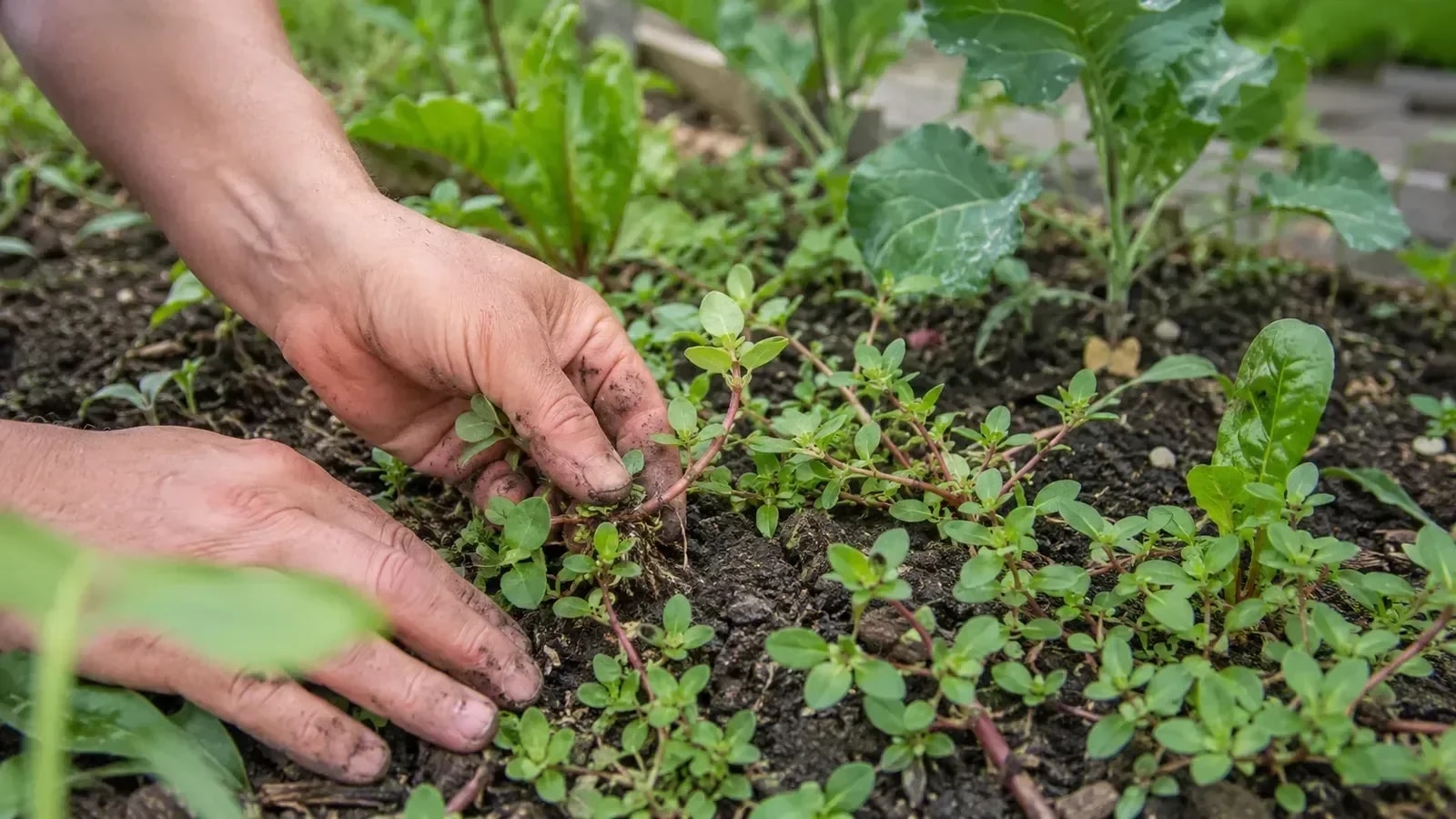
Common purslane grows close to the ground and often forms a spreading mat. Its stems are smooth, succulent, and frequently reddish. Leaves are thick, glossy, and fleshy, usually rounded or spoon-shaped rather than narrow.
The flowers are small and yellow and tend to open in bright conditions. Seed capsules develop after flowering and can release many tiny dark seeds.
A useful identifying feature is texture: healthy purslane leaves and stems feel juicy and fleshy, not hairy or papery. However, appearance varies with drought, shade, and soil fertility, so one feature is not enough for edible identification.
Garden Purslane in the Photo: What to Look at First
When comparing a plant with reference photos, look at the whole combination of traits rather than just one leaf:
Growth is prostrate or low and spreading.
Stems are smooth and often red or pinkish.
Leaves are fleshy, smooth, and arranged in clusters or alternately along stems.
Flowers are small and yellow.
Broken stems contain watery sap rather than a conspicuous milky latex.
A photo can help with weed management, but it is not a sufficient safety check for eating an unknown plant.
What Can Be Confused With Garden Purslane
The most important look-alike for gardeners to know is spurge, particularly prostrate or spotted spurge. Spurge can also form low mats and may have reddish stems.
Spurges often have thinner leaves and release a white milky latex when stems are broken. That latex is irritating and is a reason not to handle the plant casually near eyes or mouth.
Other succulent ornamentals can also resemble purslane. If identification affects whether you plan to eat the plant, use a reliable local botanical source or an experienced expert rather than a single internet image.
How to Grow Garden Purslane
Most gardeners do not need to "grow" common purslane; it appears naturally where soil is disturbed and warm. Seeds germinate near the surface when temperatures rise, especially in sunny beds.
If someone intentionally grows an edible cultivated purslane variety, it is better to start with labeled seed from a reputable source. That avoids confusion with unknown weeds and makes plant identity much clearer.
Keep intentional purslane in a defined area and remove flowers before seed capsules mature if you do not want it spreading through the rest of the garden.
Why Purslane Takes Over the Garden So Quickly
Purslane is well adapted to hot, dry conditions. Its succulent stems and leaves store water, while its low growth allows it to spread beneath taller crops.
It also produces many seeds, and those seeds can remain viable in soil for years. Disturbing soil can bring buried seed closer to the surface, creating a new flush of seedlings after weeding or cultivation.
A mature plant can also remain alive after being pulled if it is left on moist soil, and stem fragments may sometimes survive long enough to re-establish. That is why one weeding session rarely ends a heavy infestation.
Why Purslane Grows Again After Weeding
The usual explanation is not that the same root regenerated. More often, another wave of seeds germinates after soil disturbance exposes them to light and warmth.
A second possibility is that pulled plants were left in contact with moist soil and resumed growth. Purslane is unusually resistant to short periods of drying.
The practical response is repeated shallow weeding combined with mulch. Do not dig deeply every few days, because repeated soil turnover can bring more buried seeds to the surface.
Do You Need to Get Rid of Purslane in the Garden?
It depends on where it is growing. A few plants in an unused corner are not the same problem as a dense mat surrounding young onions, carrots, peppers, or herbs.
In vegetable beds, remove purslane when it competes with crops for light, water, nutrients, or space. The priority is preventing it from producing seed.
On paths or bare ground where it is not interfering with anything, control can be less urgent. Garden management does not require eliminating every single plant from the property.
When Is the Best Time to Clean Purslane
Remove it when plants are young, before flowering and seed formation. Seedlings are easiest to pull or hoe, and removing them early prevents the seed bank from increasing.
A dry sunny morning is useful if you plan to leave uprooted plants to desiccate away from beds. After rain, roots pull more easily, but wet conditions also make it easier for discarded stems to stay alive.
The best timing is therefore "small and before seed," not a specific month.
How to Get Rid of Purslane Manually
Hand removal is reliable for small and medium infestations.
Loosen the top few centimeters of soil with a hoe or hand tool.
Lift the whole plant and as much root as practical.
Shake off excess soil without breaking the plant into many fragments.
Place removed plants on a dry hard surface, in a collection container, or in a managed compost system rather than back onto moist soil.
Recheck the bed every 7–14 days for new seedlings.
Remove new plants before they flower.
Persistence matters more than digging deeply.
Should Purslane Be Weeded After Watering?
Slightly moist soil makes roots easier to pull, but soaking-wet beds are not ideal. Walking and working in saturated soil can compact it, and uprooted purslane left on wet ground may remain alive.
Water the day before if the soil is extremely hard, then weed once it is damp but crumbly. Collect the plants rather than dropping them between rows.
In loose soil, a shallow hoe during dry weather is often faster than hand pulling.
How to Get Rid of Purslane With Mulch
Mulch suppresses germination by blocking light from the soil surface. A 5–8 cm layer of straw, shredded leaves, grass clippings that are free of herbicide residues, or another suitable organic mulch can greatly reduce new seedlings.
Apply mulch after removing existing mature plants. If large purslane plants are simply buried under a thin layer, they may push through.
Keep mulch slightly away from stems of crops that dislike constant moisture at the crown.
Does Black Agrofiber From Purslane Help
Black woven landscape fabric can suppress purslane in paths and permanent planting areas by excluding light. It works best when installed over a prepared surface with edges secured.
In annual vegetable beds, fabric can be inconvenient because planting holes and seams become places where weeds emerge. It also does not remove the seed bank; seeds can remain dormant underneath.
Use fabric as a physical barrier, not as a one-time cure.
Does Soil Solarization Help?
Solarization uses clear plastic over moist soil during the hottest sunny weeks to raise soil temperature and kill some weed seeds and soil pests. It can reduce purslane pressure near the surface when done correctly.
Results depend heavily on climate, duration, soil moisture, and how tightly the plastic is sealed. It is not practical for every garden and can also affect beneficial soil organisms near the surface.
For a small home bed, repeated shallow weeding plus mulch is usually simpler.
Is It Necessary to Dig Up the Ground Through Purslane?
Deep digging is not the best default control. It can bury some seeds but bring others toward the surface, where they receive enough light to germinate.
Use shallow cultivation to remove seedlings and reserve deep digging for normal soil preparation, not as a weekly weed-control method.
A "stale seedbed" approach can work: prepare the bed, allow weeds to germinate, then remove the first flush shallowly before planting the crop.
Is It Possible to Just Sprinkle Purslane
If "sprinkle" means covering it with a little soil or mulch, a thin layer is not enough for established plants. Purslane stems can continue growing and find light.
Remove mature plants first, then apply a proper mulch depth to suppress new seedlings. Do not rely on cosmetic covering.
If the phrase means applying a household powder such as salt or baking soda, avoid it. These products can damage soil and nearby crops.
Is It Possible to Put Purslane in the Compost?
Young purslane without mature seed can go into a well-managed compost pile that heats sufficiently and is turned properly. The problem is mature seed and succulent stems that can survive for a while in cool compost.
For a home pile that stays relatively cool, it is safer to dry mature purslane completely before adding it, or dispose of seeding plants according to local green-waste rules.
Do not spread unfinished compost containing viable purslane seed back onto clean beds.
How to Prevent Purslane From Appearing Again Next Year
You may not eliminate the seed bank in one season, but you can reduce it strongly:
Never let plants set seed.
Keep soil covered with mulch or dense crop growth.
Disturb soil only as much as needed.
Remove new seedlings while small.
Clean soil from tools before moving from heavily infested beds to clean areas.
Use compost and manure that are free of viable weed seeds.
Think in terms of several seasons of seed prevention rather than one dramatic treatment.
Is It Necessary to Water the Garden Less Because of Purslane?
No. Water crops according to their needs. Purslane tolerates drought well, so deliberately stressing vegetables may hurt the crop more than the weed.
Drip irrigation can help because it delivers water close to crop roots while leaving more of the bed surface dry. That may reduce some weed germination compared with overhead watering.
The primary controls are early removal, mulch, and prevention of seed production.
Do Purslane Herbicides Help?
Some herbicides can control purslane, but suitability depends on the crop, product label, weed stage, and local regulations. A product approved for a lawn may be completely unsuitable in a vegetable bed.
For home edible gardens, mechanical control is often the simplest option. If chemical control is considered, use only a product legally labeled for the exact site and crop and follow its instructions precisely.
Never improvise concentrations or spray unidentified products around food crops.
Why Vinegar and Salt Are a Bad Idea for the Garden
Household vinegar can burn leaves, but it may not kill roots reliably and can injure nearby crops. Concentrated horticultural acetic-acid products are much stronger than kitchen vinegar and can cause serious eye and skin injury.
Salt is worse for soil. It accumulates, damages roots, and can reduce soil fertility for wanted plants as well as weeds.
A hoe, mulch, and repeated removal are slower but do not create a salinity problem in the bed.
Is Garden Purslane Edible
Common purslane is eaten in many cuisines and contains omega-3 fatty acids, vitamins, minerals, and organic acids. It can be used raw or cooked when it has been positively identified and grown in a safe location.
Do not eat a plant from a roadside, contaminated site, treated bed, or unknown garden area. Do not eat it if you are unsure of identification. Some people may also need dietary advice about high-oxalate foods depending on their health history.
What Does Purslane Taste Like?
Purslane is crisp and juicy with a mildly tart, lemony, sometimes slightly salty flavor. The acidity comes partly from organic acids in the plant.
Young leaves and tender stems are usually more pleasant than old fibrous growth. In cuisines where purslane is intentionally grown, it can be added to salads, soups, stews, yogurt dishes, or cooked greens.
Again, taste should never be used as an identification test.
Is Purslane Useful?
As a plant, purslane is interesting because it tolerates heat and drought, covers bare soil quickly, and is edible when correctly identified. Nutritionally, it contains alpha-linolenic acid, a plant omega-3 fatty acid, along with vitamins and minerals.
In a vegetable bed, however, usefulness does not cancel competition. A dense mat around seedlings can reduce crop growth and create harvest problems.
You can value purslane as an edible plant while still controlling it where it behaves as a weed.
Which Purslane Can Not Be Eaten
Do not eat any plant you cannot positively identify as an edible species. Avoid plants from sites exposed to herbicides, pesticides not approved for edible crops, road runoff, pet waste, industrial contamination, or unknown chemicals.
Ornamental Portulaca species are not automatically interchangeable with common edible purslane, and spurge look-alikes should never be consumed.
If there is doubt, do not taste it.
Are Garden Purslane and Decorative Purslane the Same Thing?
No. Common garden purslane is usually Portulaca oleracea. Ornamental moss rose is commonly Portulaca grandiflora or related cultivars bred for bright flowers.
They are in the same genus but are grown for different purposes. Do not assume that an ornamental plant is intended for food just because it resembles an edible relative.
Is It Possible to Specially Grow Purslane
Yes. Edible cultivars are sold as seed and can be grown like a quick warm-season leafy vegetable. Starting from labeled seed is safer than collecting unknown plants from roadsides or vacant land.
Sow shallowly in warm soil, keep the seedbed lightly moist until germination, and harvest young tips. To prevent escape into the garden, remove flowers before seed capsules mature.
Is Purslane Dangerous for Other Plants
It is not usually "toxic" to neighboring vegetables. The main problem is competition. A thick mat can take water, nutrients, light, and physical space from slow-growing crops.
Purslane can also make hand harvesting and cultivation more difficult. Its ability to seed heavily means a small ignored patch can become a much larger management problem next year.
What to Do If Purslane Has Already Covered the Entire Bed
Do not try to solve a dense infestation by deep digging everything under. Start by removing the largest flowering plants and any plants with seed capsules. Collect them away from moist soil.
Next, hoe or hand-pull smaller plants. Add an appropriate mulch between established crops. Recheck every week or two because new seedlings will continue appearing.
If the bed is empty between crops, consider a stale seedbed: water lightly to encourage a flush of weed seedlings, then remove them shallowly before planting the next crop.
10 Rules for Fighting Purslane in the Garden
Remove purslane while it is young and before it flowers.
Never let mature plants scatter seed in the bed.
Collect pulled plants instead of leaving them on moist soil.
Use shallow cultivation rather than repeated deep digging.
Cover bare soil with a suitable mulch.
Recheck infested beds regularly because seeds germinate in waves.
Water crops properly; do not drought-stress vegetables to punish purslane.
Avoid salt and improvised strong vinegar treatments in fertile garden soil.
Compost only when you are confident the pile will not return viable seeds to the garden.
Treat control as a multi-season reduction of the seed bank, not a one-day task.
A heavily infested bed is best managed as a seed-bank problem. Every mature plant you remove before it sheds seed is progress even if new seedlings appear the next week. The first season may still feel repetitive because seeds already in the soil germinate in waves. By the second and third seasons, consistent prevention of new seed usually reduces the number of plants substantially.
Mulch works best as part of that system, not as a substitute for observation. Pull or hoe established purslane first, then cover the soil. Check planting holes and mulch edges because those are the first places where light reaches the surface. If seedlings appear, remove them while they are tiny rather than waiting until a mat forms.
Be cautious when moving soil around the property. Soil stuck to a shovel, tiller, wheelbarrow, or transplant can contain purslane seed. Clean tools after working in a heavily infested bed and avoid using that soil to top-dress a clean seedling area. This is especially helpful in small gardens where a few beds can otherwise reinfect one another.
If purslane is intentionally grown as food, keep the cultivated patch separate and clearly identified. Harvest before seed production unless you specifically want self-sowing. Gardeners who both eat purslane and control it as a weed can do both successfully; the difference is deciding where it is allowed to grow and preventing uncontrolled seed spread elsewhere.
Where crops are already dense, hand removal is usually preferable to aggressive hoeing because shallow crop roots can be damaged. Hold the purslane near the base and lift slowly, supporting neighboring plants with the other hand. If a stem breaks, remove the visible fragments and check the same spot again later.
The goal is not sterile soil. A garden will always contain weed seeds. Good control means purslane stays below the level where it competes with crops or produces a new large generation of seed. That is a realistic standard for a home garden.
After harvest season, review where the worst patches appeared. Purslane often marks sunny disturbed areas where soil remains open between crops. Planning denser spacing where appropriate, cover crops, or earlier mulching for the next season can reduce the bare ground it exploits.
FAQ
What Is Garden Purslane?
Common purslane is Portulaca oleracea, a low-growing annual succulent that often appears as a weed in warm disturbed soil.
What Does Garden Purslane Look Like?
It usually has smooth reddish succulent stems, thick rounded leaves, small yellow flowers, and a spreading mat-like habit.
How to Distinguish Purslane From Milkweed or Spurge?
Many spurges have thinner leaves and white milky latex when broken, while common purslane has fleshy leaves and watery sap. Do not rely on one feature if you plan to eat the plant; use expert identification.
Is Garden Purslane Edible?
Common purslane is an edible plant when positively identified and grown in a clean, untreated location. Unknown or contaminated plants should not be eaten.
Why Does Purslane Grow So Quickly in the Garden?
It thrives in heat, stores water in succulent tissues, spreads low across bare soil, and produces many long-lived seeds.
How to Get Rid of Purslane in the Garden?
Remove young plants before seed formation, collect uprooted plants, use mulch, and repeat shallow weeding as new seedlings emerge.
Why Did Purslane Reappear After Weeding?
The soil contains a seed bank. Disturbance can bring more seeds near the surface, where they germinate after the first weeds are removed.
Is It Possible to Leave Plucked Purslane on the Bed?
It is better not to leave fresh purslane on moist soil because succulent stems can remain alive and mature plants may still release seed.
Can Purslane Be Composted?
Young non-seeding plants can be composted in a well-managed pile. Mature seed-bearing plants are risky in cool home compost because viable seed may survive.
Does Vinegar or Salt Help With Purslane?
They can damage leaves, but salt harms soil and strong vinegar can injure crops and people. Mechanical removal and mulch are safer garden controls.
Best of the week — in your inbox
No spam. Only top Gosta stories. Unsubscribe in one click.
Comments