
Mimosa Salad: Classic Layered Recipe, Ingredient Order, and 3 Tasty Twists
Mimosa salad here means the savory layered fish-and-vegetable dish served at Ukrainian home and holiday tables—not a brunch salad inspired by the champagne-and-orange-juice cocktail. The classic version combines cooked potatoes and carrots, eggs, onion, canned fish, and a light layer of mayonnaise between selected ingredients. The top is finished with finely grated egg yolk, giving the dish the soft yellow look that inspired its floral name.

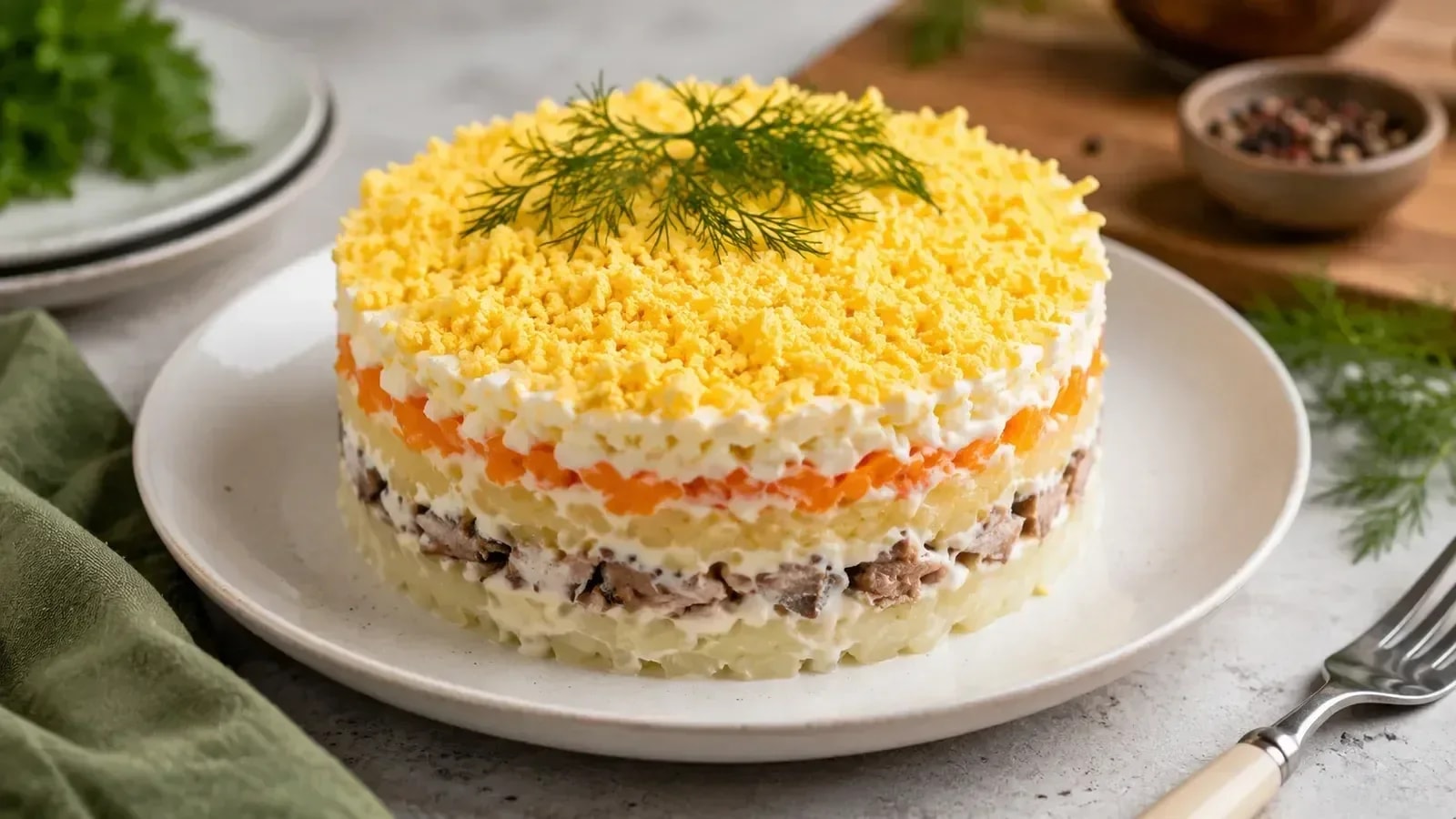
Mimosa salad here means the savory layered fish-and-vegetable dish served at Ukrainian home and holiday tables — not a brunch salad inspired by the champagne-and-orange-juice cocktail. The classic version combines cooked potatoes and carrots, eggs, onion, canned fish, and a light layer of mayonnaise between selected ingredients. The top is finished with finely grated egg yolk, giving the dish the soft yellow look that inspired its floral name.
Texture depends on details: cool the vegetables completely, drain the fish well, grate rather than mash, use mayonnaise sparingly, and give the assembled salad time to chill. Below is a practical classic formula for 4–6 servings, plus three useful twists: tuna, cheese and butter, and a no-potato apple version.
Think in thin connecting layers, not thick white blankets. You should still taste potato, fish, carrot, and egg separately. Chill 4–8 hours so the layers settle.
Classic Mimosa salad
Ukrainian layered holiday salad with potato, canned salmon or saury, onion, carrot, eggs, and thin mayonnaise. Grated yolks on top give the yellow mimosa finish.
Ingredients
Instructions
- Boil the unpeeled potatoes and carrots until just tender. Drain and cool completely. Hard-boil the eggs, cool, peel, and separate whites from yolks.
- Drain the canned fish thoroughly. Remove large bones and flake with a fork; do not puree. Chop the onion finely. If it is sharp, marinate 10–15 minutes in 2 tablespoons warm water, 1 tablespoon mild vinegar or lemon juice, 1/2 teaspoon sugar, and a pinch of salt, then drain extremely well.
- Peel and grate the cooled potatoes and carrots separately on a medium grater. Grate the egg whites and yolks separately.
- Spread potato in the serving dish, season lightly, and add a thin mayonnaise layer. Add fish, then onion, then carrot, then a thin mayonnaise layer, then grated egg whites, then another very light mayonnaise layer.
- Grate or crumble the yolks over the entire surface. Do not press them down. Cover and refrigerate 4–8 hours. Keep chilled until shortly before serving.
Mimosa salad with tuna
The same layer order as classic Mimosa, with well-drained canned tuna. Tuna is leaner, so spread the mayonnaise especially evenly rather than adding one thick layer.
Ingredients
Instructions
- Cook, cool, and grate the potatoes and carrots. Hard-boil the eggs and separate whites from yolks. Drain the tuna very well and flake it.
- Layer potato, a thin mayonnaise mesh, tuna, onion, carrot, mayonnaise, egg whites, a little more mayonnaise, and grated yolks on top — the same order as the classic salad.
- Spread mayonnaise evenly rather than in one thick layer. Finish with a little chopped dill if you like. Chill 4–8 hours.
Mimosa salad with cheese and butter
A richer festive Mimosa: finely grated semi-hard cheese and very cold grated butter after the carrot layer. Reduce the mayonnaise slightly.
Ingredients
Instructions
- Prepare potato, carrot, fish, onion, and eggs as for classic Mimosa.
- Build the salad: potato, thin mayonnaise, fish, onion, carrot, then the grated cheese. Grate the cold butter in fine shavings over the cheese. Do not use melted or softened butter.
- Continue with egg whites, a very thin mayonnaise layer, and grated yolks. Use less mayonnaise than the classic because cheese and butter already add richness. Chill 4–8 hours.
No-potato Mimosa salad with apple
A lighter Mimosa that replaces the potato base with a crisp, tart-sweet apple grated just before assembly.
Ingredients
Instructions
- Cook, cool, and grate the carrots. Hard-boil the eggs and separate whites from yolks. Drain and flake the fish. Chop the onion finely.
- Peel and coarsely grate the apple just before assembly. Toss with a few drops of lemon juice to slow browning; do not soak it.
- Layer fish, onion, apple, carrot, egg whites, and yolks, with thin mayonnaise where needed. Chill 4–8 hours. The result is lighter, fresher, and slightly sweet.
Which fish works best
Canned salmon flakes neatly and has a recognizable flavor. Canned saury is richer. Tuna is a convenient everyday swap. Drain liquid or oil thoroughly — excess moisture is one of the quickest ways to turn clean layers into a soggy mass. If the fish is oil-packed, let it sit in a sieve; if it is packed in water, press very gently.
Cook potatoes and carrots until tender but not falling apart, then cool completely before peeling and grating. Warm vegetables trap steam and make the salad wet. Grate whites and yolks separately: whites go inside, yolks form the yellow top.
How much mayonnaise, and how to keep Mimosa fluffy
For 4–6 people, 120–160 g mayonnaise is usually enough. A squeeze bottle makes a fine mesh easier than spreading with a spoon. If the fish is oil-packed, use the lower end of the range.
Cool the vegetables completely. Grate rather than mash. Place each layer gently without compacting. Use only enough mayonnaise to connect the ingredients. Do not assemble with watery fish, wet marinated onion, or steaming vegetables. For neat sides, use a serving ring or a straight-sided glass dish.
Choose classic Mimosa the first time. Use tuna for a mild everyday table, cheese and butter for a holiday meal, and apple when the potato version feels too dense.
How to serve Mimosa
Serve chilled. A wide, shallow dish shows off the yellow top. Garnish with a little dill or scallion around the edge so the grated yolk stays visible. Pair with cucumber-tomato salad, roasted vegetables, dark rye, simple baked chicken, or pickled vegetables. If the table already includes several mayonnaise-based salads, balance them with fresh vegetables.
Mimosa is a familiar layered salad on Ukrainian festive tables. The spelling mimoza also appears in English searches, but the dish described here is the Ukrainian layered holiday salad rather than a cocktail-themed brunch recipe. Households vary the fish, add cheese or butter, or skip potato — what stays recognizable is savory fish, cooked vegetables, eggs, restrained mayonnaise, and the bright yellow finish.
FAQ
What is the classic Mimosa salad recipe?
The classic home-style formula uses cooked potatoes and carrots, hard-boiled eggs, canned fish, onion, and mayonnaise. The ingredients are grated or flaked, layered, and chilled before serving.
What is the correct Mimosa salad layer order?
A practical order is potato, mayonnaise, fish, onion, carrot, mayonnaise, egg whites, a little mayonnaise, and grated yolks on top.
What fish is best for Mimosa salad?
Canned salmon and saury both work well. Tuna is a convenient variation. The most important step is draining the fish thoroughly.
Can you put cheese in Mimosa salad?
Yes. Finely grated semi-hard cheese creates a richer variation. Add it as an inner layer and reduce the mayonnaise slightly.
Can I make Mimosa salad without potatoes?
Yes. A firm grated apple can replace the potato for a lighter version with a crisp, slightly sweet contrast.
How do I fix soggy Mimosa salad?
Once assembled, a very wet salad is difficult to reverse. Chill it thoroughly and serve carefully. Next time, cool vegetables completely, drain fish and onion well, and use thinner mayonnaise layers.
Best of the week — in your inbox
No spam. Only top Gosta stories. Unsubscribe in one click.
Comments