
Planets Beyond Neptune: Pluto, the Kuiper Belt and the Planet Nine Search
Planets beyond Neptune are not a newly confirmed addition to the eight major planets of our solar system. The region does contain real worlds, including dw

Contents8
- Are any major planets beyond Neptune confirmed?
- What is the Kuiper Belt beyond Neptune?
- Why does Pluto appear in planets beyond Neptune searches?
- What is Planet Nine in planets beyond Neptune research?
- Why is searching for planets beyond Neptune difficult?
- What does the recent ancient-ice research show?
- How should you assess planets beyond Neptune headlines?
- FAQ
Planets beyond Neptune are not a newly confirmed addition to the eight major planets of our solar system. The region contains real dwarf planets beyond Neptune, including dwarf planets such as Pluto, together with many smaller icy bodies. Planet Nine, sometimes called Planet X in public explanations, remains a hypothesis in the NASA material checked for this guide.
A search for planets beyond Neptune can mix three questions: what has been observed, how those objects are classified and whether another planet awaits discovery. Separating them makes the outer solar system more interesting, not less. Exploration does not require an invented discovery.
Are any major planets beyond Neptune confirmed?
No additional major planets beyond Neptune are confirmed in the NASA references used here. Neptune remains the outermost of the eight recognized major planets. That statement does not mean the solar system ends abruptly at Neptune's orbit.
When a headline mentions planets beyond Neptune, check whether it means dwarf planets, a proposed planet or worlds orbiting other stars. Those are different categories. A telescope finding an exoplanet does not add another major planet to our solar system.
For planets beyond Neptune, the question is what evidence identifies the object and what classification the source applies. Words such as candidate, hypothetical and dwarf are part of the scientific information, not optional decoration to remove from a headline.
What is the Kuiper Belt beyond Neptune?
The Kuiper Belt is a broad outer-solar-system region beyond Neptune containing icy bodies left from the system's formation. NASA's Kuiper Belt overview explains why it is a population of objects rather than a single hidden world.
For readers asking about planets beyond Neptune, the belt supplies an important change of scale. A diagram showing a few bright circles can make the outer solar system seem empty. In reality, the diagram is selecting a small number of familiar objects from a much larger population.
The Kuiper Belt is not a solid wall. Planets beyond Neptune discussions sometimes make it sound like a boundary you would strike while traveling outward. It is a sparse region of objects with large separations, not a continuous surface.
Why does Pluto appear in planets beyond Neptune searches?
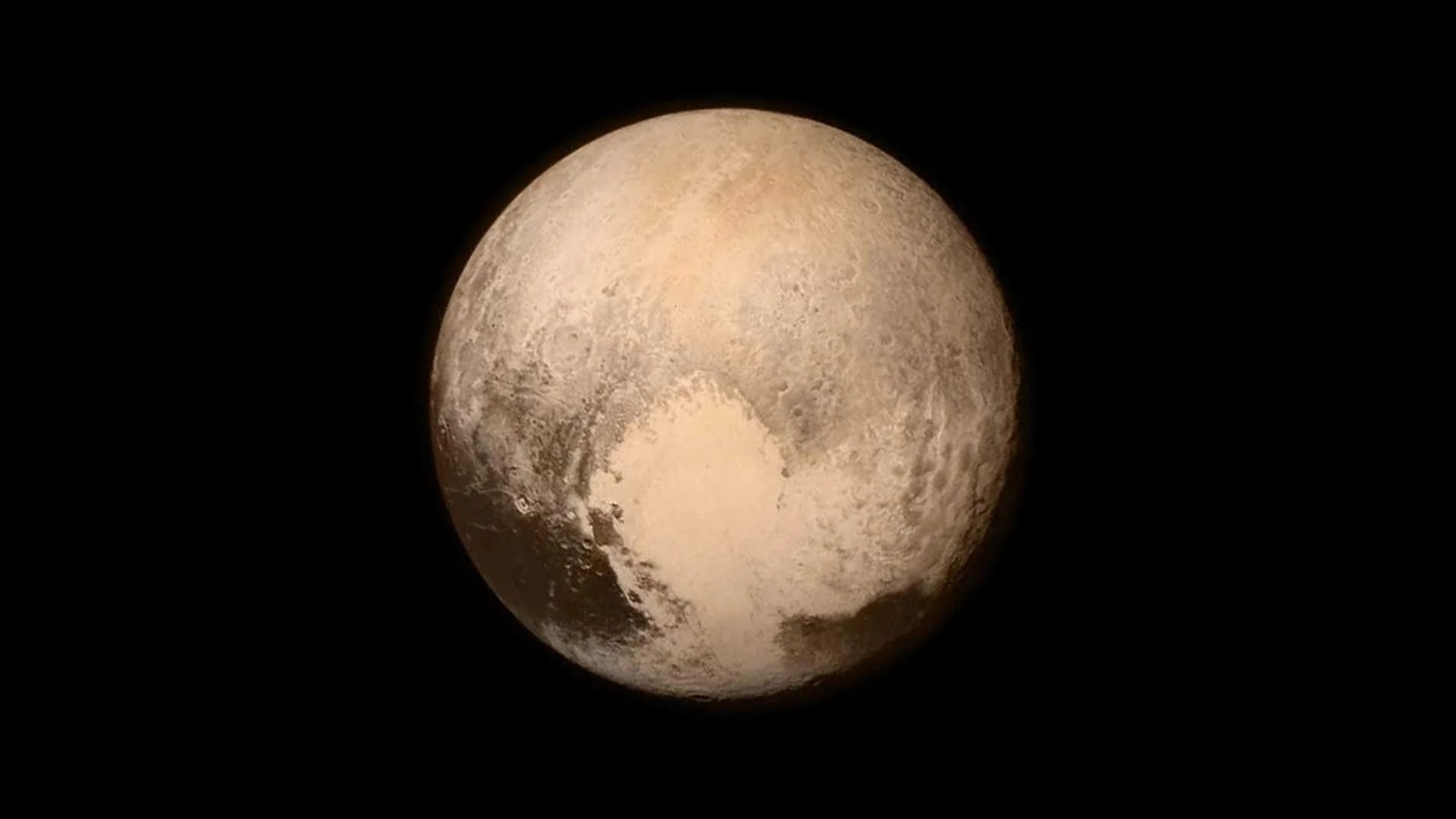
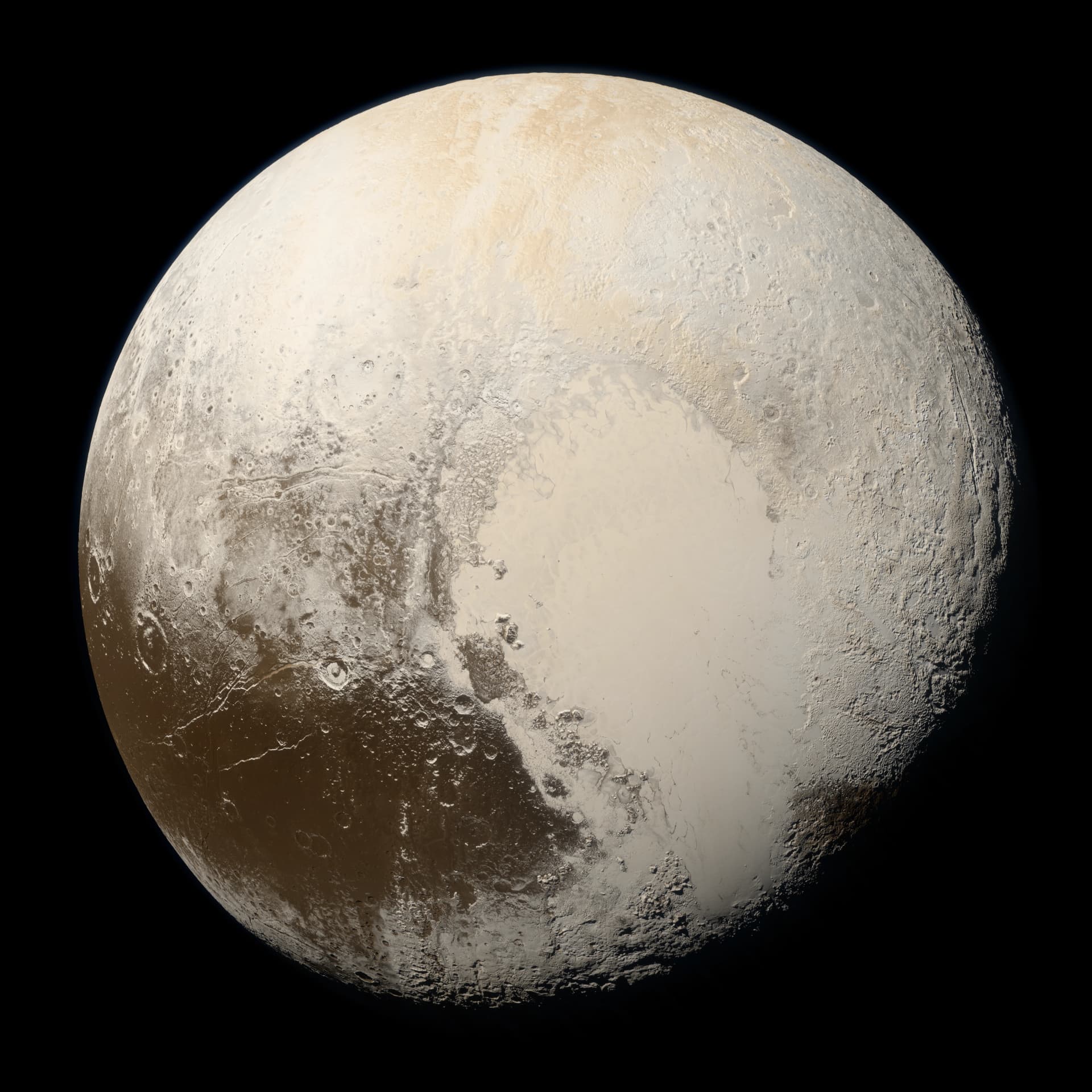
Pluto appears in planets beyond Neptune searches because it is a real, well-studied dwarf planet in the outer solar system and was historically taught as the ninth planet. Its classification changed; the world itself did not vanish or become scientifically unimportant.
NASA's Pluto guide describes a complex world explored by the New Horizons spacecraft. Images in planets beyond Neptune coverage can document real dwarf planets; an artist's concept of an undetected world serves a different purpose.
That distinction helps with planets beyond Neptune imagery. A detailed picture accompanying reports about planets beyond Neptune can be a real spacecraft image, a processed scientific image or an artist's concept. For planets beyond Neptune images, read the caption before deciding what the image proves. An attractive rendering is not automatically a photograph.
Term | What it means in this discussion |
|---|---|
Neptune | The outermost recognized major planet |
Pluto | An observed dwarf planet explored by New Horizons |
Kuiper Belt object | A body in the outer region, not necessarily a major planet |
Planet Nine | A hypothesized planet, not a confirmed detection here |
Exoplanet | A planet outside our solar system |
What is Planet Nine in planets beyond Neptune research?
Planet Nine is a proposed explanation for aspects of the distant solar system, not a confirmed object in the checked planets beyond Neptune material. NASA's Hypothetical Planet X explanation explicitly describes the proposed world's uncertain status.
The planets beyond Neptune hypothesis is interesting because gravity can leave clues in the motion of other bodies. Researchers can test whether an additional planet would help explain a pattern. A plausible explanation involving planets beyond Neptune, however, is not the same as seeing the proposed object and measuring its orbit.
For planets beyond Neptune claims, ask what was measured. An orbit calculation, a new small object and a direct detection of a large planet would be different results. Combining them into one dramatic discovery story removes the distinction the research depends on.
Why is searching for planets beyond Neptune difficult?
Searching for planets beyond Neptune is difficult because distant objects can be faint, move slowly across the sky and occupy a large search area. An expected location inferred from a model is not necessarily a single point where a telescope can immediately find the object.
A planets beyond Neptune search also needs repeated observations. Researchers must distinguish a moving solar-system body from background sources and determine whether the measurements support a reliable orbit. One interesting dot is a starting point for investigation, not a complete planetary biography.
When reading planets beyond Neptune coverage, look for the observing instrument, dates and follow-up evidence. Those details help distinguish a search proposal from an observation and an observation from a confirmed interpretation.
What does the recent ancient-ice research show?
The recent research to planets beyond Neptune concerns evidence for ancient ice in the Kuiper Belt, not the discovery of a ninth major planet. NASA's November 18 report describes analysis of twelve dust particles collected from Earth's stratosphere and chemical clues to their outer-solar-system origins.
The NASA ancient-ice report explains how microscopy and oxygen-isotope measurements help investigate early solar-system material. The evidence discussed alongside planets beyond Neptune searches addresses the history and distribution of material, a different question from whether new planets beyond Neptune have been directly detected.
That is a example of planets beyond Neptune science advancing without a dramatic new world being announced. Small samples can answer large questions about how the solar system developed, even when no new planet receives a name.
How should you assess planets beyond Neptune headlines?
Assess planets beyond Neptune headlines by checking the original research, the object's classification and the difference between observation and interpretation. Scientific reporting on planets beyond Neptune should say what was measured and what remains uncertain.
Check whether the claim concerns our solar system or another star.
Read whether the object is observed, proposed or hypothetical.
Identify whether an image is a photograph or an illustration.
Look for dated observations and independent follow-up.
Do not turn a new clue into a confirmed planet without supporting evidence.
Planets beyond Neptune FAQ
Does this article announce new planets beyond Neptune?
No. This planets beyond Neptune guide distinguishes observed dwarf planets and small bodies from hypothetical major planets.
Are Pluto images evidence of planets beyond Neptune?
They are evidence of a real dwarf planet. Planets beyond Neptune claims still need the classification and context.
Did the ancient-ice study discover planets beyond Neptune?
No. The study discussed alongside planets beyond Neptune searches concerns material history, not a newly detected major planet.
Best of the week — in your inbox
No spam. Only top Gosta stories. Unsubscribe in one click.
Comments