
5 Chef Secrets for a Perfect Greek Salad
Greek salad seems simple, yet that simplicity takes skill. Chefs say there are no small details in a Greek salad – every vegetable, every knife cut, every drop of oil matters.

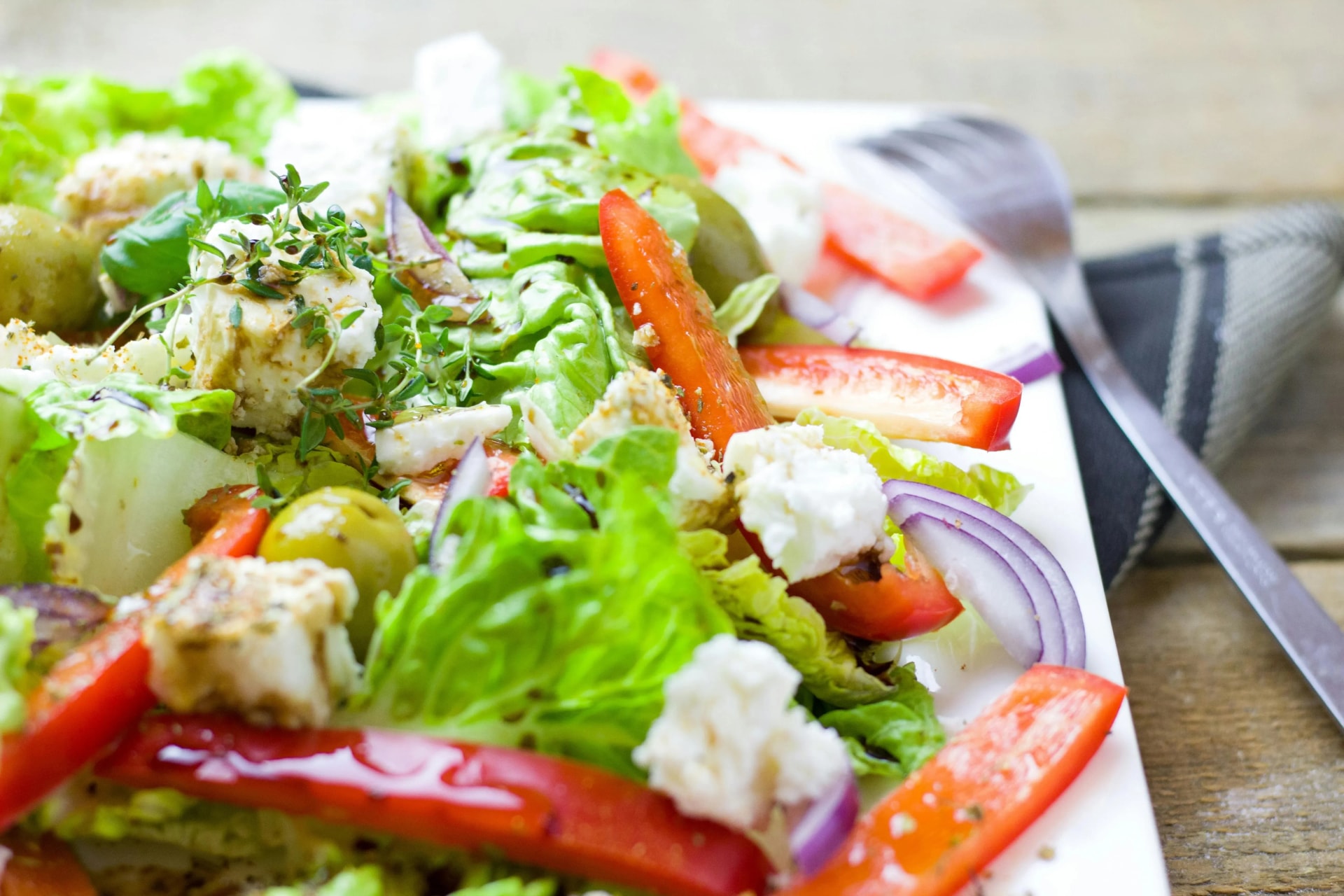
Greek salad captures the spirit of the Mediterranean. It began as a humble farmers' dish of the freshest vegetables, feta, and olive oil, and it is still a national symbol that never goes out of style. The idea is simple — ripe vegetables, real olive oil, correct proportions — but recreating the taste "like in Greece" is not easy. Tiny mistakes in picking or cutting ingredients can change the flavor completely.
Chefs say there are no small details in a Greek salad: every vegetable, every knife cut, and every drop of oil matters. Tomatoes must be ripe yet firm, cucumbers young and not watery, and feta made from sheep's milk with some goat's milk so it stays crumbly and tangy-salty. The classic combination keeps balance: feta's saltiness, tomato acidity, and olive oil's softness create harmony without any extra sauce.
The recipe below is the classic for two servings. Dress it at the last moment, do not toss it hard, and keep the feta in a generous piece until serving. That geometry of flavor is what tavernas get right.
Classic Greek salad
A two-serving horiatiki: large vegetable pieces, a slab of sheep’s-milk feta, Kalamata olives, oregano, and extra-virgin olive oil. Do not shred the salad or drown it in dressing.
Ingredients
Instructions
- Halve cherry tomatoes, or cut large tomatoes into wedges. Slice the cucumber into 5–6 mm half-moons. Seed the pepper and cut it into medium squares. Slice the onion into thin half-moons.
- Layer in a bowl: tomatoes on the bottom, then cucumbers, then pepper and onion. This keeps juices from pooling and preserves structure.
- Add the olives. Place one large slab of feta on top, or cut it into large cubes only if the salad will be shared immediately.
- Right before serving, drizzle 3–4 tablespoons of extra-virgin olive oil, a pinch of oregano, and a pinch of salt. Add a few drops of lemon juice only if you want extra brightness.
- Lift gently with spoons. Do not overmix or press the feta. Chill for 10–15 minutes at most; over-chilled salad loses the oil’s aroma.
Quality first: how to choose the ingredients
The secret starts at the market. Tomatoes must be ripe yet firm, not watery. Cherry tomatoes or meaty varieties that do not fall apart under the knife work best. Choose young cucumbers with thin skin and minimal seeds; if the seeds are large, scoop them out so the salad does not get watery.
Sweet green pepper adds herbal freshness, while red onion brings a gentle bite. Real feta from sheep's milk with some goat's milk has a firm, crumbly texture. If you swap it for brined cow's-milk "feta-style" cheese, the salad will taste different. Olives vary by region: some cooks skip them, others use only Kalamata, whose soft, slightly sweet flesh pairs with feta.
For two servings the classic balance is 200 g tomatoes, one large cucumber, one green pepper, half an onion, 200 g feta, a handful of olives, and a few tablespoons of oil. Changing even one element shifts the dish. In winter, cherry tomatoes and slightly saltier feta compensate for milder greenhouse vegetables.
How to cut the vegetables
Shape matters. Cut tomatoes into large wedges so they stay juicy. Slice cucumbers into rounds or half-moons about 5 mm thick, peppers into strips or medium squares, and onion into thin rings. Each piece should be big enough to feel on its own. Cutting too small releases juices and turns the dish into a mushy mix.
Assemble in order: tomatoes first, then cucumbers, pepper, and onion. Add feta, olives, and seasonings only after that. For a shared table you can cube the feta, but keep it whole until the last moment.
A dressing that lifts, not masks, the flavor
The classic formula uses only extra-virgin olive oil, oregano, and a pinch of salt. Modern takes sometimes add lemon juice or a little wine vinegar. Use oil less than a year old: good oil smells of greens, fresh grass, and almonds; poor oil tastes bitter or metallic. Mix the dressing separately and add it right before serving so oregano blooms and vegetables stay crisp.
A modern yogurt version is a different dish, not a replacement: 2 tablespoons mayonnaise, 1 tablespoon Greek yogurt, a pinch of salt, basil, oregano, and a few drops of lemon juice. Dress crunchy vegetables and cubed feta at the last moment. It is creamier and a bit more filling, still light if you keep the sauce modest.
Common mistakes
Watery tomatoes — choose cherry or firm, meaty varieties.
Cutting too small — texture is lost; pieces should stay distinct.
Too much salt — feta and olives already season the bowl.
Cheap olive oil — bitterness, no aroma.
Aggressive mixing — feta breaks and vegetables mash.
Lettuce leaves — they make the salad watery and generic; skip them.
Greek salad is more than vegetables under oil. It is balance: tomato acidity, feta saltiness, olive oil softness, cucumber crunch. Nothing extra — and that is what makes it a slice of summer you can make anywhere.
FAQ
Do I have to add olives to Greek salad?
Not necessarily. Traditions vary by region: on some islands olives are served on the side; on the mainland they go into the bowl. At home, follow your preference.
What can replace feta if I don't have it?
The closest options are sheep or goat brined cheeses. They match the texture better than cow's cheese. Still, real feta has a unique crumbly feel and a gentle tangy-salty balance.
Do people add vinegar or lemon to Greek salad?
Yes, in moderation. A few drops of lemon juice or wine vinegar add freshness, especially in winter when vegetables are milder. In the classic recipe, feta's natural saltiness provides balance.
Why not add lettuce leaves?
Lettuce changes the dish's nature — it makes it watery and "generic European," and the Greek character is lost. Greek salad is about juicy vegetables, not greens. For freshness, add capers or a little basil instead.
How long can Greek salad be stored?
No longer than 6–8 hours in the fridge under wrap. It tastes best in the first 30 minutes, when vegetables are crisp and the feta holds its shape. For a party, prepare it right before serving.
Best of the week — in your inbox
No spam. Only top Gosta stories. Unsubscribe in one click.
Comments