
Kefir Pancakes – A Childhood Classic: A Simple Recipe
For many people, kefir pancakes are linked to slow weekends, the smell of vanilla in the kitchen, and a mug of hot cocoa. A simple dish made from the most basic ingredients turns into a little home ritual if you know a few tricks. Let’s figure out how to make pancakes so they are fluffy and stay tasty even when cold.

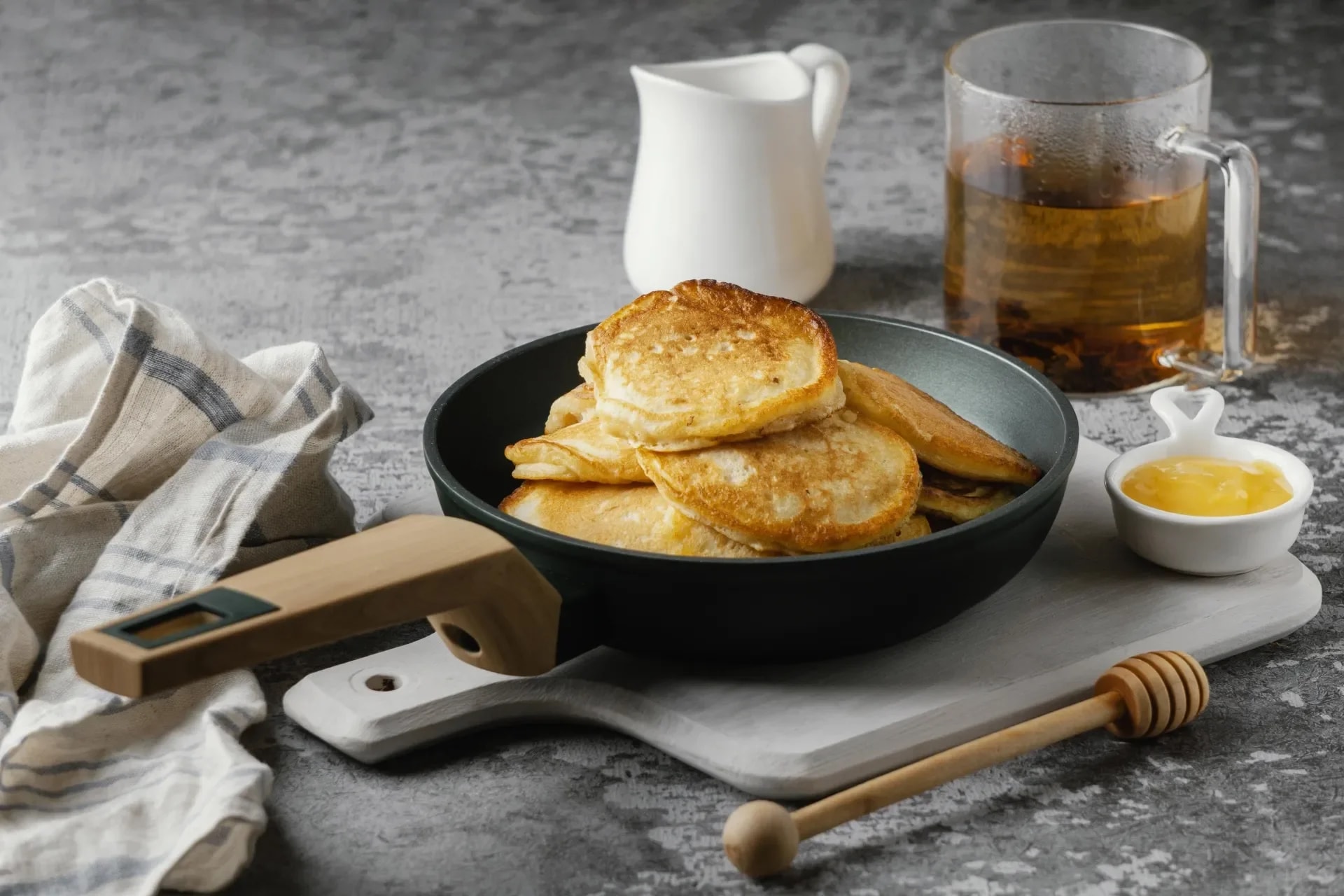
Kefir pancakes seem like a very simple dish, and that simplicity is exactly what makes them so popular. All you need is kefir, a bit of flour, an egg, a pinch of baking soda, sugar, and oil — everything you usually have at home. From this short list you get a warm breakfast with a crispy crust, a soft center, and a light tang.
Kefir should be sour, ideally a couple of days old and at room temperature, so baking soda can react steadily. You do not need to quench soda with vinegar: kefir is already acidic enough. Add soda to the finished batter, then let it rest so the bubbles stay until frying.
For 3–4 servings you need about 330–350 ml kefir, one egg, and 200 g flour. Keep the batter moderately sweet so the pancakes brown without staying raw inside.
Classic kefir pancakes
Fluffy pan-fried pancakes from sour kefir, flour, egg, and baking soda. The batter should look like thick sour cream and rest 10–15 minutes before frying.
Ingredients
Instructions
- Take the kefir and egg out of the fridge so they warm to room temperature. You can gently heat the kefir until it starts to separate into white mass and whey — that boosts acidity.
- Mix kefir with the egg until smooth. Add salt and sugar and stir until dissolved.
- Add sifted flour in portions, stirring in one direction, until the batter holds its shape on a spoon but is not as thick as dough. If it is too thick, add a little kefir or water.
- Add baking soda, mix quickly, cover, and let the batter rest 10–15 minutes. Do not stir vigorously after the soda goes in.
- Heat a thick-bottomed pan with enough oil over medium heat. Spoon the batter, leaving space between pancakes. Fry until bubbles appear and a golden crust forms, then flip and cook the other side.
- Drain on a paper towel and serve hot with sour cream, jam, honey, fruit, or powdered sugar.
What each ingredient does
Kefir provides acidity, fluffiness, and a light tang — use sour, room-temperature kefir, not very fresh cold kefir. One egg builds structure; too many eggs make pancakes rubbery. Sifted flour gives volume; different flours absorb moisture differently, so adjust to consistency. Baking soda makes pancakes airy without yeast. Sugar adds sweetness and a caramelized crust, but too much burns the outside while the inside stays raw. A pinch of salt is enough.
The batter should slowly fall off the spoon. Too little flour makes thin, oily pancakes; too much makes them dense. A thick-bottomed pan that keeps heat matters. You need enough oil for an even crust, but not so much that the pancakes float in fat.
Common mistakes
Cold kefir means poor rise and a dense crumb. Too much baking soda leaves an unpleasant taste and a crumbly texture. Poorly mixed batter hides flour lumps. Heat that is too high gives a dark crust and raw batter inside. Too little oil causes sticking and burnt spots. Later you can add apple pieces, cinnamon, or raisins without changing the base recipe.
Serve with sour cream or sour cream with honey, berry jam, condensed milk, banana or apple slices, berries, powdered sugar, or chopped nuts. Children usually get cocoa or warm milk; adults coffee or tea. Kefir pancakes rise from soda and acid, so they are faster than yeast pancakes and keep a light dairy tang.
FAQ
Why do kefir pancakes not rise and turn out thin?
The most common reason is cold or very fresh kefir, so the baking soda does not react well. Pancakes can also be flat if the batter is too thin or if you stir it too long after adding the soda.
Do I need to quench baking soda with vinegar for kefir pancakes?
No. Kefir already creates an acidic environment. Extra vinegar can change the taste and make the pancakes too sharp.
How much sugar should I add so the pancakes do not burn?
For a classic batch, 1–2 tablespoons of sugar without a heap are enough. Keep sweetness moderate and add more with toppings.
How do I know if the pancake batter has the right consistency?
It should look like thick sour cream: it slowly drips from the spoon and holds its shape. If it spreads too thinly, add sifted flour. If it falls in a heavy lump, add 1–2 tablespoons of kefir or water and let it rest.
How are kefir pancakes different from yeast pancakes?
Kefir pancakes rise from baking soda and acid, so you do not wait for dough to proof. They cook faster and have a light dairy tang. Yeast pancakes have a more open crumb but need fermentation time.
Best of the week — in your inbox
No spam. Only top Gosta stories. Unsubscribe in one click.
Comments